

iBasso Kunlun Recall Announced After Amplifier Failures
From: Vitor Valeri
A headphone hobbyist for over 15 years, he founded the Hi-Fi Hub website and is an administrator of the "Fones High-End" and "Fones Low-End" groups on Facebook.


Published in: 22/07/26 at 18:00
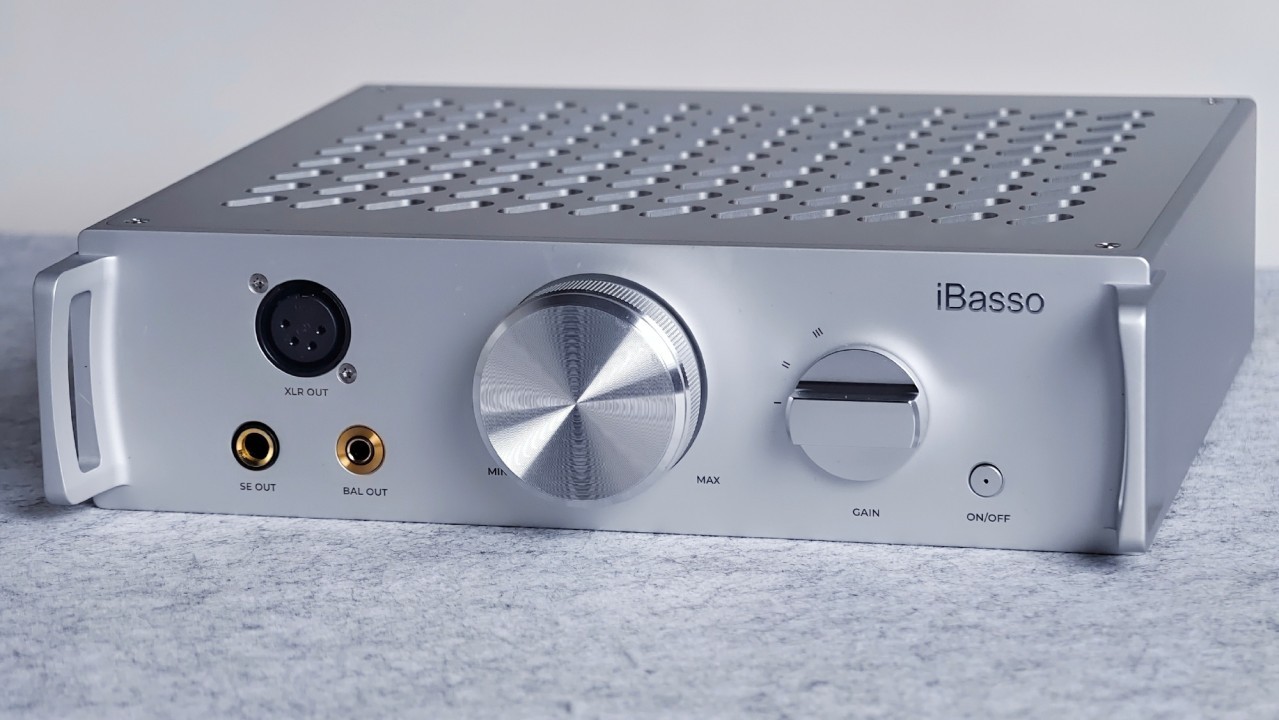 iBasso Kunlun desktop amplifier (Image: 窝是一吱喵/Weibo)
Power supply failures affecting European users of the iBasso Kunlun have resulted in units becoming permanently inoperable. Reports of defective Kunlun amplifiers first surfaced on the North American Head-Fi forum and later spread to local Italian audio communities. Two months after the first reports of incidents involving iBasso’s flagship desktop amplifier, the company’s representative, Paul, announced that a recall would be issued. Below is a detailed timeline of the events and iBasso’s official response.
Kunlun Units in Europe Begin Failing
Released internationally in January 2026, the iBasso Kunlun amplifier received widespread praise from reviewers. However, in May, an Italian Head-Fi user identified as “Polky74” reported that a friend’s Kunlun had unexpectedly failed.
On May 25, Polky74 posted:
“A question for Kulnun owners: have you had any problems?
I recommended the amp to two of my friends, and after less than a month, one of them suddenly flared up and died, and the other’s right channel went off today.
Mine and two of my friends’ amps are working fine, but I’m starting to worry. Are you all okay?”
Initially, the Head-Fi community paid little attention to the report, assuming it was an isolated incident. In response, iBasso representative Paul offered technical support:
“Please contact me at [email protected] so we can get this resolved for you.”
Three weeks later, another Italian user reported that multiple Kunlun failures had begun appearing within his local audiophile community. Identified on Head-Fi as “omusi,” he wrote:
“In my local audiophile community, we are seeing a worrying trend of power supply failures upon turning the unit back on via the rear mechanical switch.”
Omusi further explained that his home’s circuit breaker tripped immediately after powering on the amplifier:
“My home breaker tripped once when turning it on from the back after accidentally forgetting to put it in standby first. It seems the inrush current on 230V grids is massive, and without a proper soft-start or snubber circuit on the primary stage, it risks blowing the power supply.”
Shortly after omusi’s post, the first user who had originally reported problems with the Kunlun revealed that his own amplifier had also failed:
“My Kunlun, which I purchased in January, also broke.
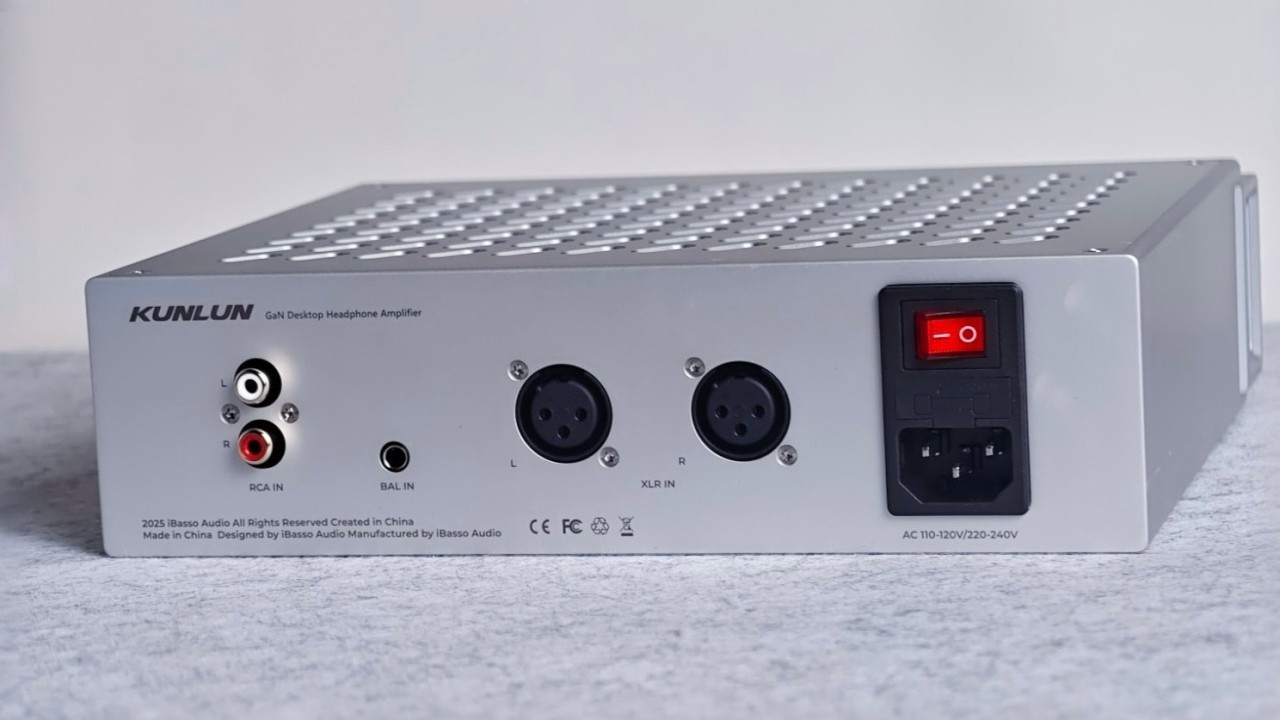
This morning (after having turned it off properly a week ago), when I turned it back on using the rear button, it tripped the circuit breaker. It hasn’t turned on since, but fortunately, no sparks… just an almost silent death.
I’m truly sorry because I was the one who recommended it to many friends, and some of them have had the same problem. We’re already at 4/5 Kunlun and it needs service, and everything seems to be caused by the power button located next to the IEC socket.”
Later that same day, another Head-Fi user, “pink87,” also reported a serious power-related failure:
“One evening, when I turned on the Kunlun from the back button, I heard a loud “bump” with a spark that lit up the room and tripped the electricity meter in my house.
Since it had been purchased 40 days earlier, it was replaced under warranty.
I had purchased the Kunlun following a forum chat in Italy, but I learned that others had also had malfunctions, forcing them to return it under warranty. I hope this incident is clarified because I’m a little worried it might happen again.”
iBasso Representative Paul Attempts to Downplay the Situation
One day after these reports, iBasso representative Paul addressed Kunlun owners:
“I am sorry that some are having issues with the Kunlun.
We are actively researching and working on this. For the past week we have had 4 units pulled from our line, tested over and over. We have the same voltage as Europe. They have been left off, turned off, turned back on etc. Torture tests regarding use, loads, on and off with the front and back switch and so far we have not been able to duplicate the issues stated on this forum.
We will continue to pursue this, tearing down the back switch (multiple switches, to check for any inconsistencies). We are also looking at the transformer and will continue so that this is resolved.
As a matter of practice, the back switch is turned on then the front.”
One week later, Paul returned to the Kunlun thread, stating that there was still no workaround available:
“I have stated previously in the thread that we are looking into this. There is no work around.
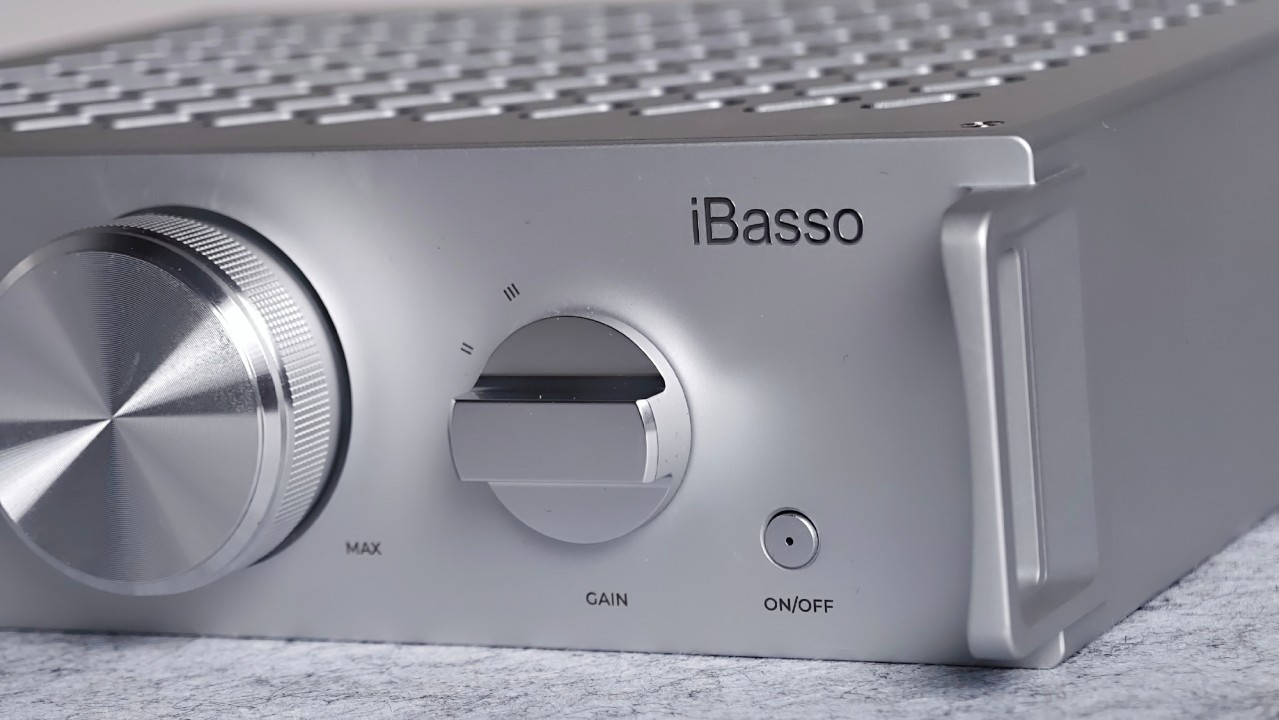
You have to turn the Kunlun on from the back and then use the front switch for the main PCB board to be activated. If you want you can turn the unit off by using the back power switch.
All Kunlun amplifiers are from the same run. Here in China the voltage is the same as in Europe, there have been no failures with many hundreds sold. We have not had any in the Americas, that I am aware of and a number of European distributors have had no issues.
There have been a few in Europe and I would expect them to get attention and we are actively researching this to find out the cause.
I have also checked HK and in Japan with both having received many units and there have been no issues.
I hope this adds clarification.”
More Kunlun Failures Surface as Paul Attributes the Issue to Mains Voltage Fluctuations
Two weeks after Paul’s previous statement, the Italian Head-Fi user “claudiocerri” reported hearing a loud pop coming from inside his Kunlun amplifier:
“I’m writing from Italy to share my experience with my iBasso Kunlun amplifier.
I bought it from the official European iBasso store on May2026, and until today it had been working perfectly.
This evening, I turned the amplifier off using the rear power switch, and I immediately heard a loud popping sound from inside the unit. At the same time I saw a visible spark, and the residual-current circuit breaker (RCD / safety breaker) in my house instantly tripped, cutting off the electricity.
The amplifier had never shown any signs of problems before this happened.”
Later that same day, Paul posted another update:
“At this point we are researching the reason for the failure in the units mentioned.
We have a Kunlun on its way to us and await its arrival as it is from Europe and seems to have had the same problem.
All the Kunlun amps are made with the same parts so there is no set of units that have anything different.
Here in China we have the same working voltage as Europe but there have been no failures.
We should have the unit that is in transit to us very soon and we will be able to determine what the issue is at that time.”
Five days later, Paul stated that the failures appeared to be associated with abnormal AC line conditions rather than the amplifier itself:
“The IEC is not an issue. It is rated at 250 volts and 10 amps and fully certified.
The issue is spikes or excessively high AC on some lines.
As mentioned, many units have been sold here in China, Hong Kong and Japan and there have been no problems. Our sales into North America have not had issues.”
Note: An IEC inlet is the standardized AC power connector commonly used on desktop computers, servers, desktop amplifiers, and many other electronic devices. The most common connector types used in audio equipment are IEC C13/C14.
The Discovery of the Kunlun Hardware Issue and iBasso’s Silent Board Revision
One day after Paul’s latest statement, Head-Fi user “omusi” reported that several European Kunlun units had suffered catastrophic failures caused by the AC input capacitors:
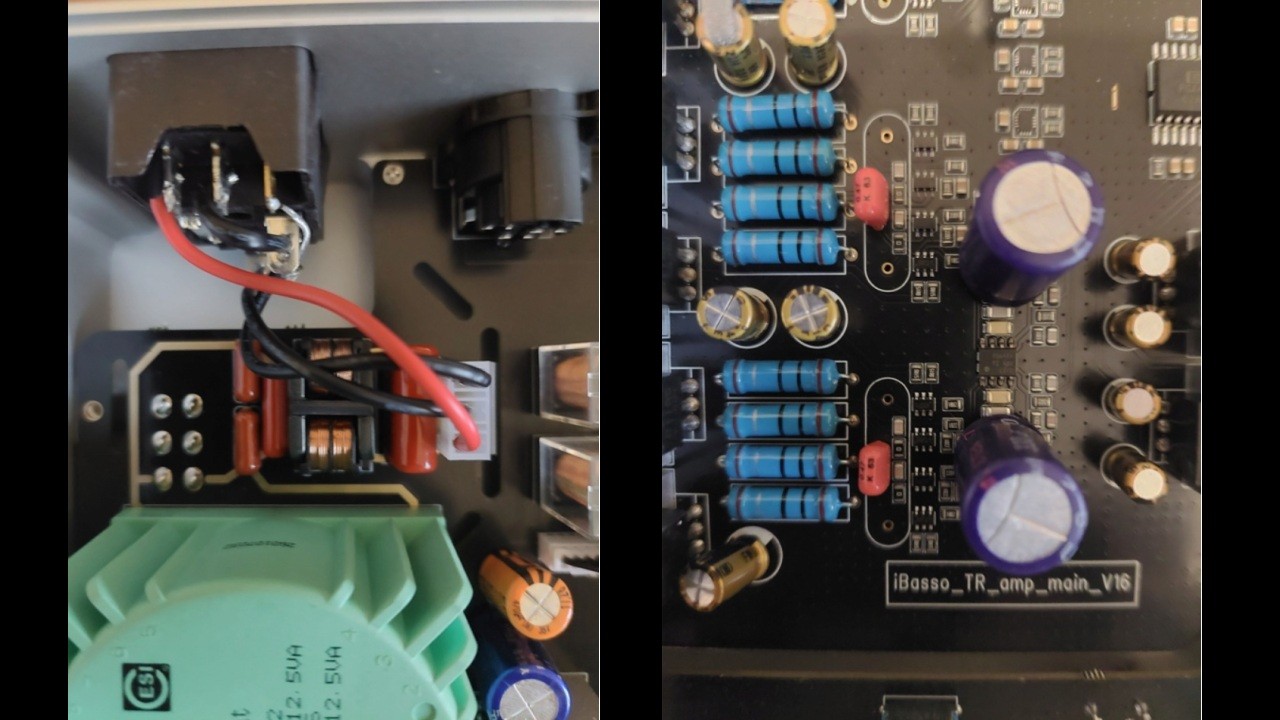
“As we speak, European owners are sharing photos of catastrophically failed units. In one recent case, an AC input capacitor rated at 630V literally exploded, shattering into pieces and leaving black scorch marks inside the chassis, all while the amplifier was switched completely off and the owner was away. This caused a direct short between neutral and ground, tripping the home breaker.”
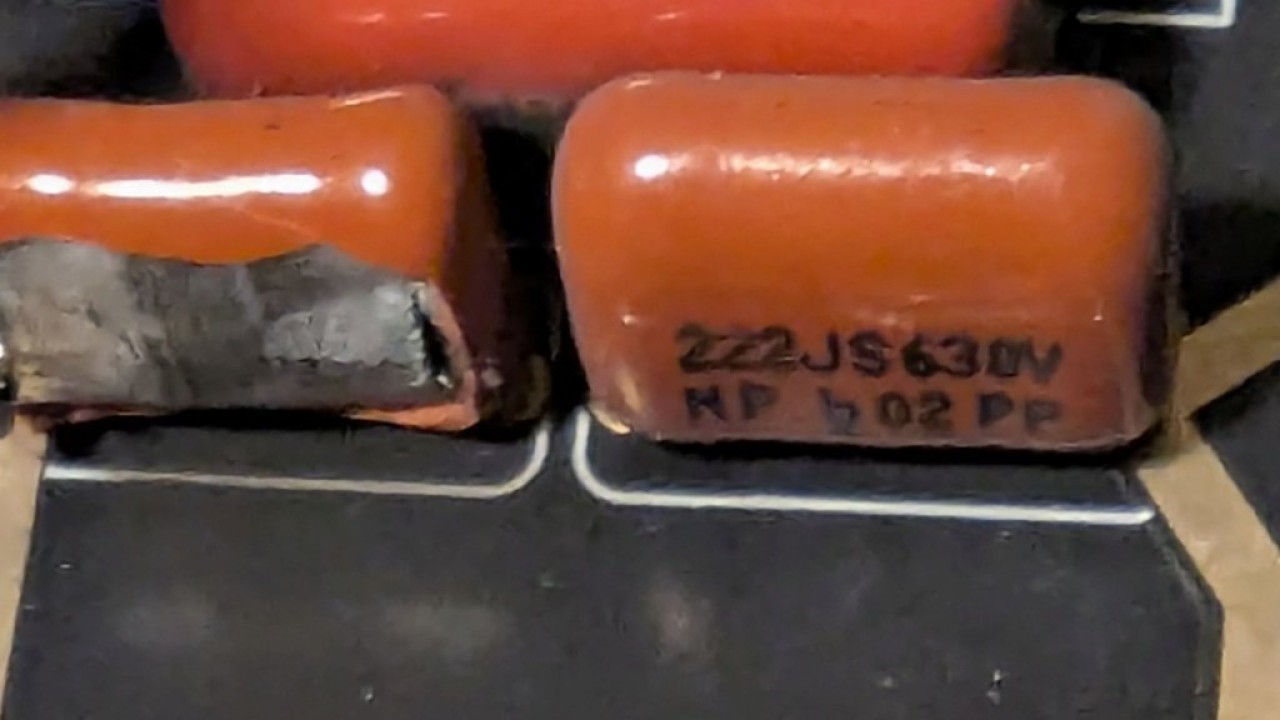
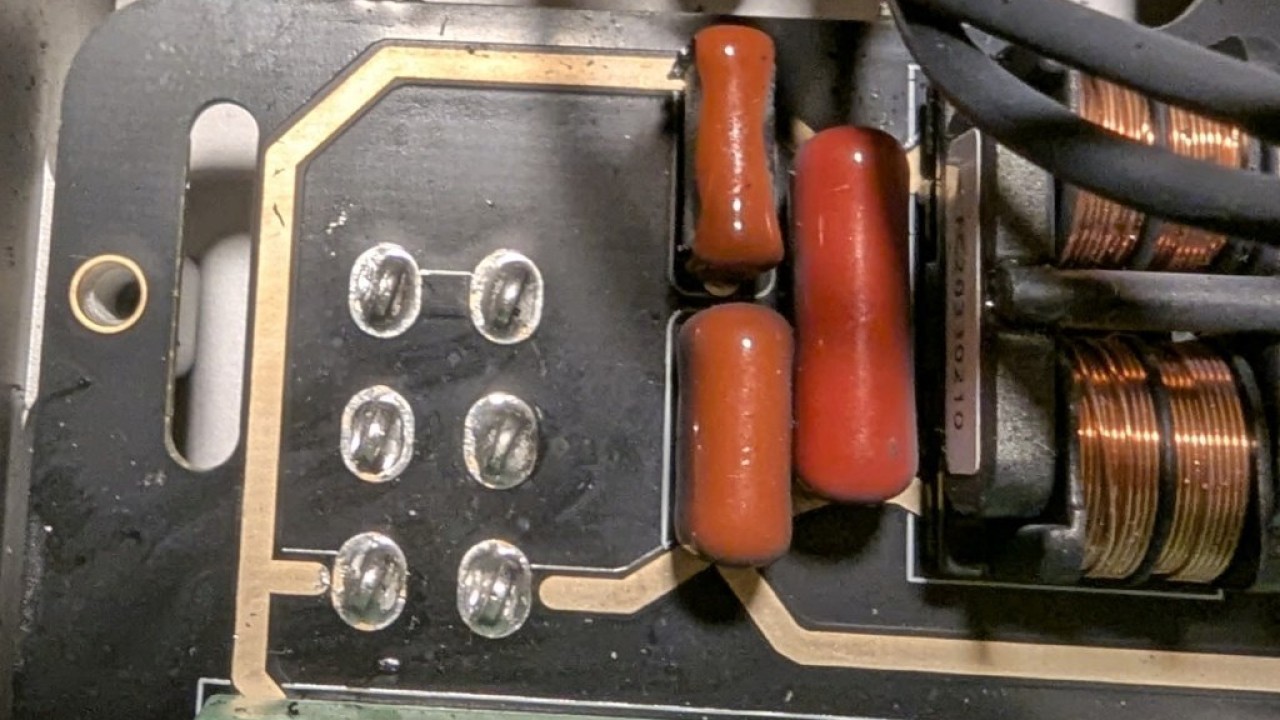
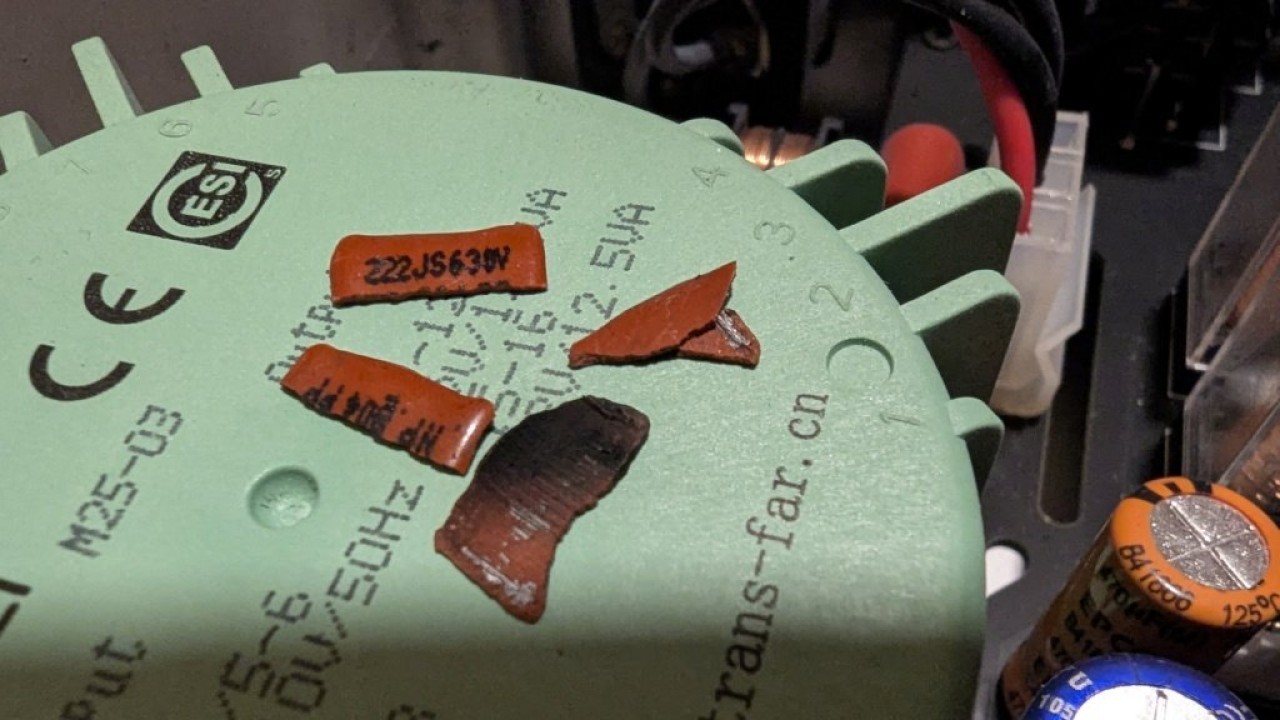
Later that same day, the Hungarian user “osonte” reported that the capacitors in his Kunlun had been replaced and shared photographs documenting the repair:
“Useful pictures, they also replace the parts accordingly. I attach in the first picture that replaced capacitors were installed in my 1-month-old device (a total of 4 parts were replaced there).”
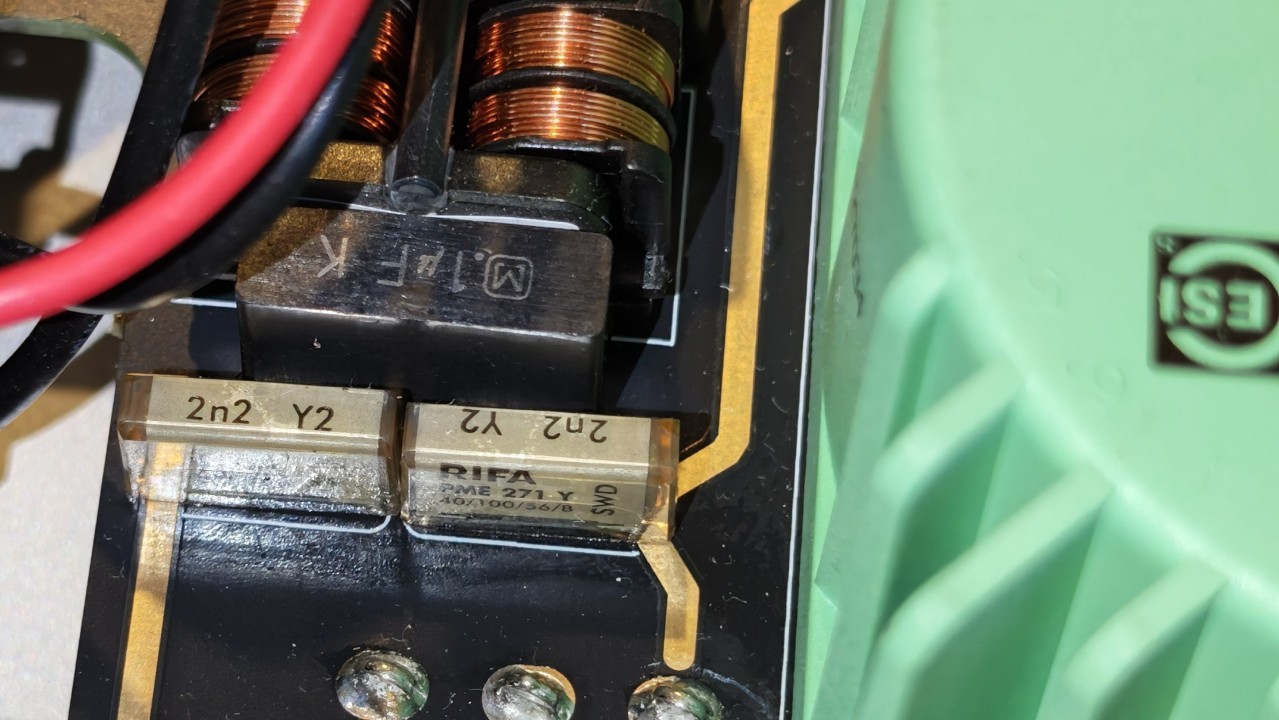
Responding to osonte’s post, omusi wrote:
“Thank you for sharing these valuable pictures. This is the smoking gun!
The unit with the exploded capacitor belongs to another Italian enthusiast who shared his story on our local forum.
Looking at your pictures, it’s clear what’s happening.
Those transparent RIFA PME 271 Y (Y2 class) capacitors in your 1-month-old device are high-quality, self-healing safety capacitors designed specifically to handle mains voltage safely without shorting out or exploding.
The fact that iBasso silently revised the V16 board with these parts proves they are fully aware of the weakness in the earlier production run, even if Paul is publicly claiming otherwise.”
Later that day, omusi pointed out that the V16 PCB had undergone hardware changes without any change to the board revision printed on the PCB itself:
“Unfortunately “V16” doesn’t mean your unit is safe.
I just saw some photos posted over on the Italian forum (which I’m attaching here) that prove iBasso did a silent component swap without changing the board revision number.
As you can see, this unit has the V16 label on the mainboard, but it still has the unsafe red/orange capacitors on the AC input.
It looks like they only started soldering the high-quality, self-healing RIFA safety caps (like the ones in osonte’s unit) later on, keeping the “V16” label for both.
So, if you have a V16 unit and think you’re in the clear, you might still want to double-check.
Having a newer batch doesn’t guarantee you have the safe, revised parts inside.”
Paul Attempts to Explain the Capacitor Design and Faces Strong Technical Criticism
Two days later, Paul addressed the capacitor issue with the following explanation:
“In order to filter the AC and provide safe use of the Kunlun, we have used standard X (line to line) and Y (line to ground) filtering capacitors.
Because a few areas in Europe have had issues, we have changed the capacitors that filter at the input of the AC, which still provide all the safety that X and Y capacitors introduce but will not trip as easily.
As mentioned, the X and Y capacitors are there to filter the incoming AC but also are designed to fail, blowing the fuse or trip the circuit breaker, thus preventing a shock or fire hazard.
The current X and Y capacitors were implemented on the 18th of June of this year.
Our previous and current capacitors meet the requirements for safety standards ,with our foremost and full concern for the end user.”
Paul’s explanation immediately drew criticism from several technically knowledgeable users. Head-Fi member “HeadphonePassion” replied:
“Congratulations, Mr. Paul. You demonstrate a lack of knowledge of electronics basics by confusing something very important.
Class X2 or Y2 capacitors are the RIFAs you admittedly implemented after June 18, 2026.
While the previous capacitors are NOT X or Y, but components suitable ONLY for 600 VDC (conrinue), and explode if the 275 VAC (alternating) spike arrives.
So X and Y are incorrect definition; previously, they were UNSUITABLE for fire safety (NOT X or Y).
Congratulations, confusing gold with lead is a boomerang.
Congratulations… but please…”
Users Criticize iBasso’s Response
Following the exchange, another Head-Fi member, “Max61MI,” expressed disbelief at how iBasso had handled the situation:
“How audacious to claim that both the orange and subsequent capacitors meet both safety standards! HeadphonePassion had already extensively argued the differences between the two types of capacitors, the fact that the orange ones were not recommended for use with AC power and that they were dangerously undersized to operate with 230 V AC power (considering appropriate margins for possible fluctuations and temporary peaks).
These considerations are practically borne out by the fact that out of six people I know who have purchased the Kunlun in Italy, five have already experienced a short circuit; only one hasn’t encountered the problem yet, likely because he bought it only two months ago, while mine failed after more than five months of use.
I should point out that I live in Milan, not exactly an underdeveloped area, and in the last 40 years no one other product has failed causing a short circuit in my home (televisions, computers, DACs, amplifiers, etc…).
We know that this is iBasso’s first desktop device, so it’s understandable that they had no previous experience with it, but what happened was made worse by the fact that they attempted to downplay the problem, in an attempt to hide it, instead of communicating the problem to the distributors (at least the European ones) by issuing a recall, therefore with the a priori replacement of the at-risk models already purchased by the distributors, instead of waiting for customers to experience the problem and have to engage in warranty replacement procedures (or refunds, as has been done to some).”
After reading the discussion, claudiocerri returned to the Kunlun thread with another question directed at Paul:
“Paul , if iBasso changed the Kunlun’s internal hardware starting on June 18, why didn’t you tell your customers? Instead, you kept suggesting that the failures were caused by European power surges.
I sent my Kunlun in for warranty service about a week ago and received the replacement unit on July 14, but I have no way of knowing whether it is one of the revised units or not.
If I had known in time that the hardware had been revised from June 18 onward, I would have insisted on receiving the updated version, even if it meant waiting longer.”
iBasso Finally Announces the Kunlun Recall
On July 21, iBasso representative Paul finally published the announcement that Kunlun owners had been waiting for: a recall program for affected units. Unfortunately, the announcement was made only on the Head-Fi forum and was not published through any of the company’s other official communication channels, including its social media accounts.
The announcement stated:
“Kunlun Amplifier Replacement Announcement
We are replacing the Kunlun Amplifiers sold during the first half of 2026 due to an issue identified with the capacitors used in the AC filtering circuit.
Reported issues have occurred in countries with an AC of 220 to 240 nominal line voltage. However, we offer the remedies below to all Kunlun users that cover both 100~120V and 220~240V areas.
If you purchased your Kunlun before June 20th, please contact your seller to arrange one of the remedies below.
If you purchased your unit after June 20th, please contact us directly with your serial number (S/N) to confirm whether your unit falls within the range of affected devices.
We offer two options for affected units:
1-Exchange your current Kunlun with your seller for a revised Kunlun unit featuring the new capacitors.
2-Exchange your current Kunlun for the upcoming Kunlun 2 with your seller, which is upgraded with a tube stage and an input selector, by paying the price difference of approximately $100 USD. The Kunlun 2 will be available in about three months.”
Share:


Product launches
YBA VIBE P1: Portable R2R DAC/Amp Announced
Product launches
FiiO FT15 Launches With New Planar Driver and Lighter Build
Product launches
No comments have been made yet, be the first!