

Headphones at Work: More Than Music, Protection, and Hearing Health
From: Vitor Valeri
A headphone hobbyist for over 15 years, he founded the Hi-Fi Hub website and is an administrator of the "Fones High-End" and "Fones Low-End" groups on Facebook.


Published in: 27/01/26 at 16:15
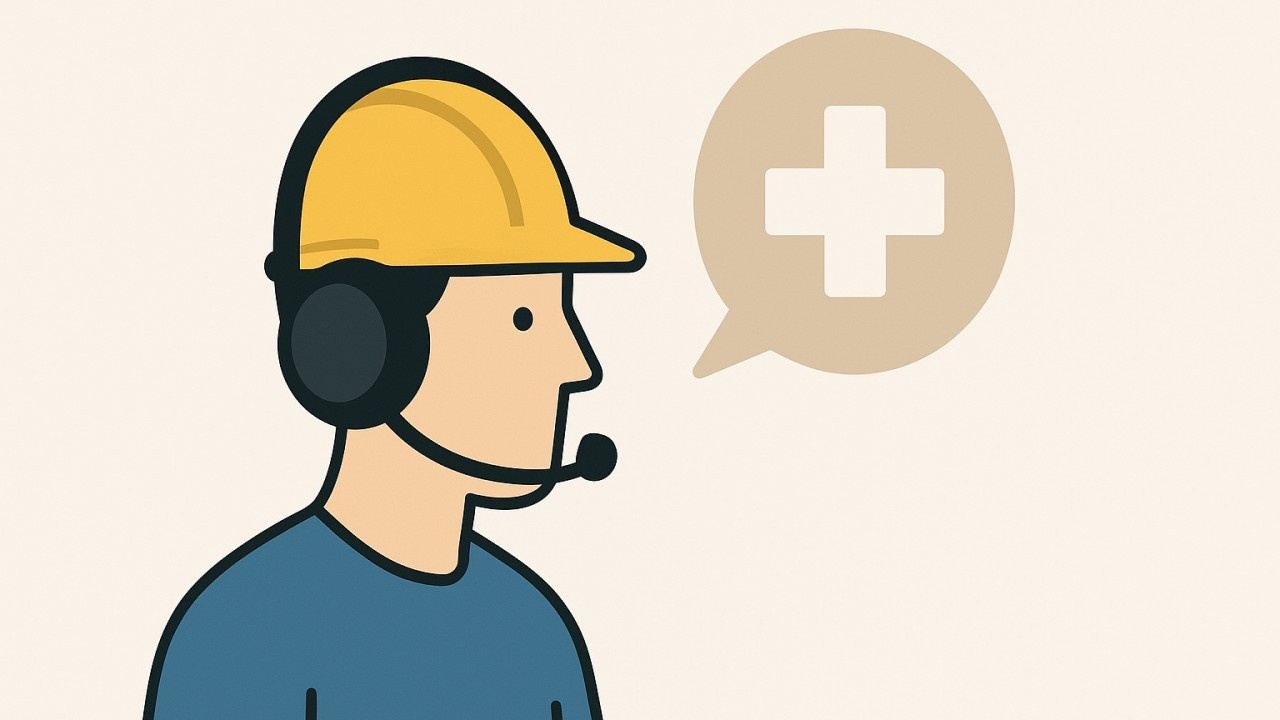 Illustrative image about the protection of workers’ hearing through the use of headphones (Image: Vitor Valeri/Hi-Fi Hub)
Headphones are not used solely for listening to music; they can also be employed to protect our hearing. The ability of headphones to provide passive and/or active isolation allows them, in certain cases, to be used as personal protective equipment (PPE). However, this indication depends on the duration of exposure, the intensity and frequency of the noise, as well as individual susceptibility related to the person’s sex and age.
The use of appropriate headphones in the workplace
Using appropriate headphones at work can be an alternative to traditional hearing protectors to safeguard and preserve the worker’s auditory health, helping to prevent NIHL. However, headphones are not recommended for hearing protection in all situations, as will be discussed below.
What is NIHL?
NIHL stands for Noise-Induced Hearing Loss. It refers to the loss of the ability to hear caused by prolonged exposure to high sound pressure levels in the workplace. Over days, months, and years, the individual gradually becomes unable to understand, for example, what someone has said, due to difficulty in perceiving certain frequencies of the sound spectrum.
The acoustic notch caused by NIHL
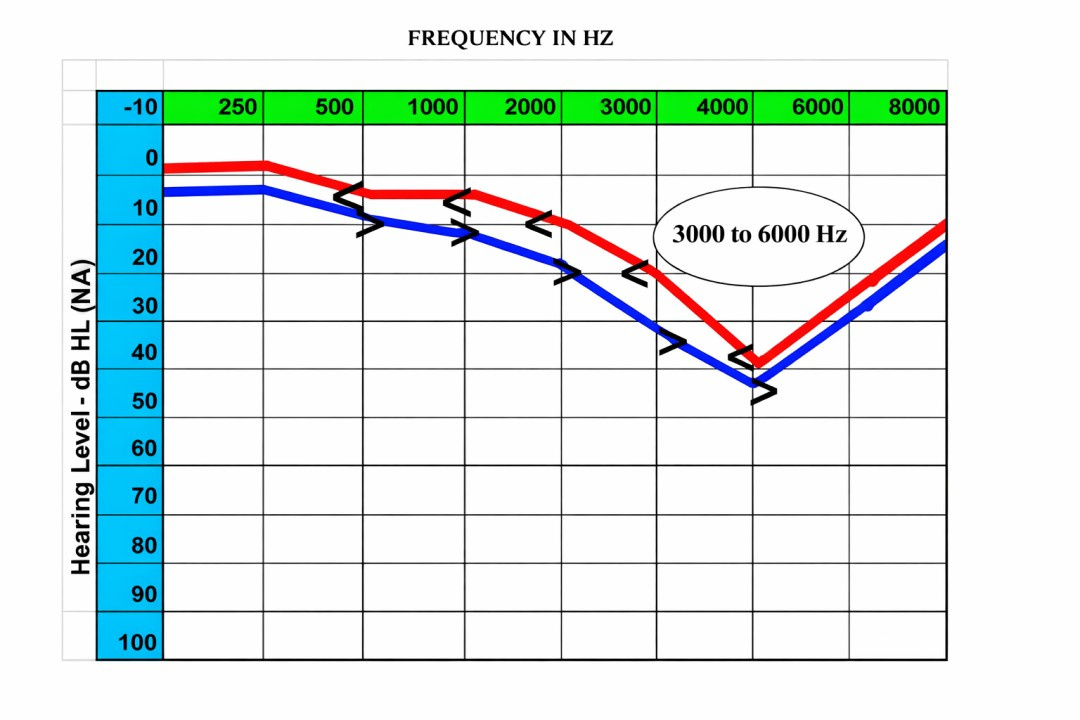
According to Aline Vicenzi Ferreira, in her article “Occurrence of hearing loss induced by high sound pressure levels in workers of a metal-mechanical industry in Caxias do Sul–RS,” published in the journal Distúrbios da Comunicação (PUC-SP) in September 2012, hearing damage in workers occurs as follows:
“Greater loss at the frequency of 4 kHz, progressing to 3 and 6 kHz. Subsequently, it advances to other frequency ranges—8, 2, 0.5, and 0.25 kHz. The audiogram tracing is characterized by the acoustic notch, defined as a dip between the frequencies of 3 kHz and 6 kHz.”
What causes NIHL?
According to Ferreira, the following factors influence the development of NIHL:
- Daily duration of noise exposure (e.g., 8 hours)
- Noise frequency characteristics (e.g., predominance in the 3 kHz to 6 kHz range)
- Duration of acoustic rest (e.g., 10 minutes)
- Noise intensity/level (e.g., 85 dB)
- Total years of exposure (e.g., 10 years with daily exposure of 7 hours)
- Individual susceptibility (e.g., age, family history of hearing impairment)
Exposure time and noise level in the workplace
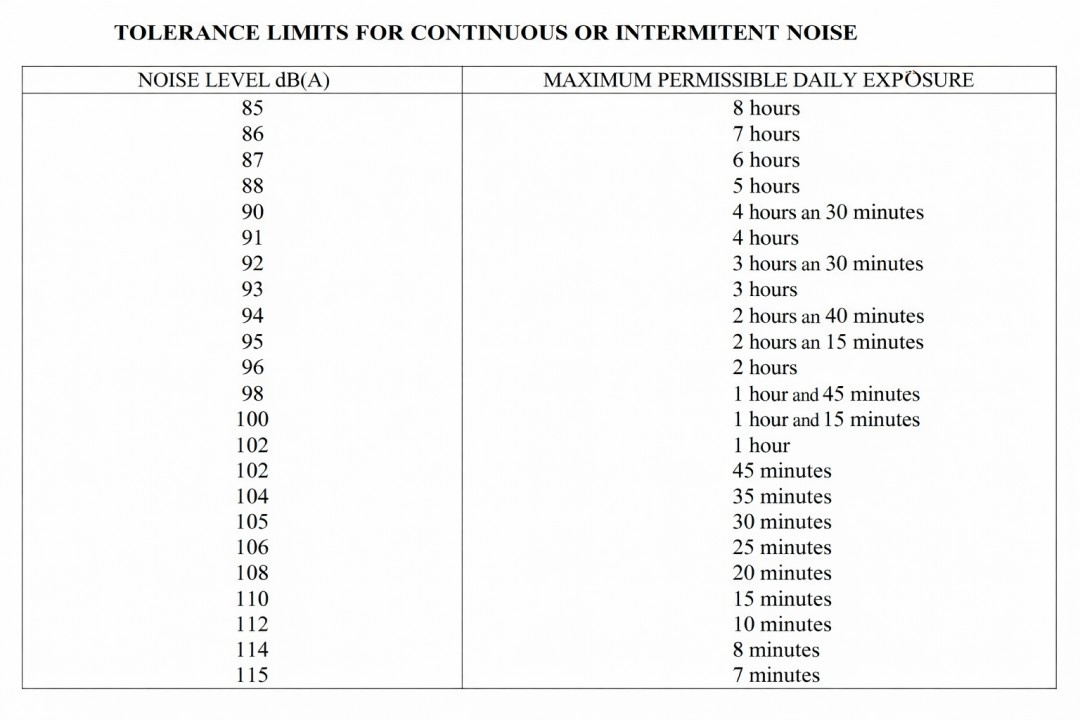
According to the table “Tolerance limits for continuous or intermittent noise” in Annex 1 of NR-15, depending on the duration of exposure and the noise level, it may be dangerous to remain in a given environment without any hearing protection for a “prolonged” period. For example, if the workplace has constant noise at an intensity of 85 dB, hearing damage may occur if exposure exceeds 8 hours.
According to Ferreira, sound can be understood as “any variation in pressure in an elastic medium (air, water, or another medium) that the human ear can detect, that is, a vibration transmitted in the form of waves and perceived by the individual as ‘pleasant.’”
When sound is undesirable, bothersome, or lacks a harmonious combination of tones, it is classified as “noise.”
NR-7 recommends that workers observe a minimum acoustic rest period of 14 hours after being exposed to noise levels of 85 dB for 8 consecutive hours in order to undergo the examination known as audiometry [1]. In other words, after exposure, several hours are required for hearing capacity to return to its pre-work condition.
With this in mind, it is important to minimize exposure to noise in the work environment as much as possible. Headphones can sometimes be a more comfortable solution when compared to traditional hearing protectors (“ear protectors,” “earplugs,” or “earmuffs”).
[1] Audiometry assesses hearing capacity at specific sound frequencies.
What must headphones have to reduce workplace noise?
Headphones must provide a good level of passive isolation. If they also feature active noise cancellation (ANC), it is necessary to evaluate how effective a given model’s ANC is at attenuating ambient noise.
Which types of headphones attenuate noise effectively?
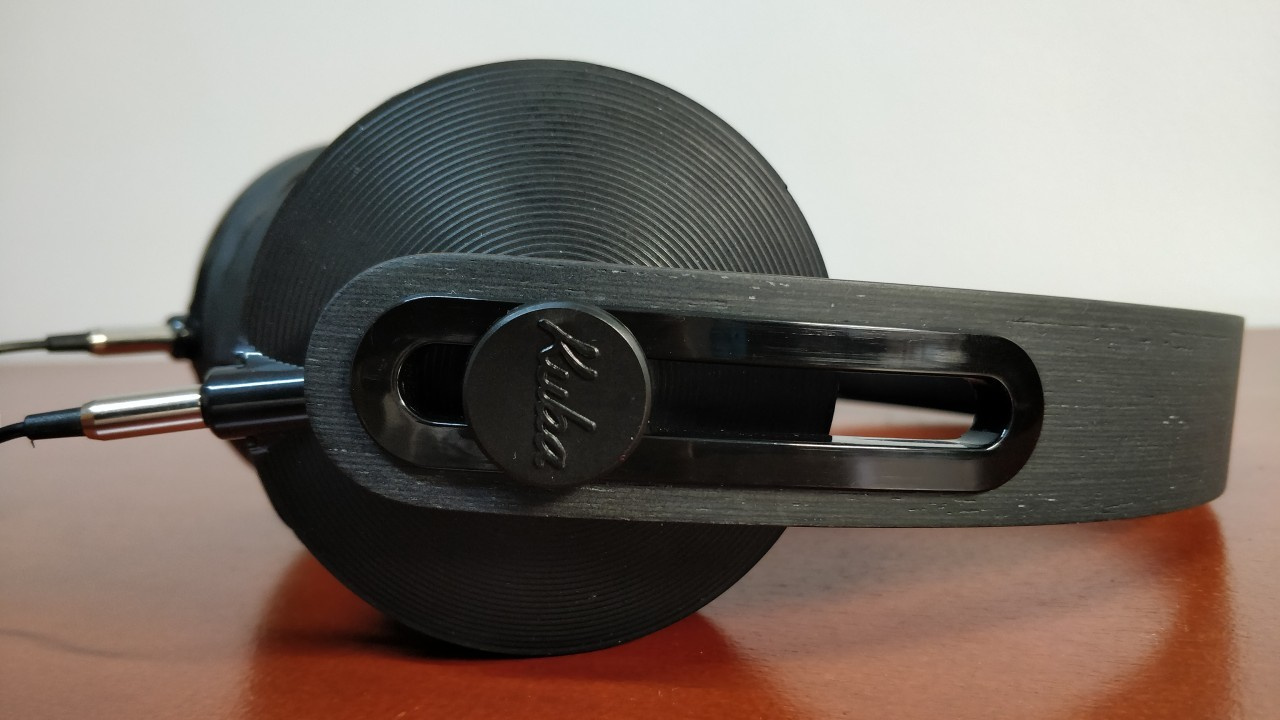
In-ear monitors (IEMs) generally provide the highest level of noise attenuation, especially when ear tips are used correctly. However, closed-back over-ear and on-ear headphones [2] can also offer a good level of isolation from ambient noise. These types of headphones provide strong passive isolation.
[2] Closed-back headphones are characterized by a sealed, solid structure on the outer side, without grilles. There may, however, be a small vent to relieve the pressure generated by the driver’s operation.
What is passive noise isolation in headphones?
Passive noise isolation refers to how much the physical structure of the headphones can attenuate environmental noise. Its effectiveness depends on the following factors:
- The user’s anatomy
- The quality of fit
- The materials used in the headphone structure
Depending on individual anatomical characteristics, such as head shape, hair, the presence of a beard, and the curvature of the ear canal, passive isolation can vary significantly from person to person. This affects not only how much noise is isolated, but also the performance of sound reproduction.
Since human anatomy already influences the effectiveness of passive isolation, the shape of each headphone model also plays an important role, as it affects the quality of fit. For this reason, manufacturers must research average ear and head shapes in order to design a more ergonomic headphone shell.
The materials used in the headphone structure also influence how much sound is passively attenuated. Each material has different acoustic properties, allowing sound to pass through with greater or lesser difficulty.
If passive isolation is insufficient, an alternative is to use active noise isolation through ANC (Active Noise Cancellation).
What is active noise isolation in headphones?
Active noise isolation involves the use of electrical energy to attenuate ambient noise. This is achieved through Active Noise Cancellation (ANC).
What is Active Noise Cancellation?
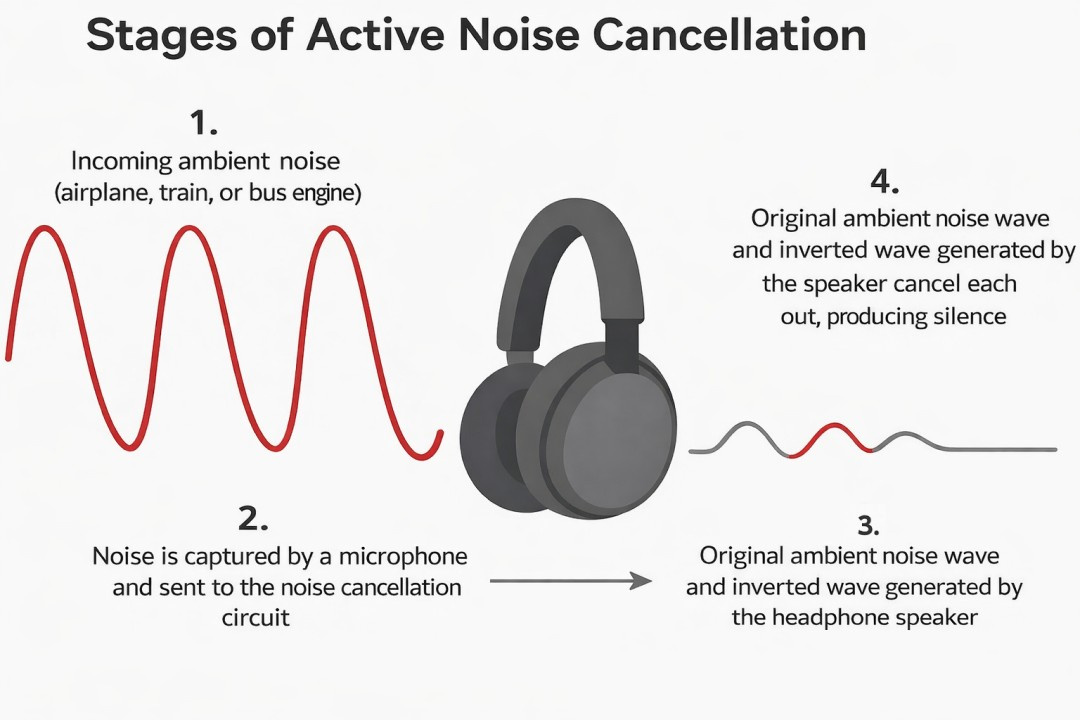
Active Noise Cancellation is a technology designed to neutralize certain environmental sounds, generating partial silence. ANC operates by predicting the sound that is being produced in the environment.
How does ANC work?
ANC uses internal and external microphones to analyze both the sound generated by the reproduced audio and the ambient noise. Based on this analysis, the system predicts the frequencies present in the environment and generates an opposite (inverted) wave relative to the ambient noise. When these waves meet, they cancel each other out, producing silence.
When is Active Noise Cancellation effective?
ANC is effective primarily for continuous, steady sounds with stable frequencies, such as those below 1,000 Hz, including noise from bus engines, cars, air conditioners, aircraft, and similar sources.
When does ANC fail?
ANC fails in environments with abrupt or highly variable sounds, as it cannot accurately predict noises that change from one moment to the next. For this reason, it is impossible to achieve total silence using headphones in a gym, for example, where loud music is played through speakers.
What is required for ANC to function properly?
For ANC to work effectively, the sound must be relatively constant, without large variations in pitch and frequency. In addition, a good acoustic seal is necessary to separate the music from ambient noise. Therefore, it is essential to use high-quality ear tips or ear pads.
For this reason, using ANC headphones is not always effective, depending on the type of environmental noise present in the workplace. If there are constant changes in sound, with different pitches and frequencies, the recommended solution is to use traditional hearing protectors. Learn more about hearing protectors in the article “Hearing Protection: Why Should You Use It?”.
What must headphones have to provide optimal isolation?
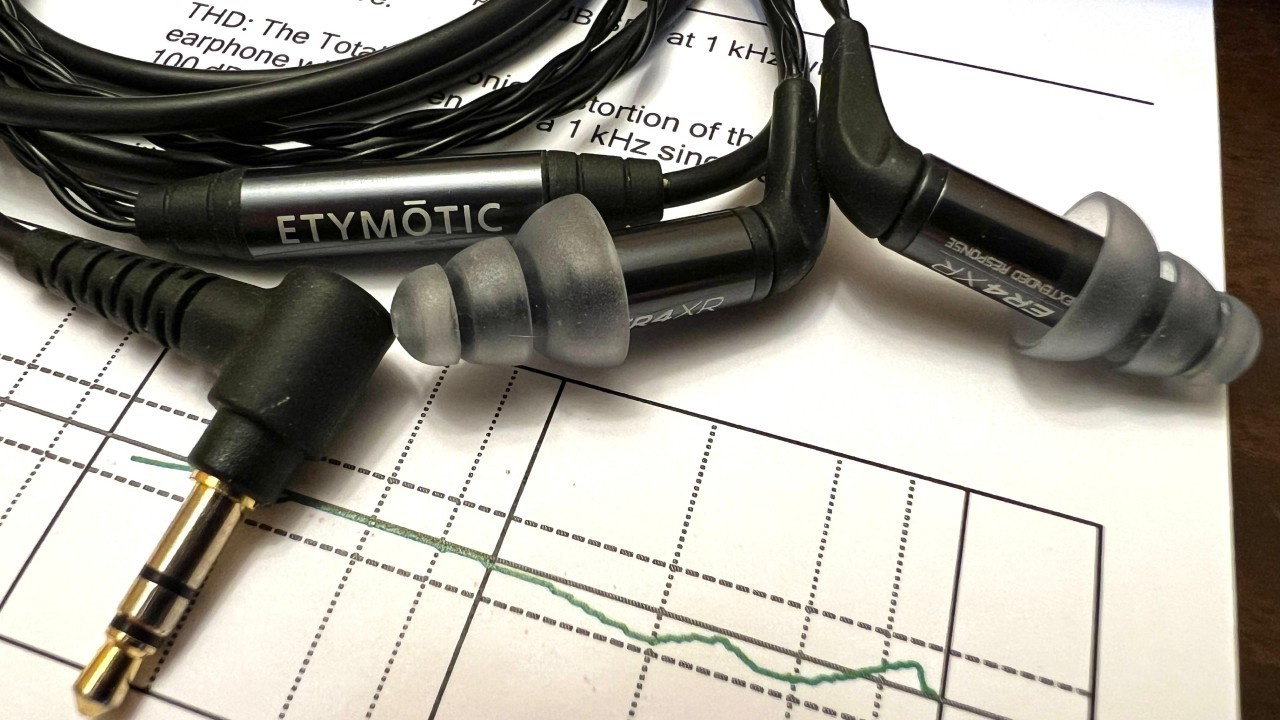
To provide optimal isolation from ambient noise, headphones must offer strong passive isolation and should not rely excessively on active noise cancellation technology (ANC). A good example is in-ear headphones with a “bullet” shape, in which the housing is cylindrical and uses triple-flange silicone ear tips (three “umbrella”-like flanges of different sizes) or foam ear tips.
Share:


No comments have been made yet, be the first!