

FiiO Launches QX11 Portable Gaming DAC/Amp With PEQ
From: Vitor Valeri
A headphone hobbyist for over 15 years, he founded the Hi-Fi Hub website and is an administrator of the "Fones High-End" and "Fones Low-End" groups on Facebook.


Published in: 24/08/26 at 18:26 - Updated in: 24/08/26 at 18:37
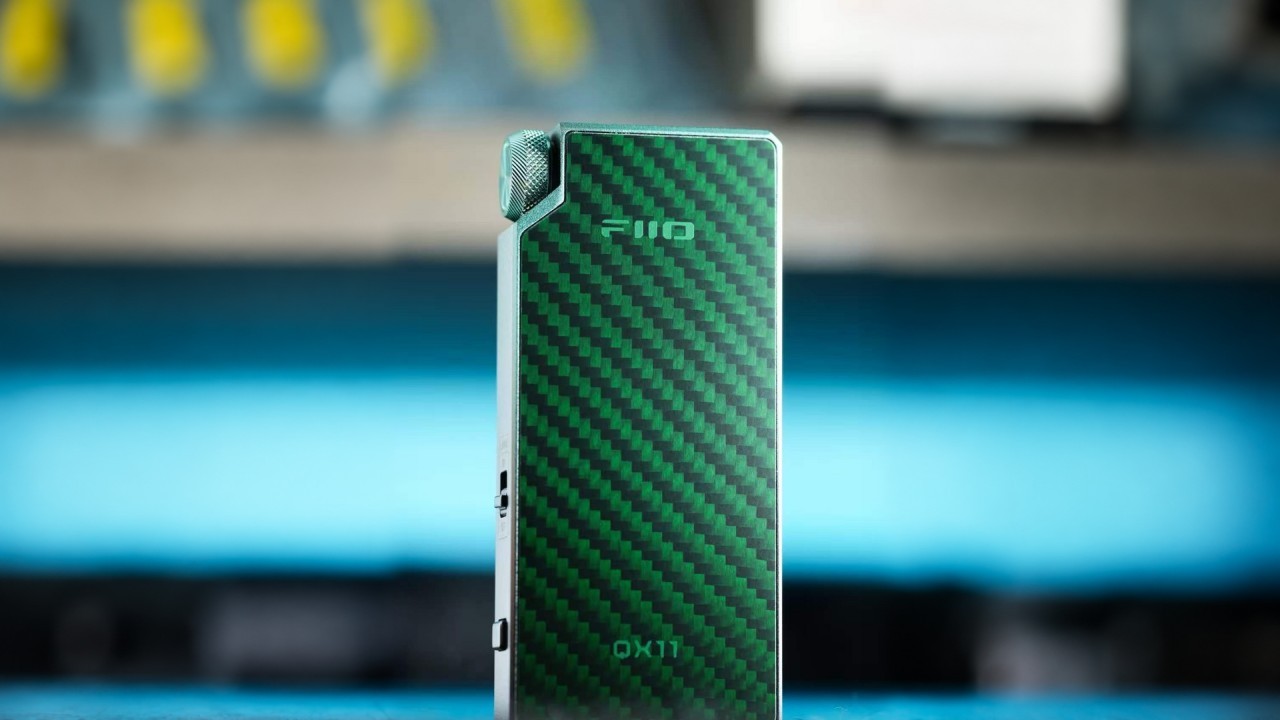
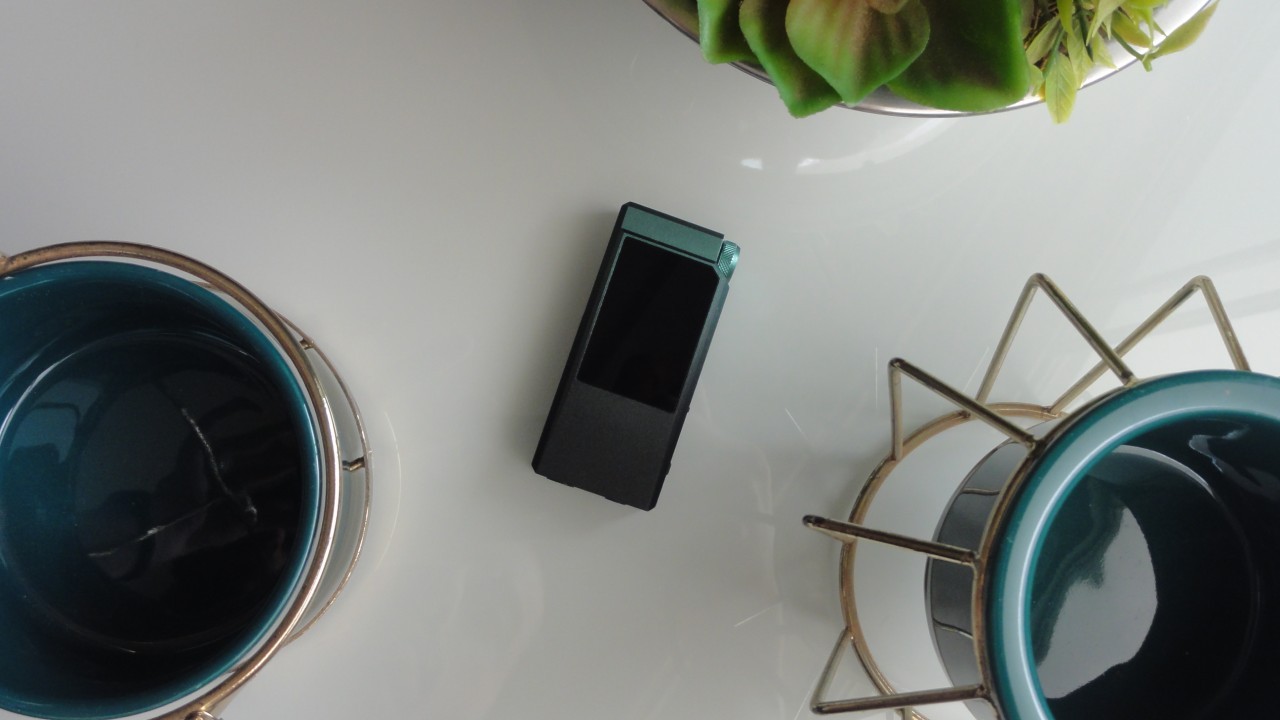
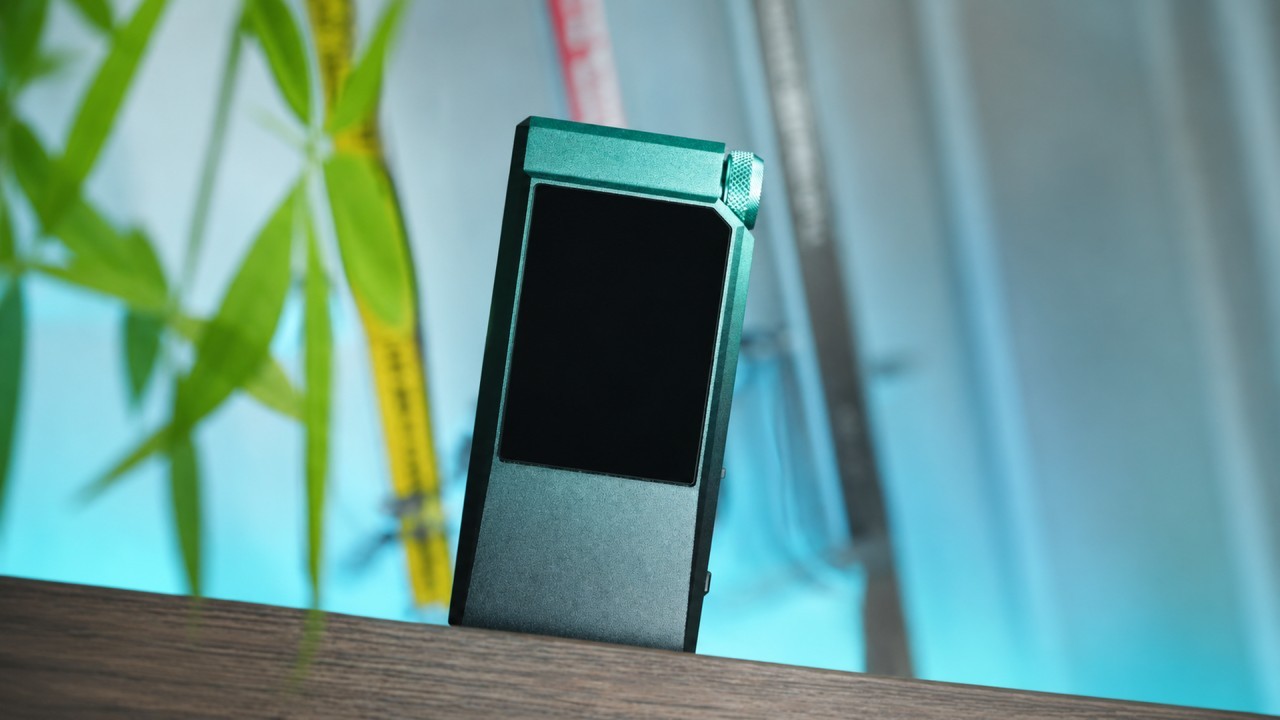 FiiO QX11 portable DAC/amp (Image: Earside耳边事/Weibo)
The FiiO QX11 was launched today (August 24) internationally and in mainland China. It was developed with esports in mind, offering professional gamers improved sound quality. The QX11’s main highlights include gaming equalization profiles (presets), a built-in microphone, support for in-line cable microphones, and a parametric equalizer (PEQ). Below are all the details about FiiO’s latest release.
The QX11 Is FiiO’s First Portable Gaming DAC/Amp
FiiO plans to launch a line of DAC/amps designed for professional esports players. The QX11 is the first gaming-oriented model the manufacturer is bringing to market.
The QX11 can be used with smartphones, PCs, and consoles such as the Nintendo Switch and PlayStation 5 (PS5), making the dongle DAC/amp more versatile. In addition, the batteries of portable devices can be recharged during use through the dedicated power port, which supports up to 45 W.
In addition to its connectivity options, the QX11 features a built-in microphone and supports cables with in-line microphones, facilitating communication in gaming chats. Specific equalization (EQ) profiles can also be applied through the parametric equalizer (PEQ) in the FiiO Control app. Further information about these and other features is provided below.
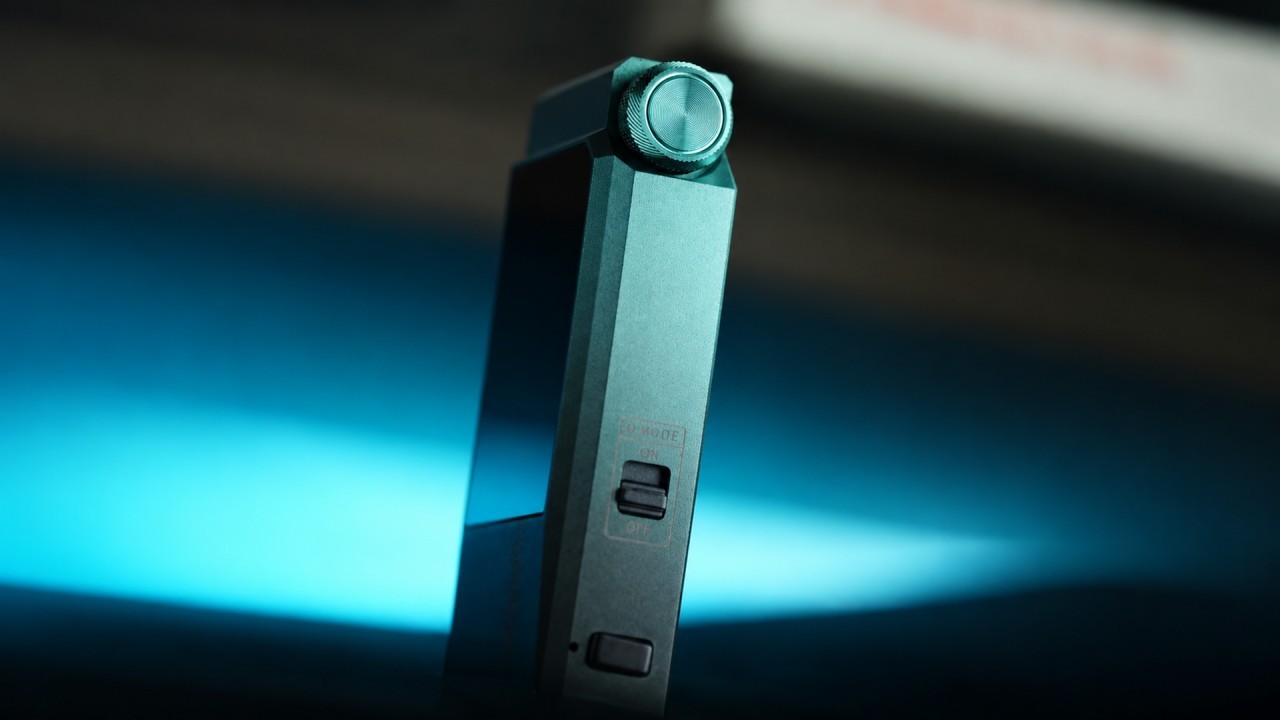
No Drivers Are Required for the QX11 to Operate
Thanks to the QX11’s support for UAC (USB Audio Class) 1.0, it can be connected to consoles such as the PlayStation 5 (PS5) and Nintendo Switch. To provide a more user-friendly control experience for this use case, FiiO implemented two operating modes: one for listening to music and another focused on gaming.
HiFi and Gaming Modes
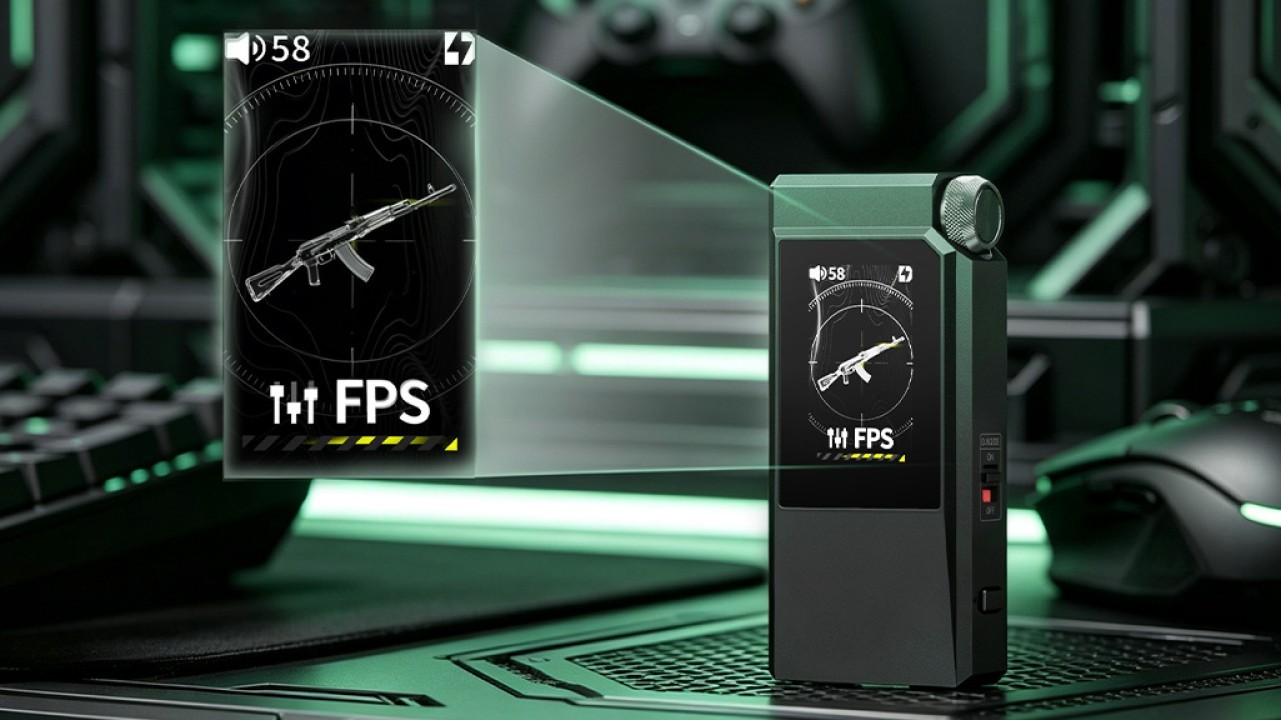
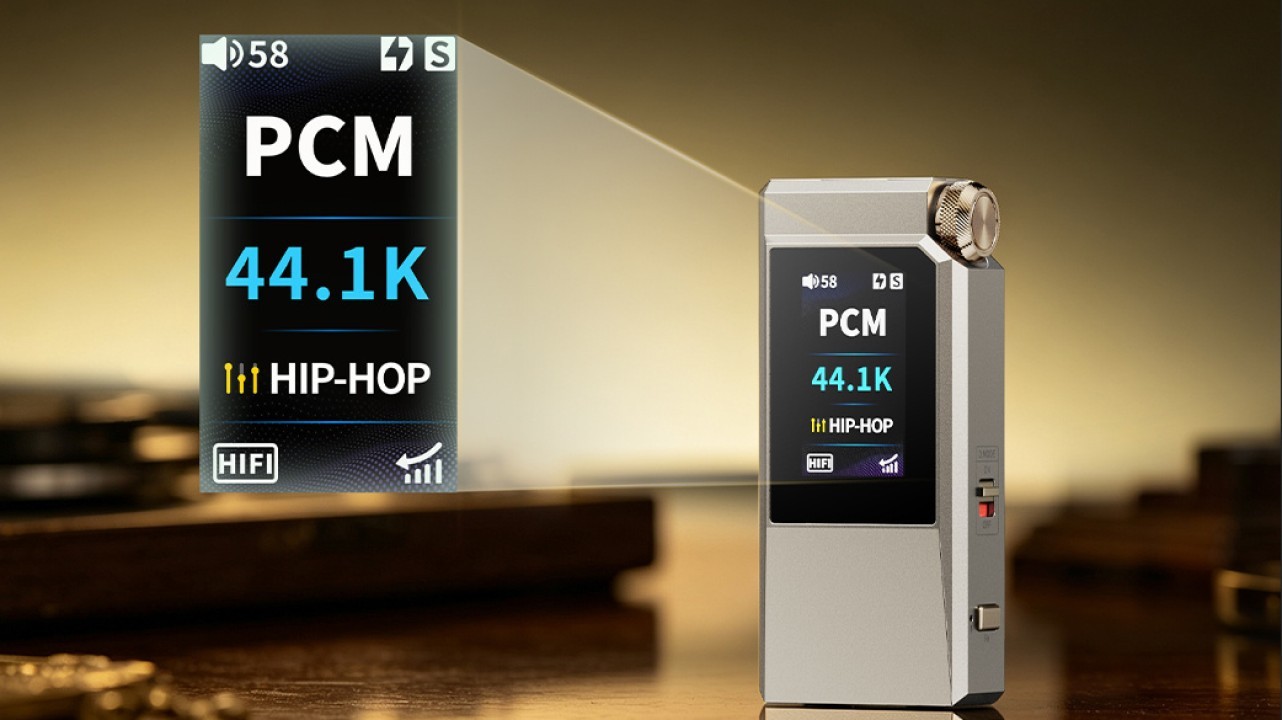
The QX11’s 1.14-inch display can show two user interfaces (UIs), depending on the type of use. The goal is to provide users with the most relevant information when listening to music or playing games.
When gaming, Gaming Mode makes it easier to switch among different gaming equalization profiles (presets) or a customized EQ profile. This mode also provides quick access to AI-enhanced ENC (Environmental Noise Cancellation) for the microphone.
In HiFi Mode, information about the audio file of the track currently being played is displayed. Users can view the sampling rate, gain level, and equalization profile currently in use.
Custom Equalization Using a Parametric Equalizer (PEQ)
In addition to the preset equalization profiles, the QX11 allows users to create customized equalization profiles through the FiiO Control app. Within the app, adjustments can be made using a 10-band parametric equalizer (PEQ).
At launch, only the mobile version of the FiiO Control app, designed for smartphones, is available. However, a future update will allow users to access the web version of FiiO Control and view the PEQ on a PC screen.
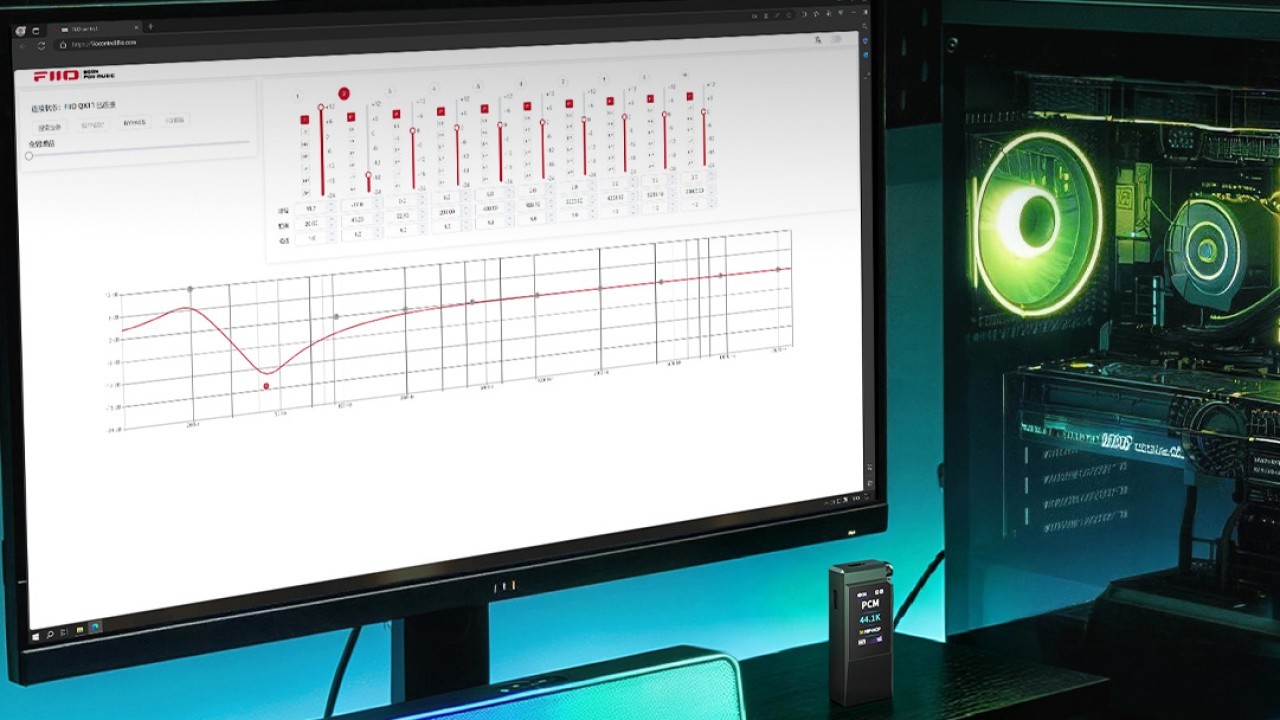
It is important to note that the equalization profile is stored in the QX11’s memory. As a result, users can benefit from their customized equalization settings on any device, regardless of the app installed.
EQ Profiles Developed Specifically for Gaming
There are four preset equalization (EQ) profiles developed for specific game genres:
• FPS
• ACT
• MOBA
• MUG
Using Microphones for In-Game Chats or Calls
A microphone can be used with the QX11 for calls on smartphones or PCs, as well as for in-game voice chats. Microphones can be used in two ways: through the QX11’s built-in microphone or through a boom microphone integrated into a headphone cable. AI-enhanced ENC is available with both options.
If your headphones do not have a cable with a microphone, you can simply use the QX11’s built-in microphone. However, if improved voice capture is desired, a cable with a boom microphone may be preferable.
Within the brand’s product lineup, my recommendations for those still seeking closed-back over-ear gaming headphones are the Snowsky Nature and the FiiO FT1. Both are compatible with the FiiO LL-3.5A boom microphone cable.

Output Power Sufficient for Most Headphones
With an output power of up to 800 mW into 32 ohms in Desktop Mode, the QX11 can drive the vast majority of headphones on the market. Desktop Mode is a feature that provides higher output power when a sufficiently powerful external power source is used.
To achieve maximum output power, the QX11’s 4.4 mm balanced output must be used. In addition, Desktop Mode must be activated using the physical button located on the side of the device.
The higher the output power used, the faster the smartphone’s battery will be depleted. To prevent this issue, the QX11 features two USB-C ports: one for data transmission and another for power delivery.
Dedicated USB-C Power Port
When a power source is connected to the QX11’s dedicated USB-C power port, the smartphone’s battery is no longer depleted and is instead recharged.
Through the PD (Power Delivery) charging protocol, the QX11 allows the smartphone’s battery to be recharged at rates of up to 45 W.
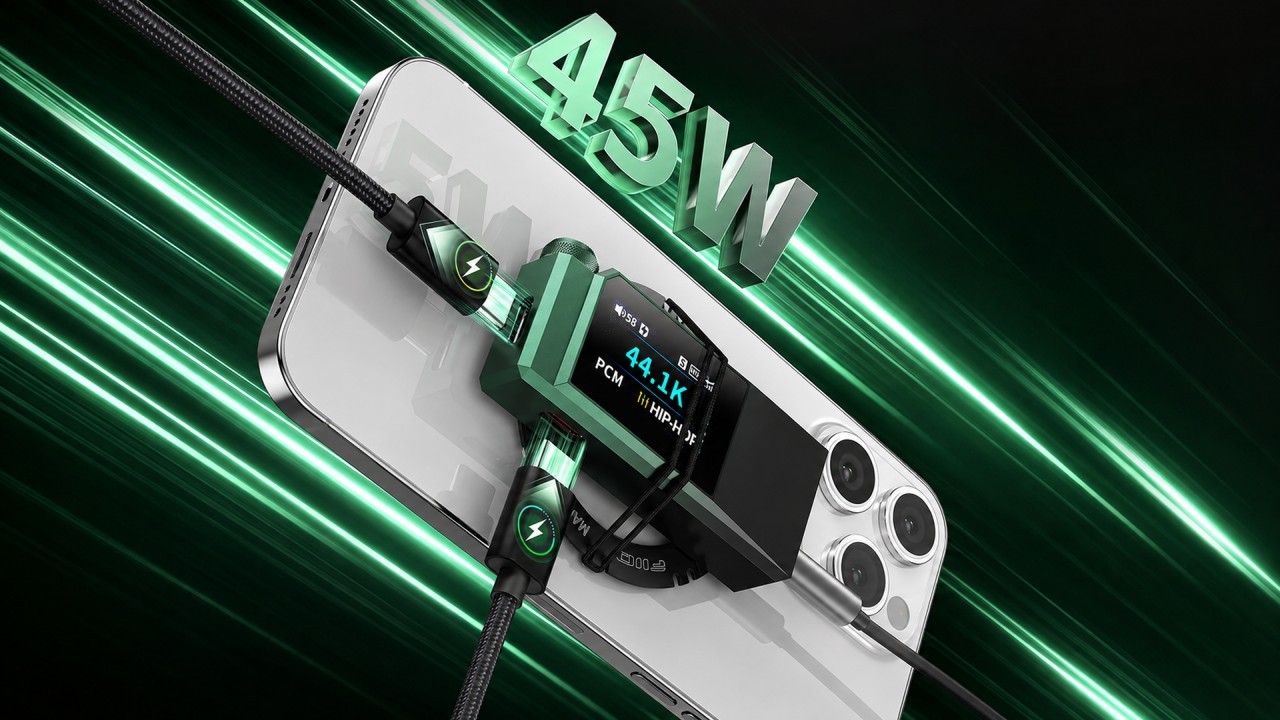
Desktop Mode can still be activated without an external power source connected to the dedicated USB-C power port. However, the USB port of the connected device must be capable of supplying sufficient power.
DAC Chip Used
FiiO equipped the QX11 with ESS’s ES9069Q DAC chip. The ES9069Q is identical to the ES9039Q2M except for its ability to support MQA playback. The ES9039Q2M cannot decode MQA.
Amplification Circuit With Six Op-Amps
The QX11’s amplification circuit uses two Texas Instruments (TI) OPA1692 op-amps for the preamplification stage, where voltage gain occurs. Four TI OPA1622 op-amps are used in the portable DAC/amp’s amplification stage. This configuration delivers low noise and excellent amplification capability.
Volume Adjustment Using a Knob
The QX11’s volume is adjusted using a physical rotary knob. The knob can be rotated or pressed to access additional functions.
Adjustable Number of Volume Steps
The total number of volume steps can be configured to either 60 or 120. This allows users to make finer adjustments according to the sensitivity and impedance of the headphones being used.
Multifunction Button
Different functions can be assigned to the Fn button located on the side of the QX11. Up to three functions can be assigned and distinguished according to how the button is pressed. Commands can be triggered with a single press, double press, or long press.
The QX11 multifunction button’s default configuration is as follows:
• Single press: switch themes
• Double press: switch modes
• Long press: next track
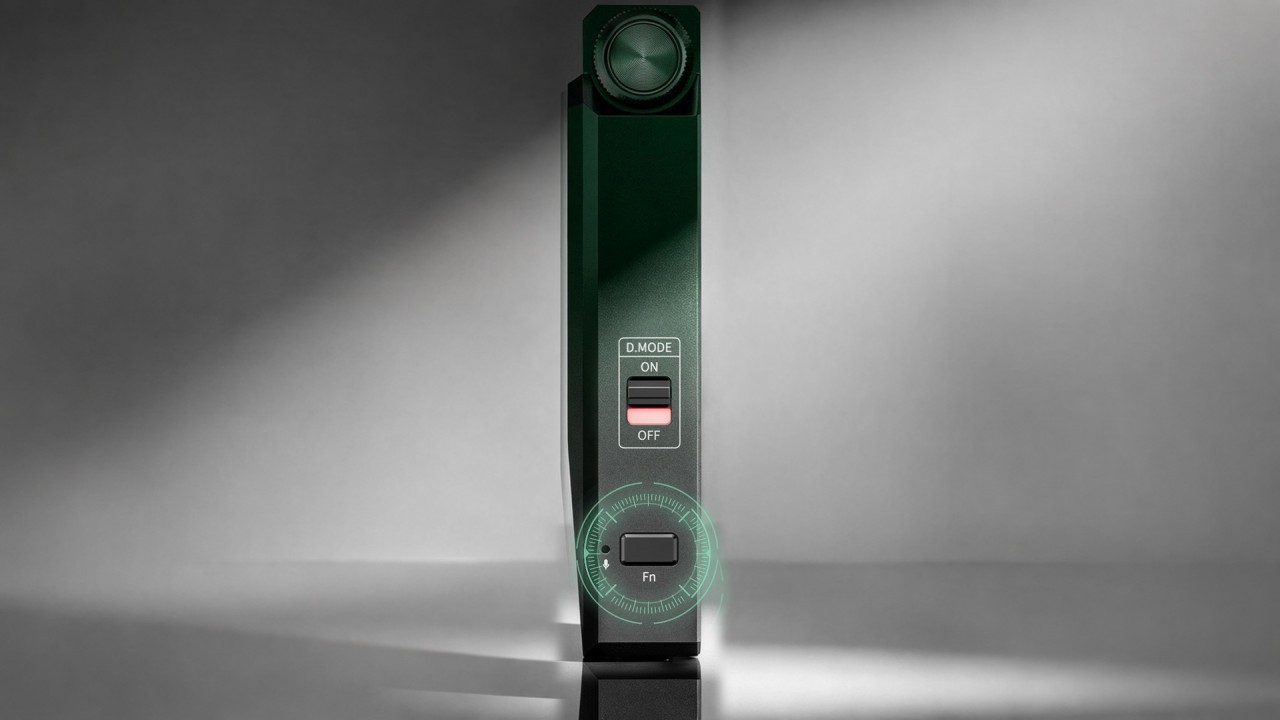
When customizing the multifunction button commands, the following options are available:
• No action
• Change the EQ profile
• Switch modes
• Switch themes
• Rotate the display
• Previous/next track
Audio Transmission Latency
To minimize audio transmission delays, the QX11 uses an SPV5068 USB controller. Compared with the XMOS XU316 chip found in the FiiO QX13, the SPV5068 consumes less power but has higher latency.
Other DAC/Amp Options That Can Be Used for Gaming
FiiO plans to launch two additional gaming-oriented DAC/amps: the FiiO KG13 and the Snowsky Game Tail.
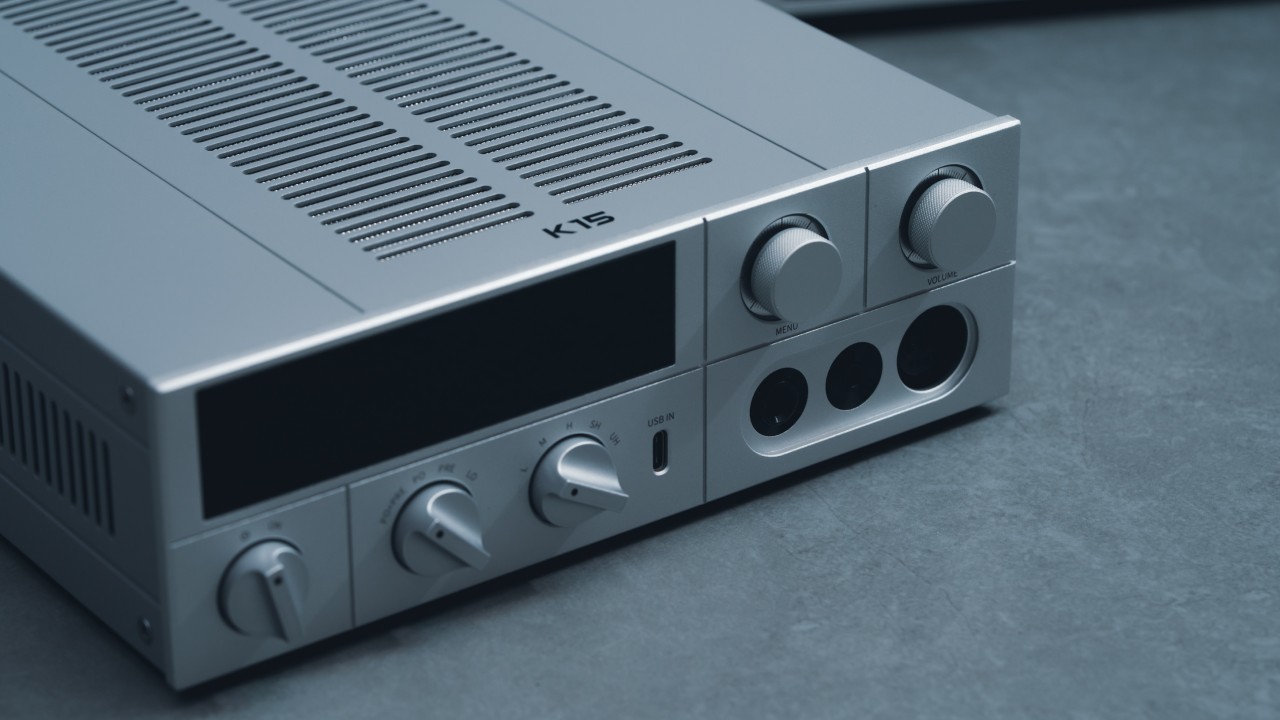
The FiiO KG13 is a desktop DAC/amp with several controls for equalization, operating modes, and microphone functions. It delivers 2,000 mW of output power into 32 ohms and can therefore drive more demanding headphones, such as planar-magnetic over-ear models.
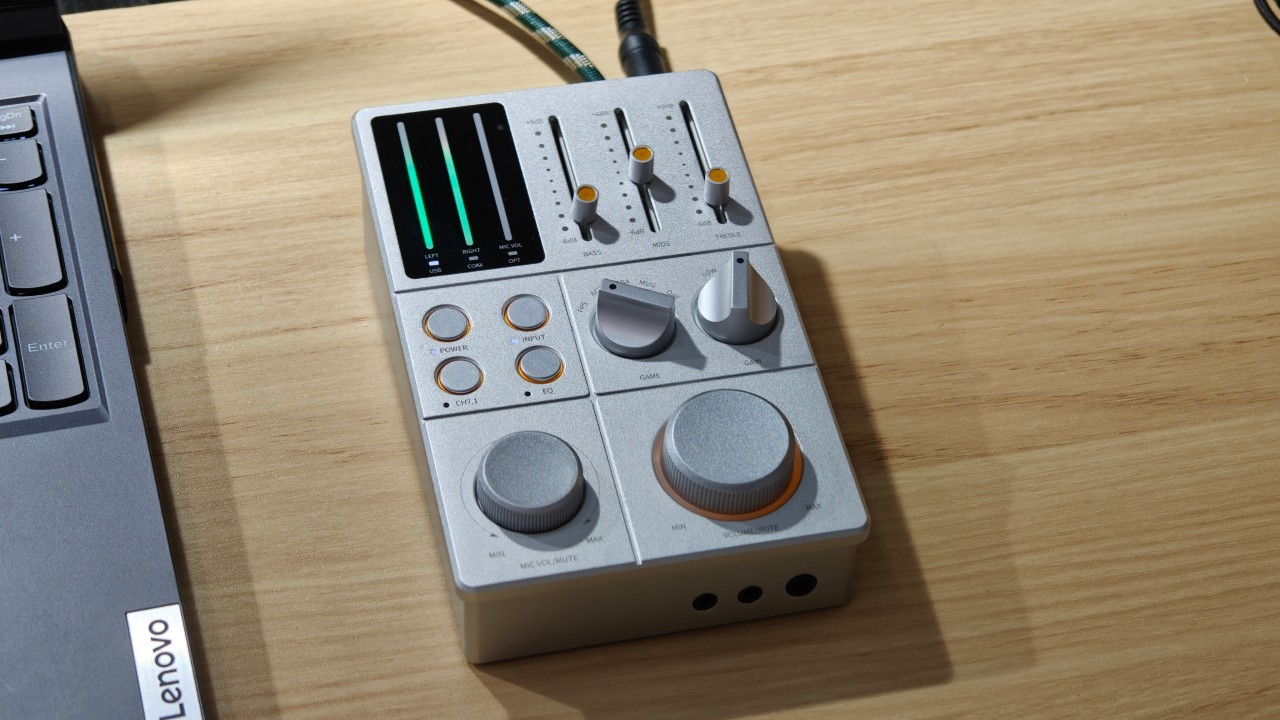
The Snowsky Game Tail, meanwhile, is a less expensive portable DAC/amp than the QX11, although it has a simpler feature set.
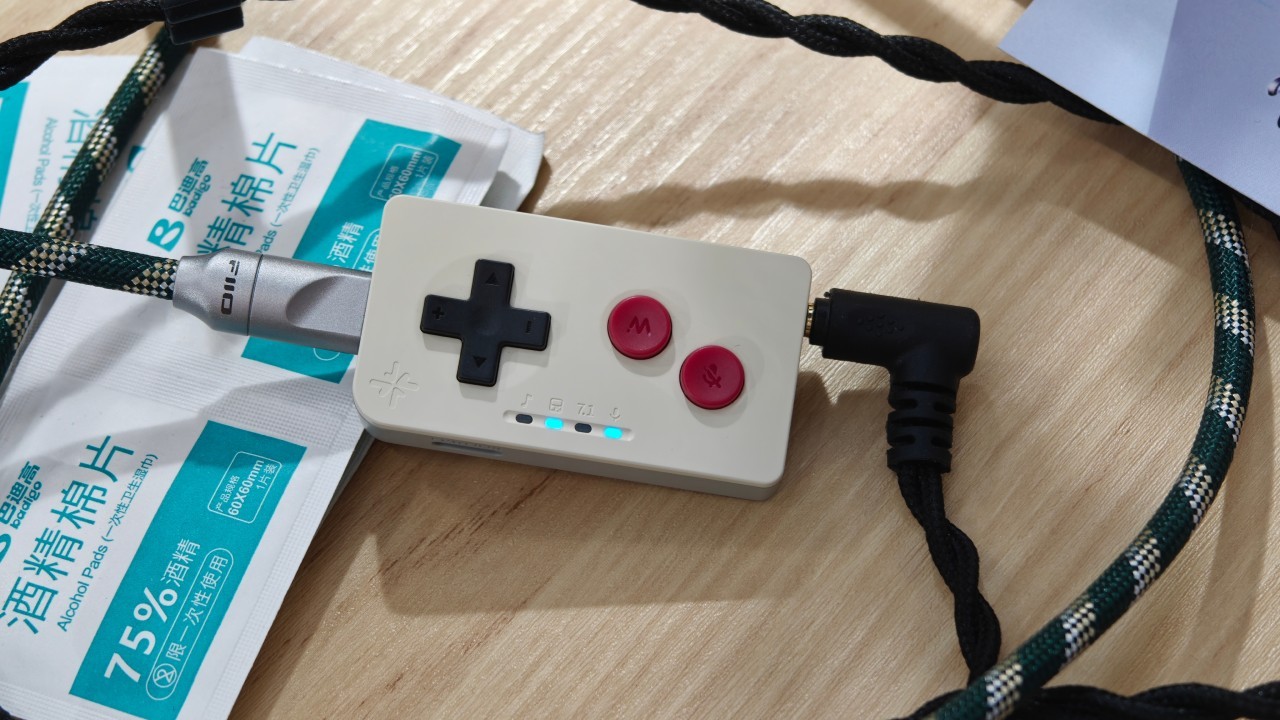
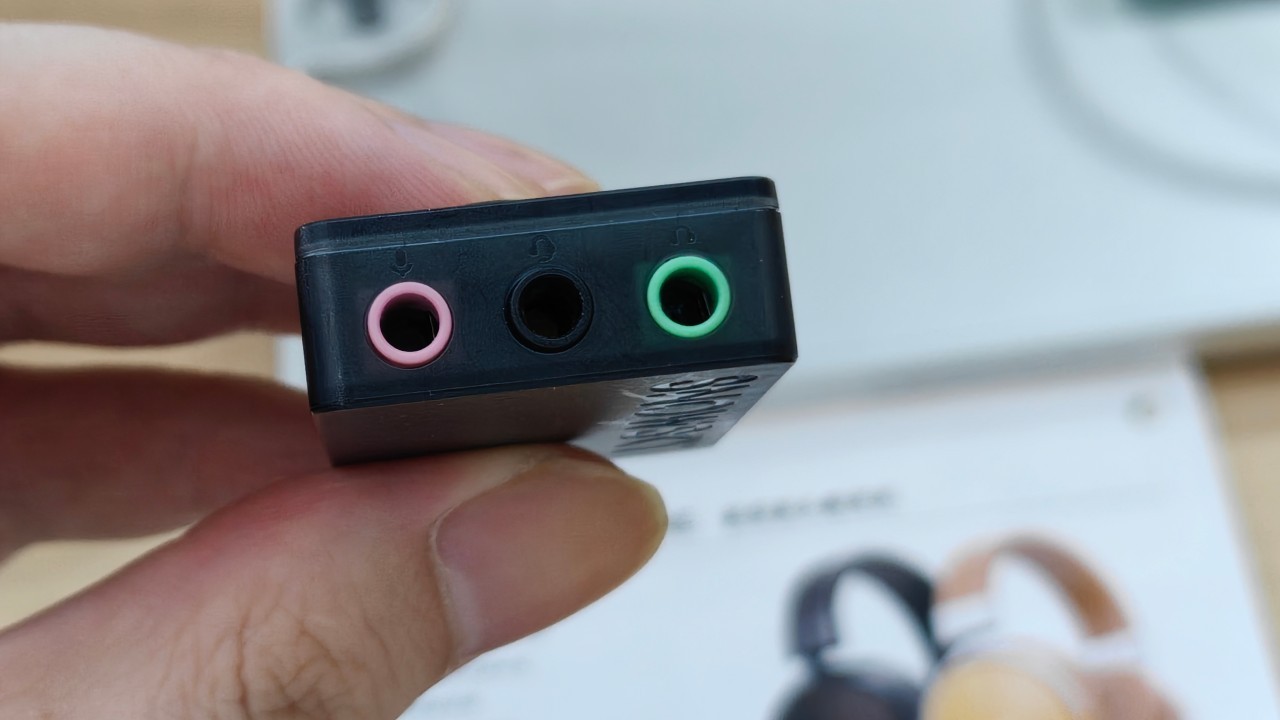
The Game Tail’s main distinguishing feature compared with the QX11 is its dedicated 3.5 mm microphone jack.
FiiO QX11: Specifications
General Parameters
• Chassis material: Aluminum alloy
• Colors: Dark Green and Vintage Gold
• DAC chips: ESS ES9069Q ×2
• Digital outputs: Coaxial
• Dimensions: 64 × 28.8 × 13 mm
• Display: 1.14-inch LCD
• Driver-free USB DAC mode (UAC 1.0 support): Supported
• Headphone amplification op-amps: OPA1622 ×4
• Headphone outputs: 3.5 mm single-ended and 4.4 mm balanced
• Preamplification op-amps: OPA1692 ×2
• USB controller: SPV5068
• Weight: 36 g
Audio Parameters
• Coaxial output playback: 96 kHz/24-bit
• Gaming Mode playback: 48 kHz/16-bit
• Noise floor: PO <1.8 μV (A-weighted); BAL <2.2 μV (A-weighted)
• Signal-to-noise ratio (SNR): >126 dB (A-weighted)
• THD+N: <0.00043% (1 kHz/−0 dB into 32 Ω)
• USB DAC Mode playback: 768 kHz/32-bit; DSD512 (native)
Output Power From the 3.5 mm Single-Ended Output
• With Desktop Mode disabled: 175 mW (32 Ω, THD+N <1%, 2.3 Vrms)
• With Desktop Mode enabled: 295 mW (32 Ω, THD+N <1%, 3 Vrms)
Output Power From the 4.4 mm Balanced Output
• With Desktop Mode disabled: 360 mW (32 Ω, THD+N <1%, 3.4 Vrms)
• With Desktop Mode enabled: 800 mW (32 Ω, THD+N <1%, 5.1 Vrms)
Launch, Pricing, and Availability
The FiiO QX11 is now available internationally in Vintage Gold and Dark Green for US$154.73 through FiiO’s official AliExpress store.
Share:


No comments have been made yet, be the first!