

Valphonics Lander 20Hz launched with Helmholtz bass resonator
From: Vitor Valeri
A headphone hobbyist for over 15 years, he founded the Hi-Fi Hub website and is an administrator of the "Fones High-End" and "Fones Low-End" groups on Facebook.


Published in: 07/08/26 at 16:39
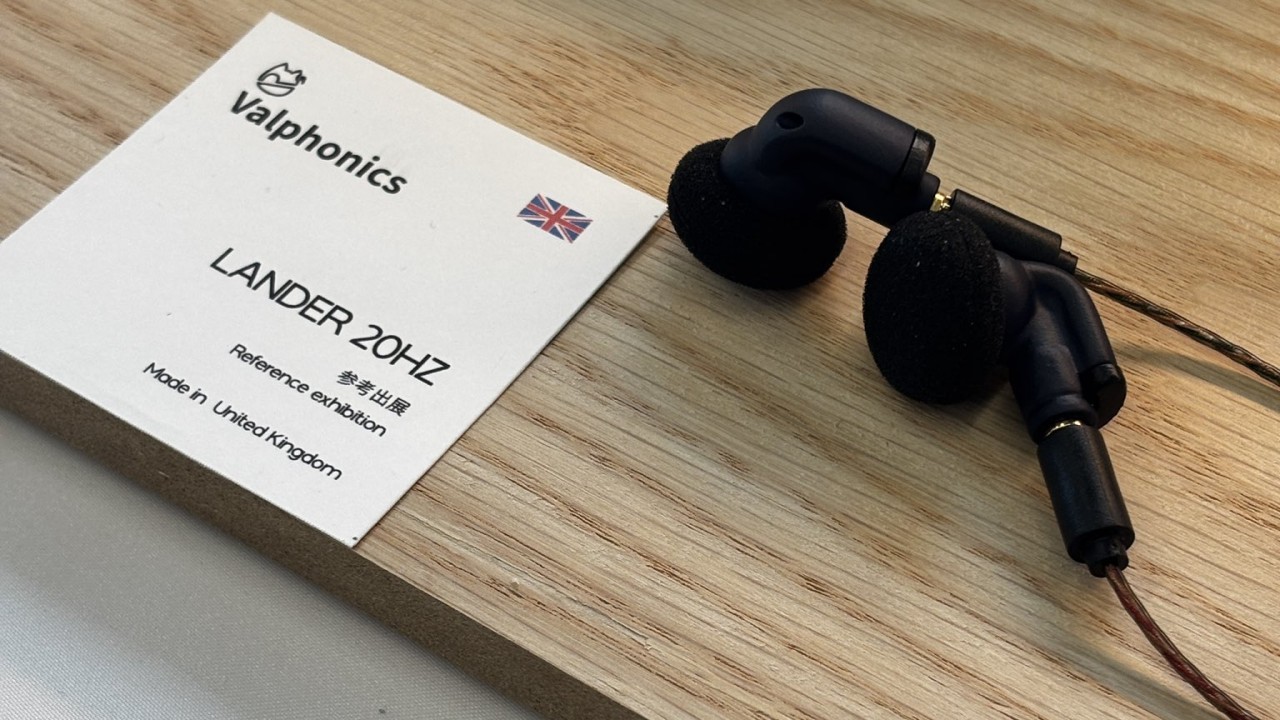 Valphonics Lander 20Hz flathead earbud (Image: eear_hamachan/X)
The Valphonics Lander 20Hz will be launched through e-Earphone, Japan’s largest specialty headphone retailer. Developed by the British boutique manufacturer Valphonics, the Lander 20Hz is a flathead earbud designed specifically for sub-bass reproduction. This was made possible through the use of 3D printing technology to integrate a resonator into the earbud housing. Find all the details below.
Lander 20Hz breaks convention with capable sub-bass reproduction
Flathead earbuds typically struggle to reproduce low frequencies due to their inherently open design, which allows significant sound leakage. Unlike In-Ear Monitors (IEMs), which seal the ear canal with ear tips, flathead earbuds simply rest in the outer ear. To address this limitation, Valphonics developed a Helmholtz resonator integrated directly into the housing of the Lander 20Hz.
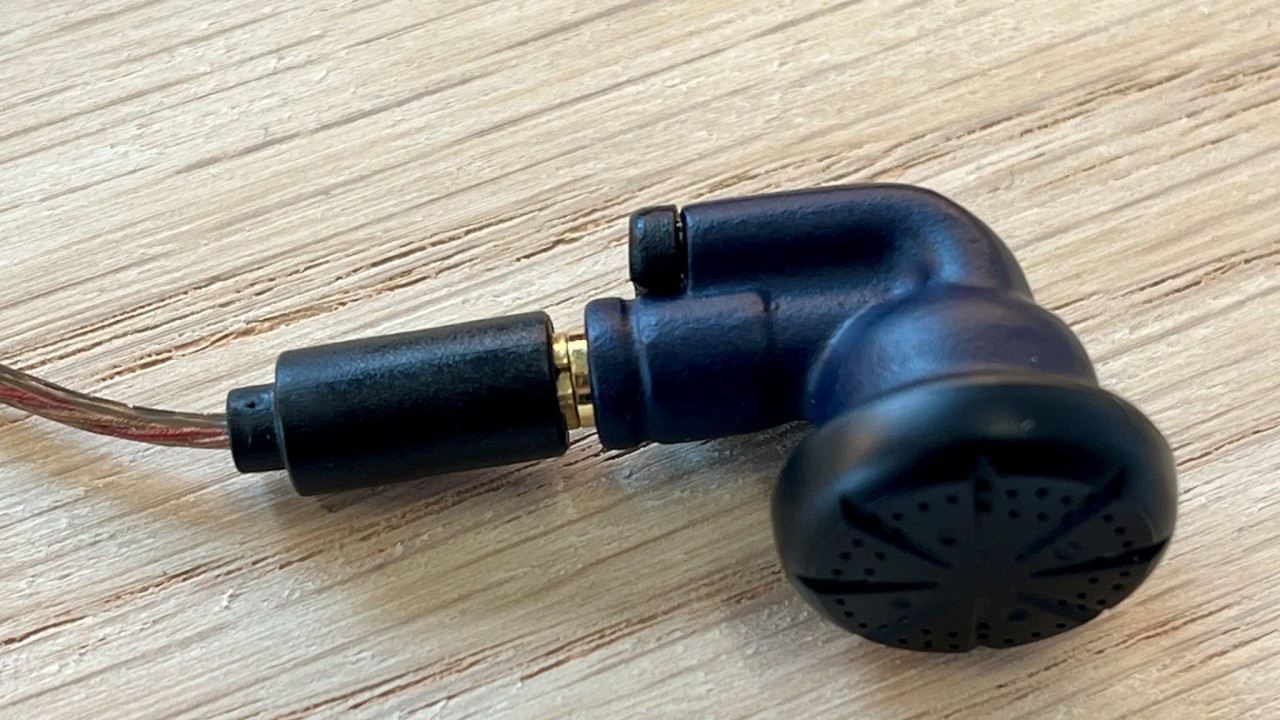
The origin of the “Lander 20Hz” name
The name “Lander 20Hz” refers to the earbud’s ability to reproduce sub-bass frequencies down to 20 Hz.
The well-known acoustical engineer Oratory1990, widely recognized within the headphone community, measured the Lander 20Hz’s frequency response using the GRAS 45CC-17 acoustic test fixture. See the graph below.
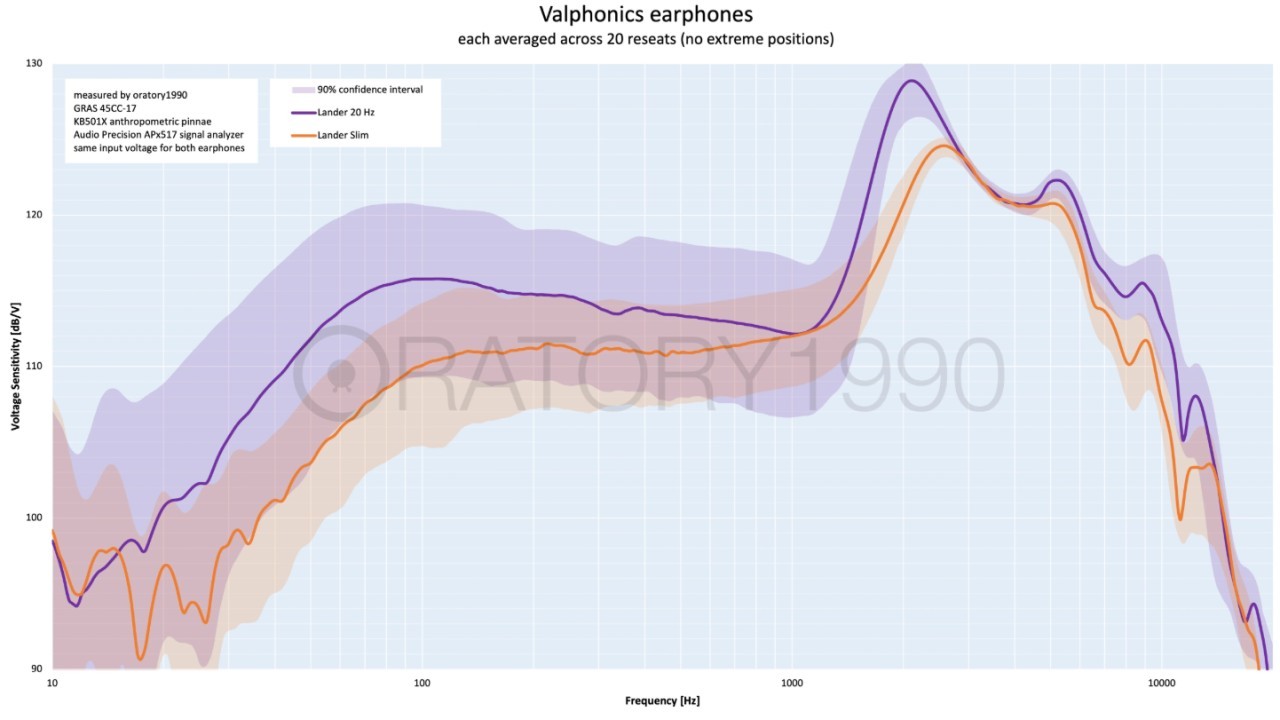
During a discussion on Discord, Oratory1990 commented on the frequency response measurements:
“More than 20 individual placements were used, placing the earphone in realistic listening positions (without sealing it with Blu Tack or anything similar). As expected, there is substantial variation below 2 kHz; depending on the exact placement, differences of up to 10 dB in sound pressure level (SPL) can occur. Most importantly, none of those measurements match the graphs published by the manufacturer.”
How does the Lander 20Hz sound?
The Lander 20Hz features a V-shaped sound signature, characterized by powerful bass and enhanced treble presence.
On the r/FlatheadEarbuds subreddit, Valphonics customer Electronic_Oil4095 described the Lander 20Hz as follows:
“The Lander 20Hz is more bass-focused and delivers a more fun, in-your-face presentation. I started with the Lander Slim as an introduction to the company’s house tuning and still use it regularly.”
The Lander 20Hz features a 3D-printed construction
The Lander 20Hz housing is manufactured using 3D printing.
The enclosure is made from ABS resin and finished in black. According to Valphonics, the resin is medical-grade, making it suitable for prolonged skin contact.
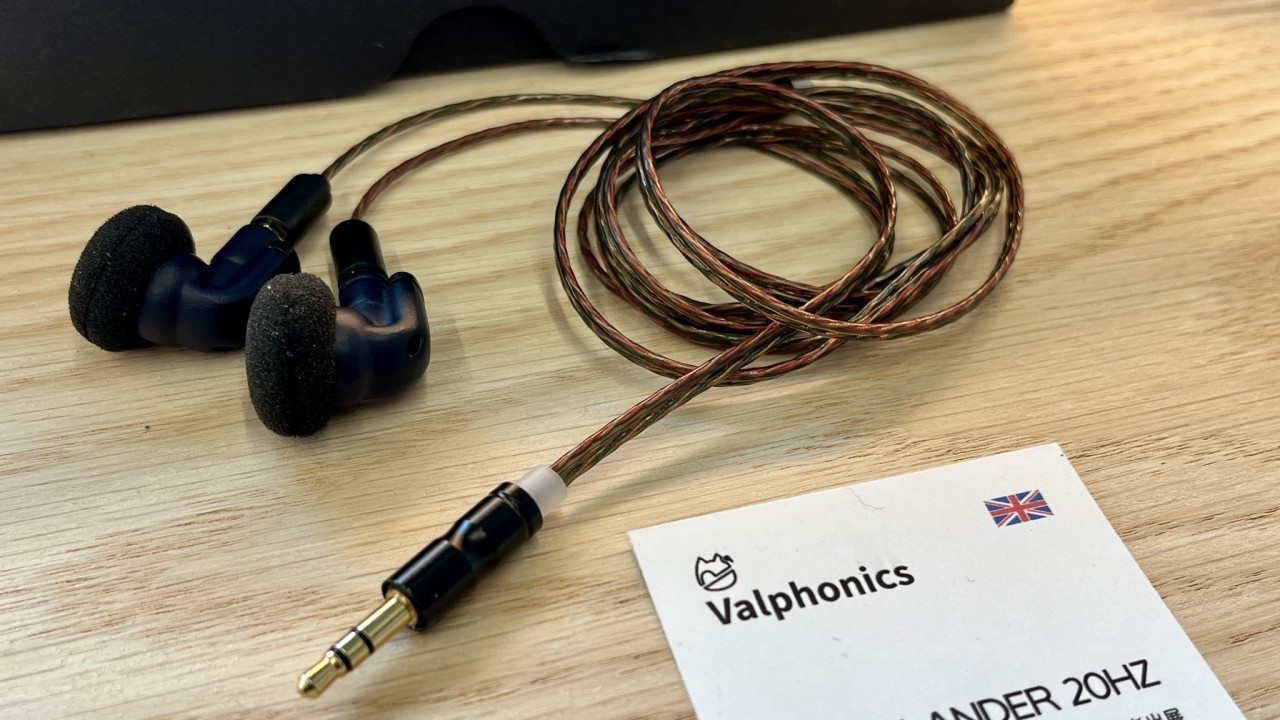
Valphonics also provided additional insight into the manufacturing process:
“The resin used is medical grade. After manufacturing, each unit is painted and wax-finished to ensure a flawless appearance. In addition, the packaging includes a carrying case specifically designed for the product.”
Removable cables improve long-term durability
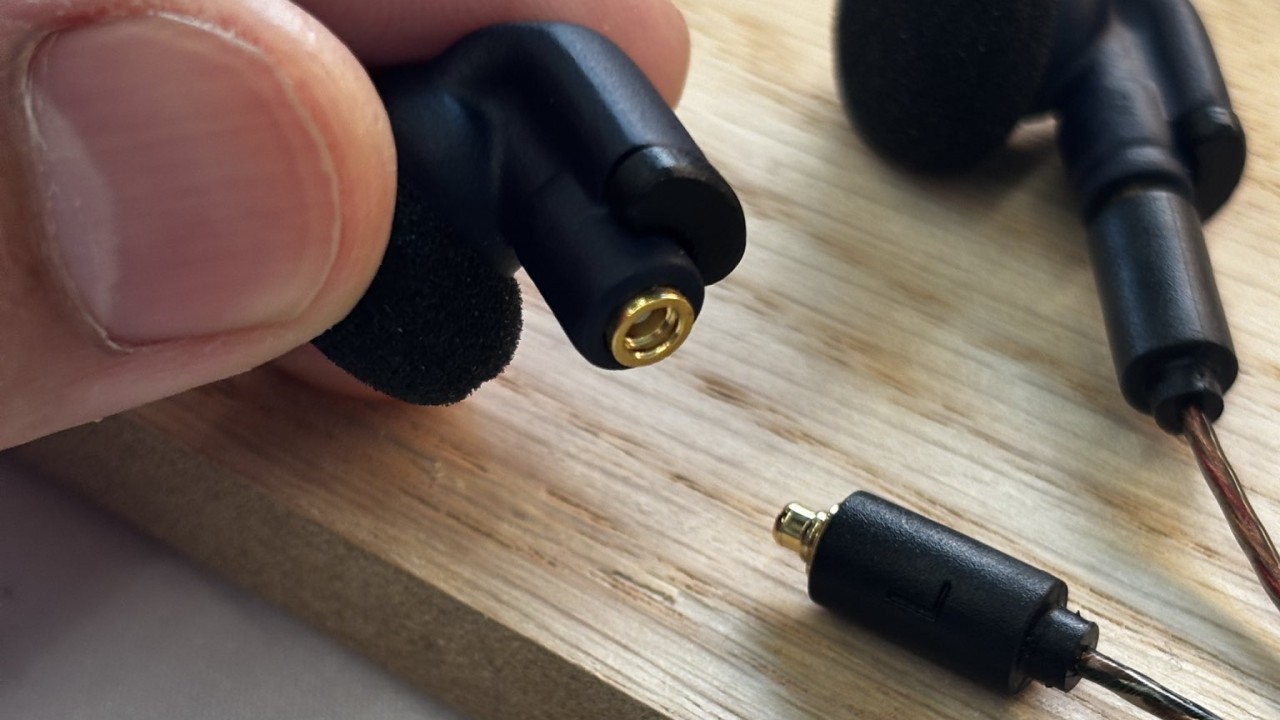
The Lander 20Hz features a removable MMCX cable system, allowing users to replace the cable if contact issues develop over time.
Another advantage is the flexibility to upgrade to a higher-quality aftermarket cable for those seeking a more premium construction.
Valphonics Lander 20Hz specifications
• Driver: 15.5 mm dynamic driver (DD) with a PET (Polyethylene Terephthalate) + LCP (Liquid Crystal Polymer) composite diaphragm
• Impedance: 64 Ω
• Sensitivity: 98 dB/mW
• Frequency response: Not specified by the manufacturer
• Earphone connector: Standard MMCX (compatible with most aftermarket cables)
• Cable plug: 3.5 mm
• Cable material: CCAW (Copper-Clad Aluminum Wire)
• Weight: Not specified by the manufacturer
What’s included in the box?
The Valphonics Lander 20Hz package includes:
• 3.5 mm cable with MMCX connectors
• Foam covers
• Carrying case
Release date, pricing, and availability
The Valphonics Lander 20Hz will launch in Japan on August 28 through e-Earphone for ¥39,600 (approximately US$252).
At the time of writing, the Lander 20Hz is already available for purchase directly from Valphonics for £150.00.
Why is the Lander 20Hz expensive for a flathead earbud?
The Lander 20Hz retails for £150.00 through Valphonics’ official store.
Because the manufacturing process is largely handcrafted, with the exception of the 3D-printed components, the production and commercialization costs are significantly higher than those of mass-produced earbuds. For this reason, Valphonics argues that it is not appropriate to compare the Lander 20Hz with inexpensive models sold on AliExpress.
The company explained its pricing strategy on the r/FlatheadEarbuds subreddit:
“While there are many earbuds that cost $10–20 on platforms like AliExpress, they’re priced that way because they’re mass-produced in the thousands. In my case, I have to hand-assemble every unit, perform quality control (QC), and ensure that each one meets the quality standards I’m satisfied with.”
Valphonics further added:
“Technically, I could charge $500 for these earbuds, as some independent DIY builders do. However, my goal is to keep the price reasonable while still delivering truly outstanding performance.”
How Valphonics, the manufacturer behind the Lander 20Hz, was founded
Valphonics was founded in 2020 in the United Kingdom by JC, better known online as AsciiJC. The company was born from its founder’s passion for retro aesthetics and everything associated with the old-school approach to audio. Today, Valphonics specializes in manufacturing 3D-printed flathead earbuds.
Its founder explained how the company began:
“I started in 2021 by painting generic shells and learning acoustics through that process. Eventually, I moved into developing IEMs, which further expanded my knowledge of acoustics, and I later applied that experience to the development of earbuds.”
Share:


Product launches
iBasso DC07Ultra Launches With Six DACs and More Power
Product launches
FiiO BTR25 Launches With aptX Lossless and Magnetic Clip
Product launches
No comments have been made yet, be the first!