

Moondrop Starfield III Debuts With Dual Dynamic Drivers
From: Vitor Valeri
A headphone hobbyist for over 15 years, he founded the Hi-Fi Hub website and is an administrator of the "Fones High-End" and "Fones Low-End" groups on Facebook.


Published in: 29/09/26 at 16:34
 Traduza o texto abaixo sem alterar os créditos da imagem para o inglês:
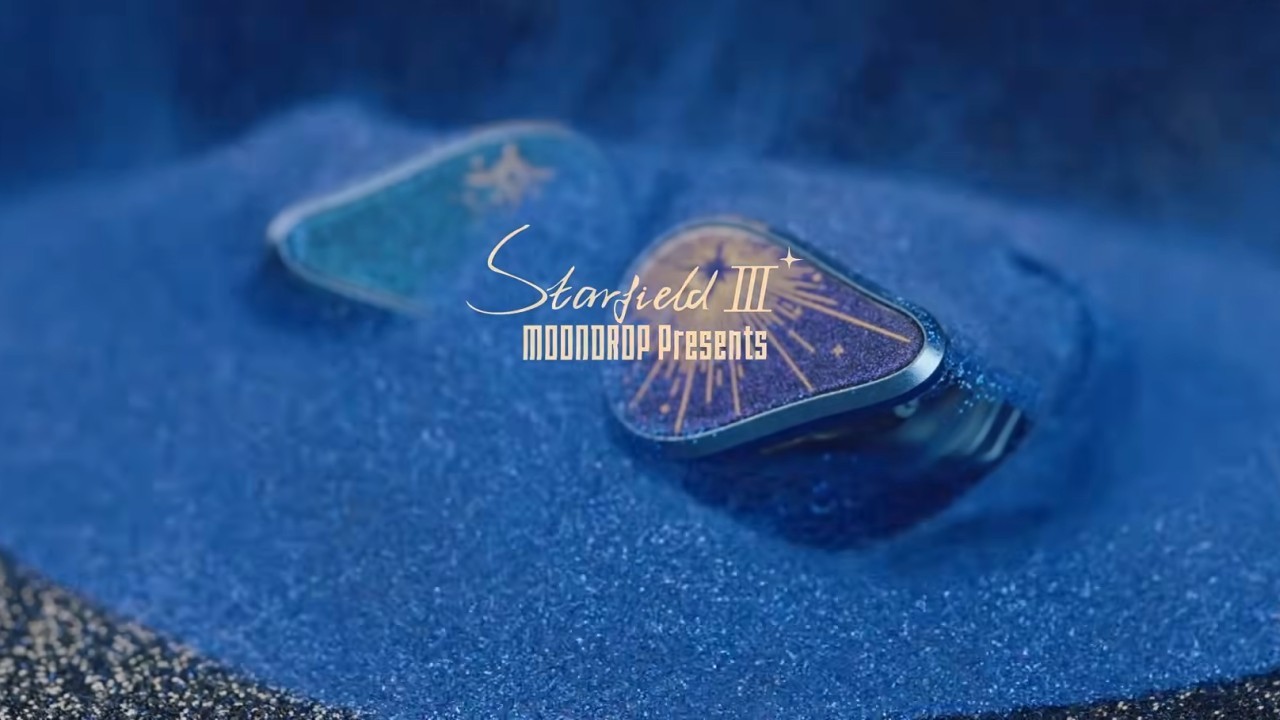
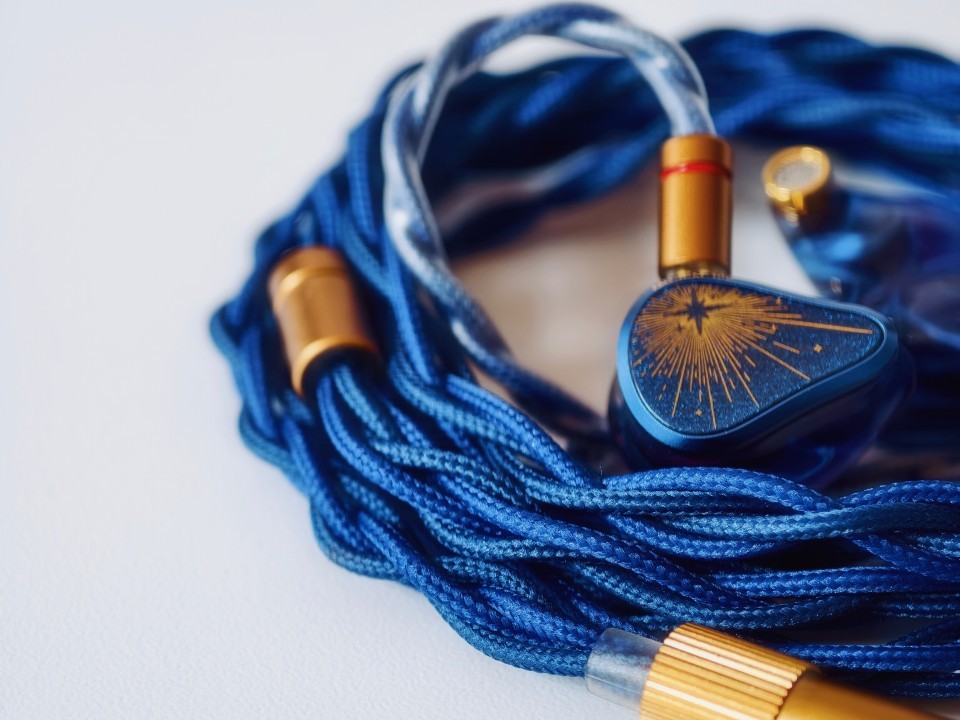
In-Ear Monitor (IEM) Moondrop Starfield III (Imagem: Moondrop)
Traduza o texto abaixo sem alterar os créditos da imagem para o inglês:
In-Ear Monitor (IEM) Moondrop Starfield III (Imagem: Moondrop)
The Moondrop Starfield III was launched today (September 29) in mainland China. The third-generation Starfield features two dynamic drivers developed in-house by Moondrop: one for the treble and another for the midrange and bass. Another highlight is the cable with interchangeable connectors, including a USB-C plug with an integrated DAC/amplifier that enables access to the parametric equalizer (PEQ) in the Moondrop app. Full details about this new Moondrop IEM are provided below.
Starfield III Introduces New Drivers, PEQ Support, and an Improved Finish
The Starfield is one of Moondrop’s most popular dynamic-driver in-ear monitors (IEMs). For its third generation, the Chinese headphone manufacturer introduced two new dynamic drivers developed in-house. The company describes their development as follows:
“Unlike many designs that simply combine multiple dynamic drivers, the Starfield III takes a scientific and efficient approach to creating an acoustic system with two drivers that truly complement each other and enhance performance.”
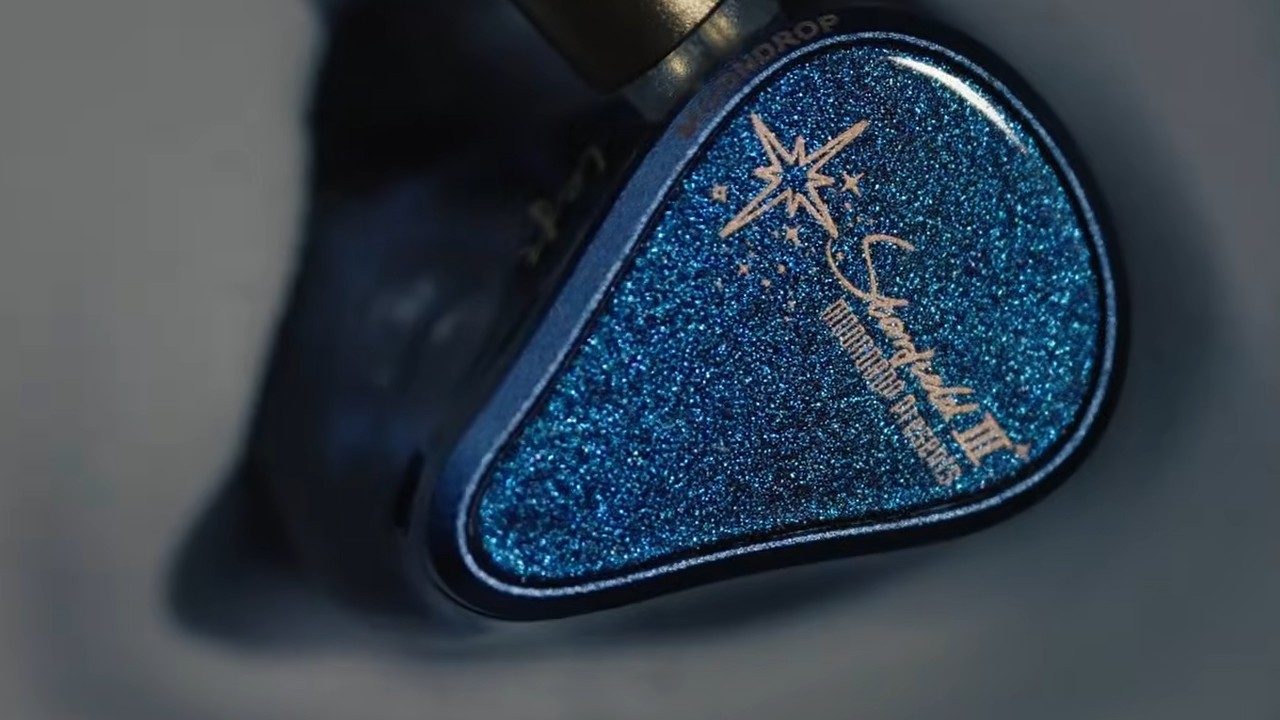
Parametric equalizer (PEQ) support on the Starfield III is made possible by the included modular cable, which features a USB-C plug. The connector houses a DAC/amplifier and a digital signal processing (DSP) chip, enabling compatibility with the Moondrop app. The app provides access to “Online Interactive DSP,” which includes a 32-band PEQ.
The Starfield III’s housing has also been improved with anodized aluminum to reduce damage from mechanical impacts. This change addresses a history of complaints from users of previous Starfield generations regarding paint flaking off without an apparent cause.
A New Acoustic System Developed for the Starfield III
Called D.W.T., the Starfield III’s acoustic system consists of two dynamic drivers (DDs) and a power crossover (active or electronic). Because the two DDs have different diaphragm materials and suspension characteristics, an active crossover was required to divide the frequencies reproduced by each driver.
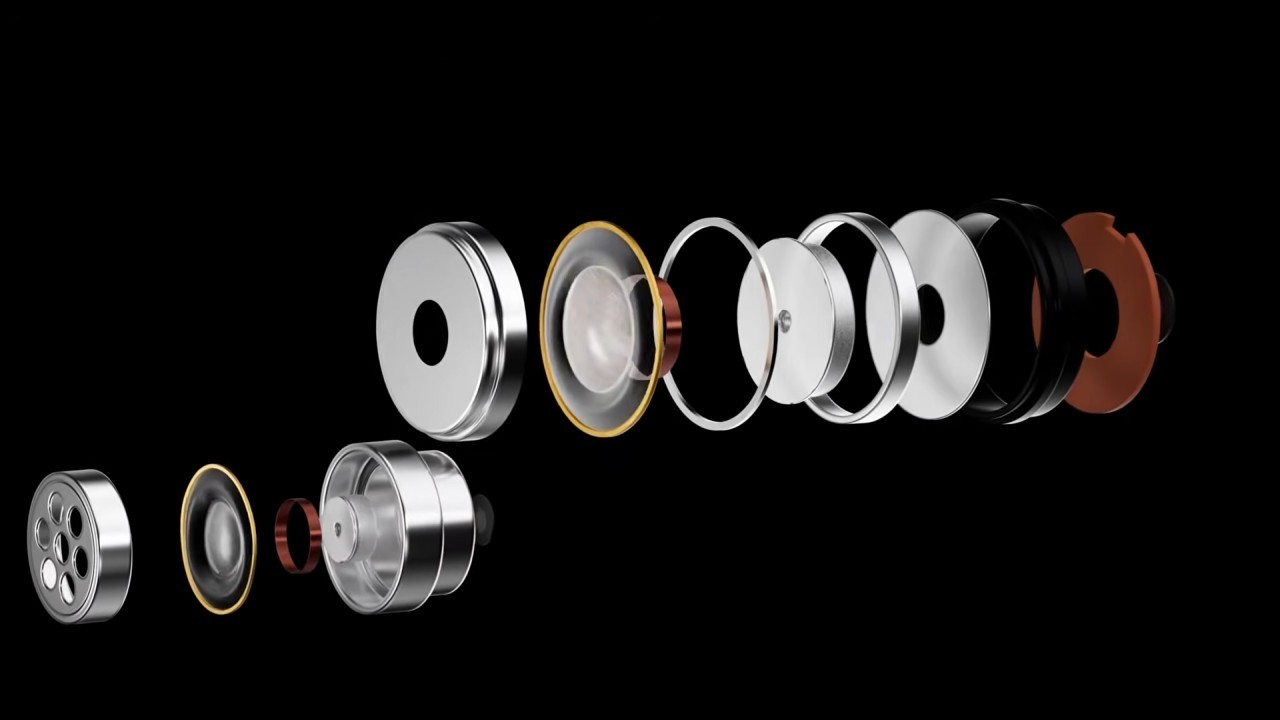
Treble reproduction is handled by a 7.8 mm dynamic driver featuring a composite diaphragm with a carbon dome and a flexible surround. According to the manufacturer, the dome material has properties similar to diamond-like carbon (DLC) and provides greater treble extension and detail. In addition, the flexible surround ensures lower distortion during highly dynamic musical passages.
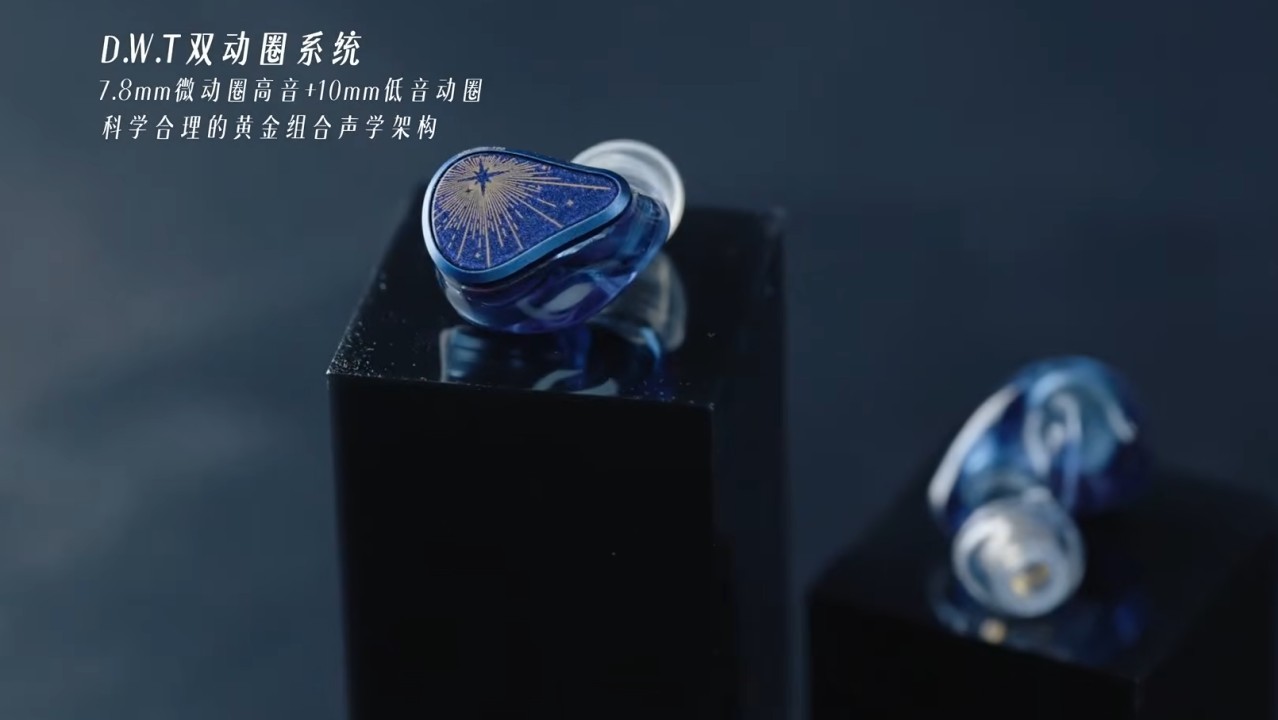
Responsible for reproducing the midrange and bass, the 10 mm DD developed by Moondrop uses a magnetic circuit comprising two magnets of equal volume, one internal and one external. This architecture allows substantial diaphragm excursion, providing greater dynamics when reproducing low frequencies.
The diaphragm dome of the 10 mm DD is made from a molded sheet of solid wood. According to the manufacturer, the characteristic stiffness of wood helps smooth the treble response. The wooden dome also facilitates integration between the drivers in the transition region while supporting good midrange performance.
Moondrop used 3D-printed acoustic ducts to direct the sound from the two drivers. Combined with the crossover, this approach delivered excellent results in terms of linear and nonlinear distortion, along with a high level of consistency, according to the manufacturer.
Starfield III Frequency Response Curve
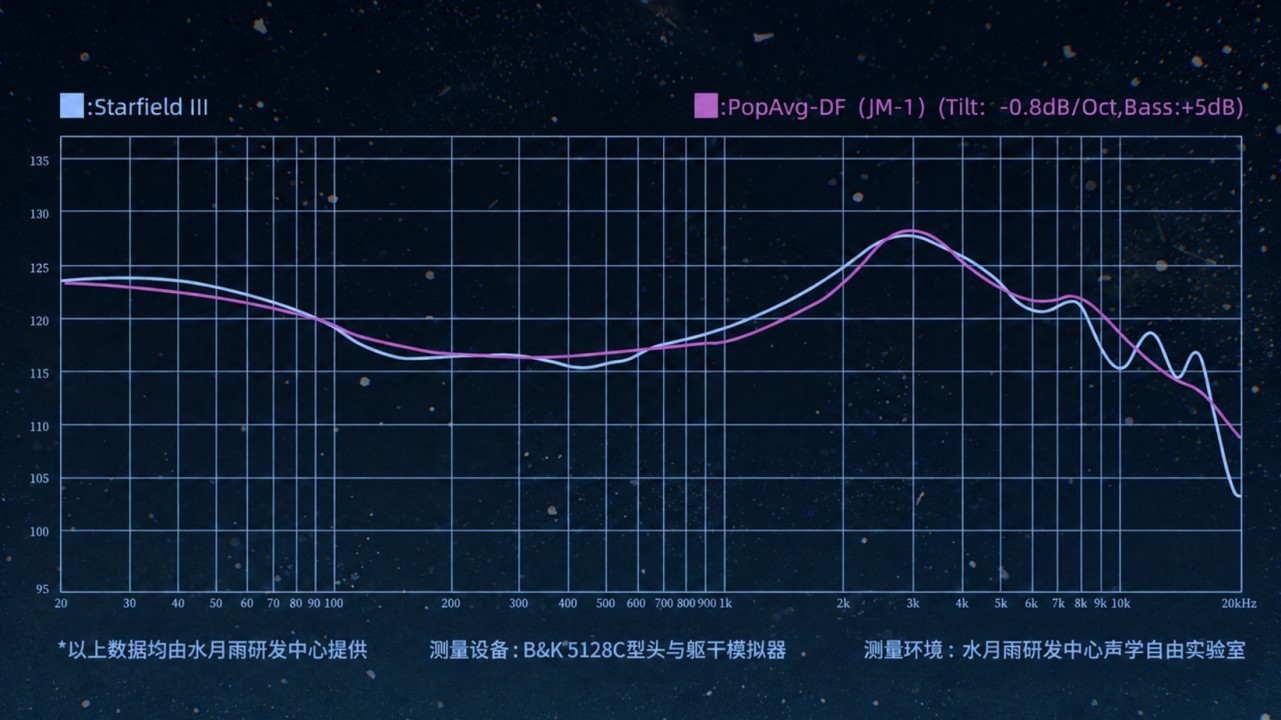
The graph below shows the Moondrop Starfield III’s frequency response curve as provided by the manufacturer.
Modular Cable with a USB-C Plug and 32-Band PEQ Support
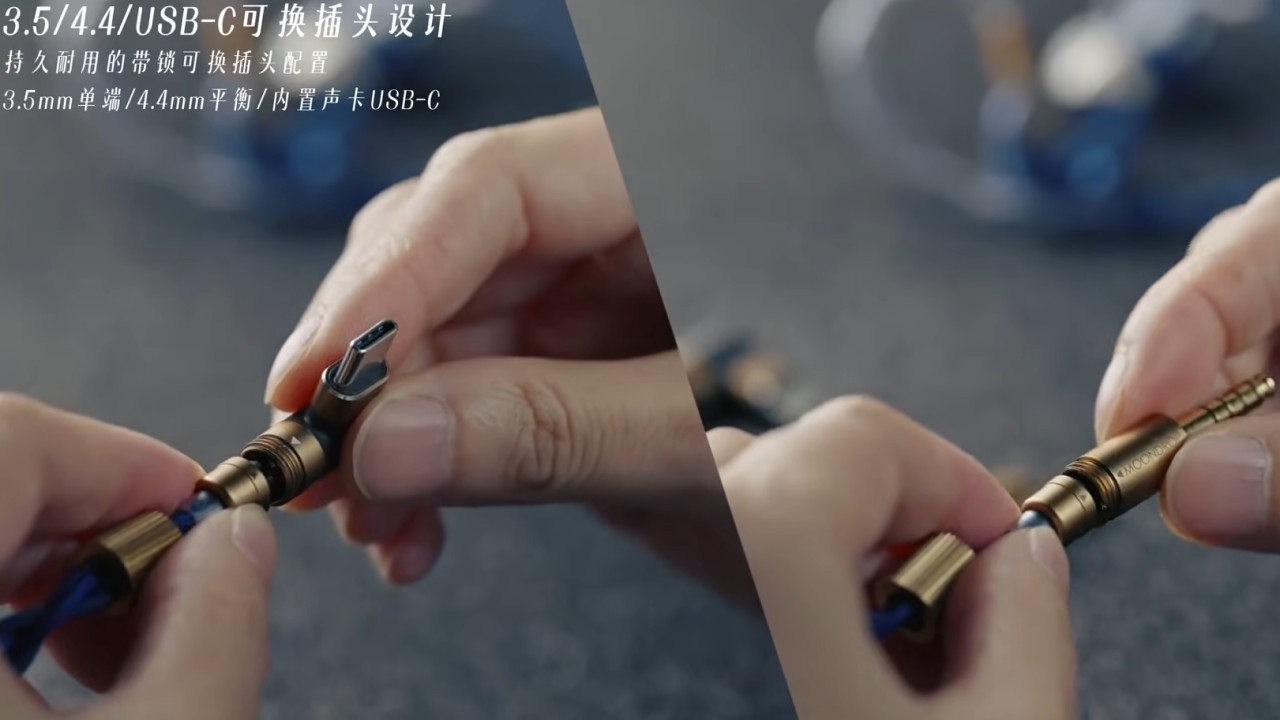
The connector options available for the Starfield III’s modular cable include a USB-C plug with an integrated “sound card.” This allows the IEM to deliver good sound quality when connected to a smartphone or laptop.
According to Moondrop, the “audio chip” inside the USB-C plug provides 60 mW of output power. Given the Starfield III’s sensitivity of 119 dB and impedance of 7.7 ohms, this amplification capability is more than sufficient.
The USB-C connector further expands the capabilities of the third-generation Starfield by enabling support for the Moondrop app and the “Online Interactive DSP” platform. The app provides access to a 32-band parametric equalizer (PEQ), “AUTO EQ,” and a social network for sharing equalization profiles [1].
[1] The Moondrop app’s social network consists of users who share equalization profiles. Users can download these shared profiles and upload their own equalization settings for the community to use.
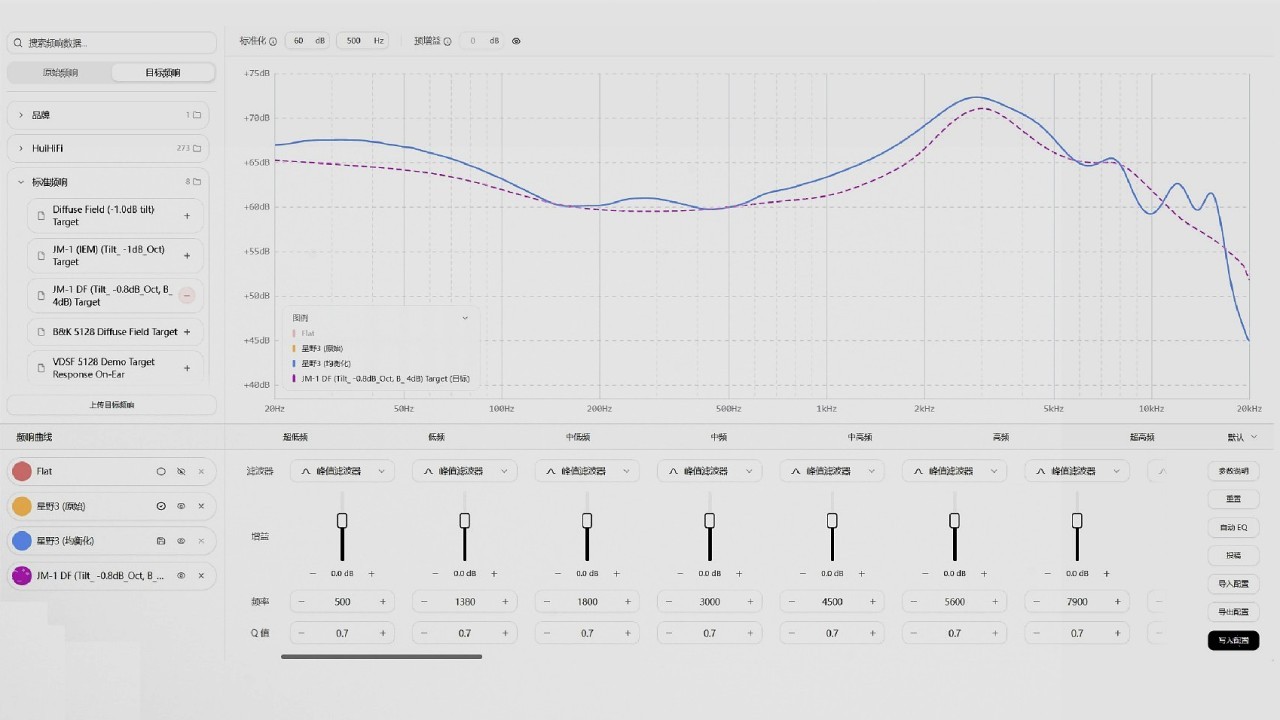
Sound Target ID: A Summary of Your Sound Preferences
In addition to its equalization features and EQ profile community, the Moondrop app offers a feature called Sound Target ID. This is a profile automatically generated by the app using data from the “Online Interactive DSP” platform and the characteristics of the headphones in use.
After creating a Sound Target ID, users can fine-tune their equalization settings to match their preferred sound signatures.
Moondrop Starfield III: Specifications
• Cable conductor material: High-purity single-crystal copper
• Cable connection to the IEMs: 0.78 mm 2-pin
• Cable jacket material: Braided nylon
• Drivers per side: One 10 mm dynamic driver with a wooden dome + one 7.8 mm dynamic driver with a carbon dome
• Effective frequency response: 20 Hz–20 kHz (IEC 60318-4, −3 dB)
• Frequency response: 12 Hz–44 kHz
• Housing material: Anodized aluminum alloy
• Impedance: 7.7 Ω ±15% at 1 kHz
• Modular cable plugs: 4.4 mm balanced, 3.5 mm single-ended (SE), and USB-C with an integrated sound card
• Sensitivity: 119 dB/Vrms at 1 kHz
• Total harmonic distortion (THD): ≤0.2% at 1 kHz and 94 dB
What Is Included in the Moondrop Starfield III Box?
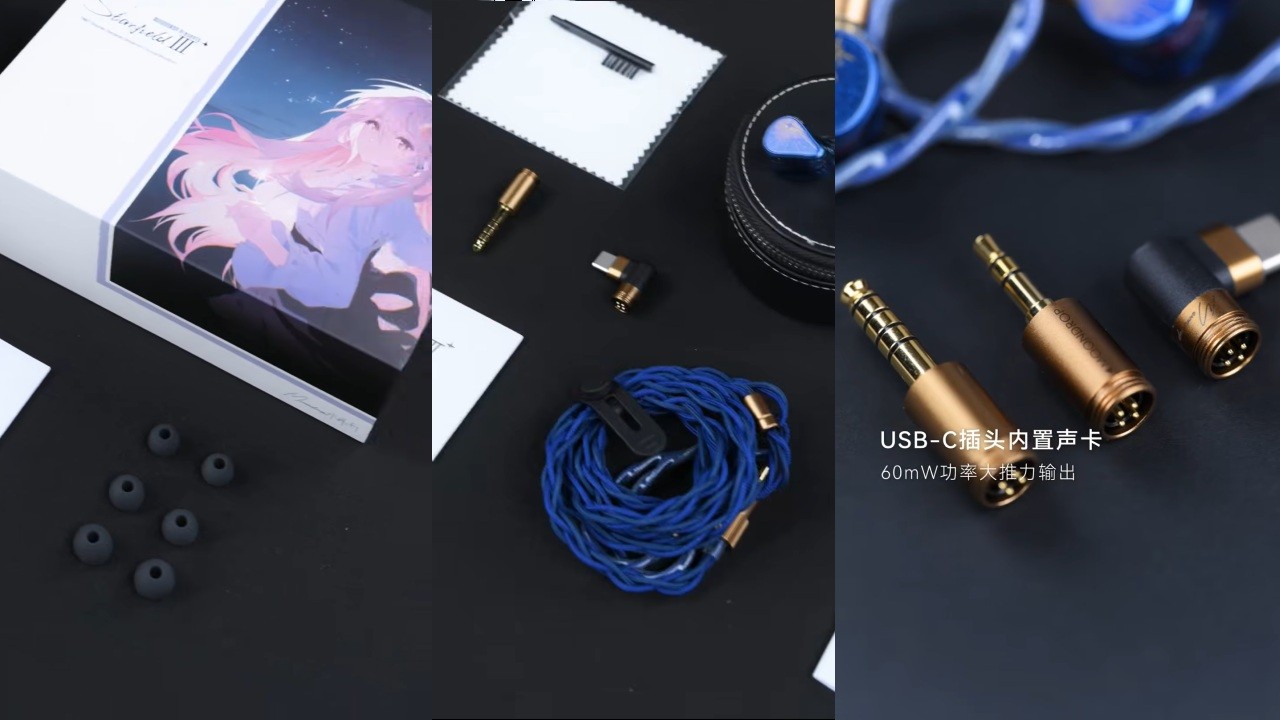
The following items are included in the Moondrop Starfield III package:
• Starfield III in-ear monitors (IEMs)
• Cable with interchangeable plugs
• Interchangeable 3.5 mm plug
• Interchangeable 4.4 mm plug
• Interchangeable USB-C plug
• Leather carrying case
• Instruction manual
• Earphone fitting guide card
• Three pairs of replacement ear tips
• Certificate of conformity
Launch, Pricing, and Availability
The Moondrop Starfield III is now available in mainland China for 699 yuan (approximately US$104.17). International pricing and the release date have not yet been announced. This article will be updated as new information becomes available.
Share:


Product launches
xDuoo XQ-60: Bluetooth 6.0 DAC with AM/FM Radio
Product launches
FiiO DT11: Full Specs and Shipping Details
Product launches
No comments have been made yet, be the first!