

FiiO R7 R2R Launches With Android 13 and 4W of power
From: Vitor Valeri
A headphone hobbyist for over 15 years, he founded the Hi-Fi Hub website and is an administrator of the "Fones High-End" and "Fones Low-End" groups on Facebook.


Published in: 07/11/26 at 22:23 - Updated in: 08/11/26 at 00:13
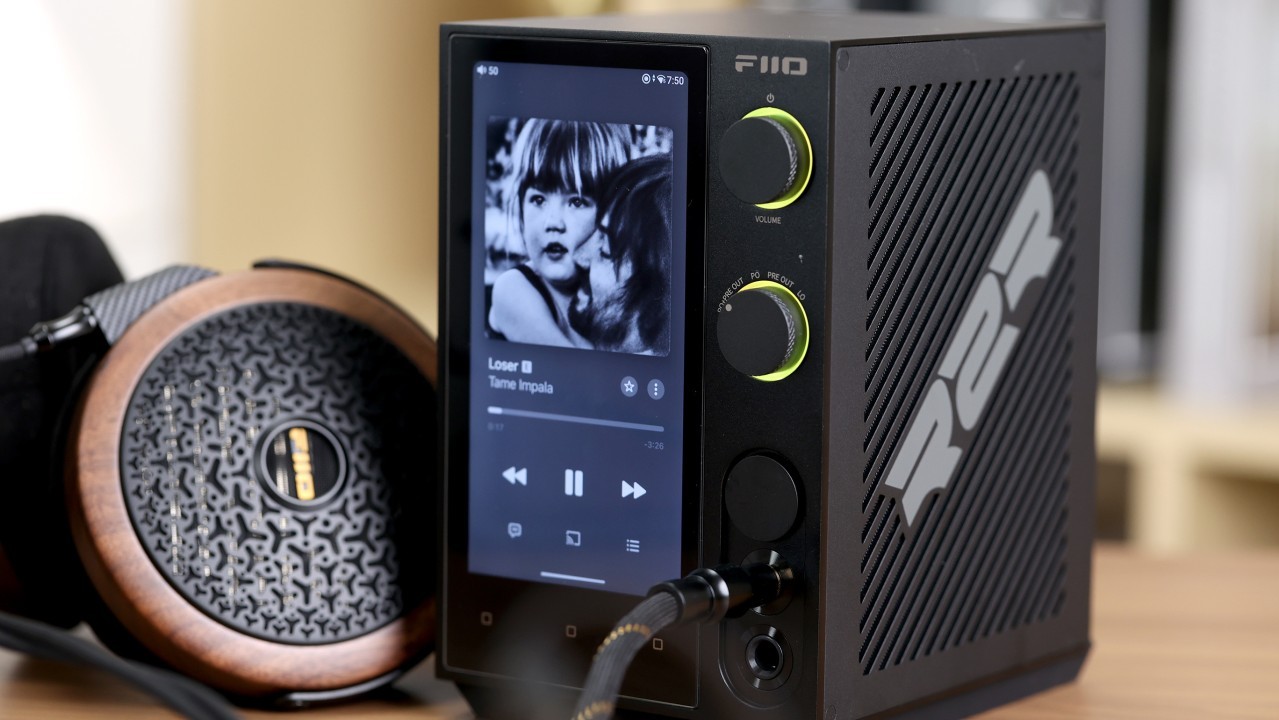 FiiO R7 R2R and FiiO FT15 headphones (Image: 微型计算机官方微博/weibo)
The FiiO R7 R2R was launched today (November 7) in international markets and mainland China. Essentially, the R7 R2R is a desktop version of the FiiO M33 DAP with the 4 W output power of the FiiO K17 R2R DAC/amp. It also includes connections typically found only on desktop devices, including XLR outputs, an Ethernet port, and an AC power input. Further details about this new release are provided below.
R7 gains an R2R DAC version with M33 hardware and K17 output power
Originally released in 2023, the FiiO R7 was designed to play music, drive headphones, and serve as a preamplifier for powered speakers. Many users welcomed this concept because it offered a device as compact as a DAP (Digital Audio Player), with the connectivity and output power of desktop equipment. With this in mind, FiiO combined the interest in R2R DAC architectures with this product format to develop the R7 R2R.
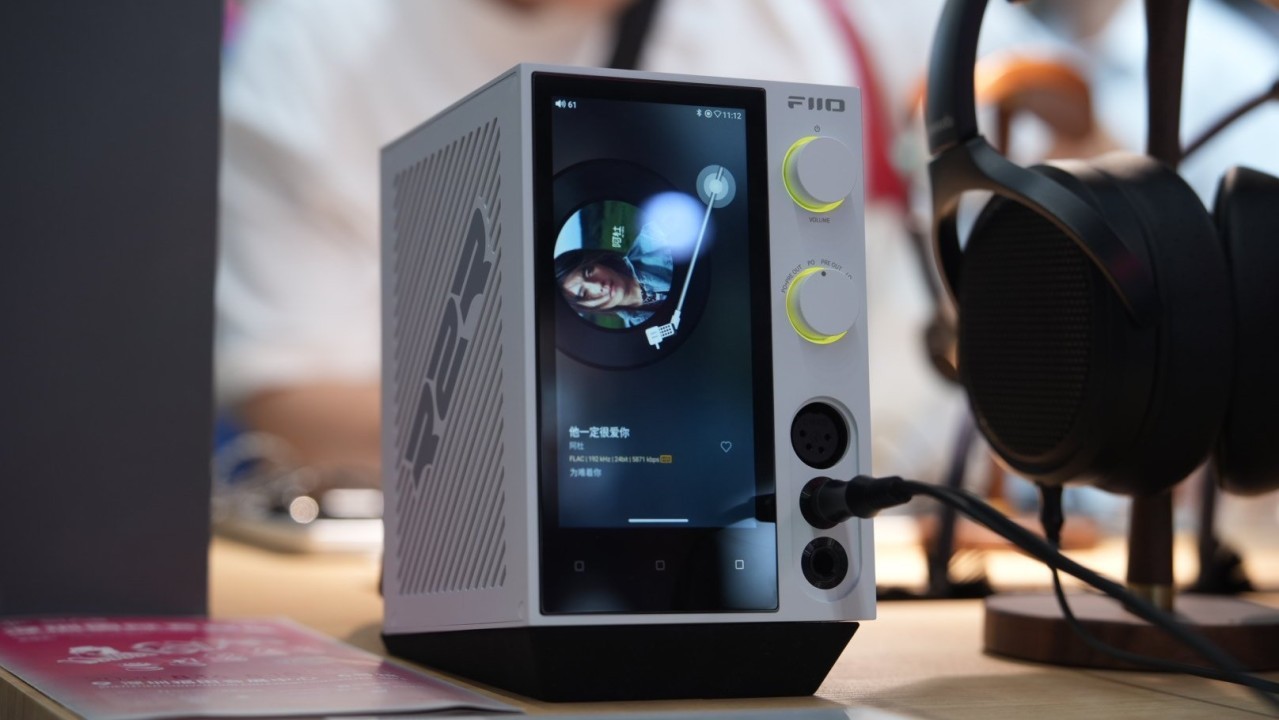
However, the DAC was not the only component updated in the new R7 version. The Snapdragon 660 SoC (System-on-a-Chip) was replaced with the Snapdragon 680, which offers higher performance and improved energy efficiency. RAM was also increased from 4 GB to 8 GB, while internal storage was expanded from 64 GB to 128 GB. Finally, the operating system was upgraded from Android 10 to Android 13.
An examination of the R7 R2R’s SoC, RAM, storage, Android version, and even its display reveals that these specifications are identical to those of the FiiO M33. Even the R2R DAC appears to be the same.
The R2R version of the FiiO R7 also offers increased output power. The original R7 (OG) could deliver 3,650 mW through its balanced output into 32 Ω, whereas the R7 R2R delivers 4,000 mW under the same conditions. This matches the output power of the FiiO K17 R2R desktop DAC/amp.
The R2R DAC used in the FiiO R7
The R7’s R2R DAC uses a “resistor array with a fully differential, complementary architecture.” Like the M33, the R7 R2R features a DAC with “four channels comprising a total of 192 thin-film resistors.”
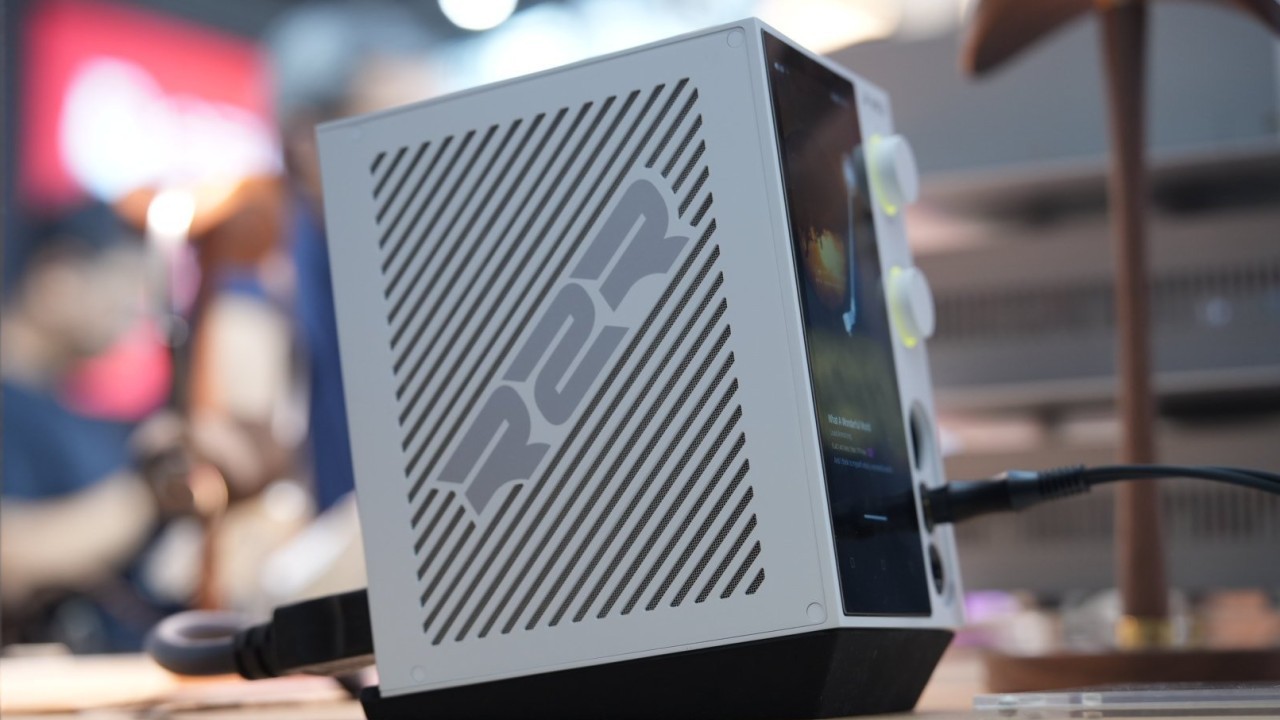
In addition to sharing the same description, the R7’s R2R DAC is not designated as “R2R PRO,” the technology used in the M25 and K17 R2R. This further supports the possibility that the M33 and R7 R2R use the same R2R DAC.
Sound profile selection
Like the M33, the R7 R2R allows users to switch between two sound profiles, FLAT and WARM. The former is described as having a “natural” sound, while the latter is characterized as “warm.”
More than a change in DAC architecture
The R7 R2R offers both a different sound, resulting from FiiO’s internally developed R2R DAC, and a smoother user experience. With the Snapdragon 680 SoC paired with 8 GB of RAM, the R2R version of the R7 delivers better performance than the original R7.
It also runs Android 13, which extends compatibility with future music app updates and provides improved resource management.
Output power and gain levels matching the K17 R2R
The R7 R2R delivers a maximum output power of 4 W through its balanced output into 32 Ω. This matches the capability of the K17 R2R desktop DAC/amp. To facilitate volume adjustment for different types of headphones, the R7 R2R also offers the same five gain levels as the K17 R2R. This allows precise volume control with devices ranging from IEMs (In-Ear Monitors) to over-ear headphones.
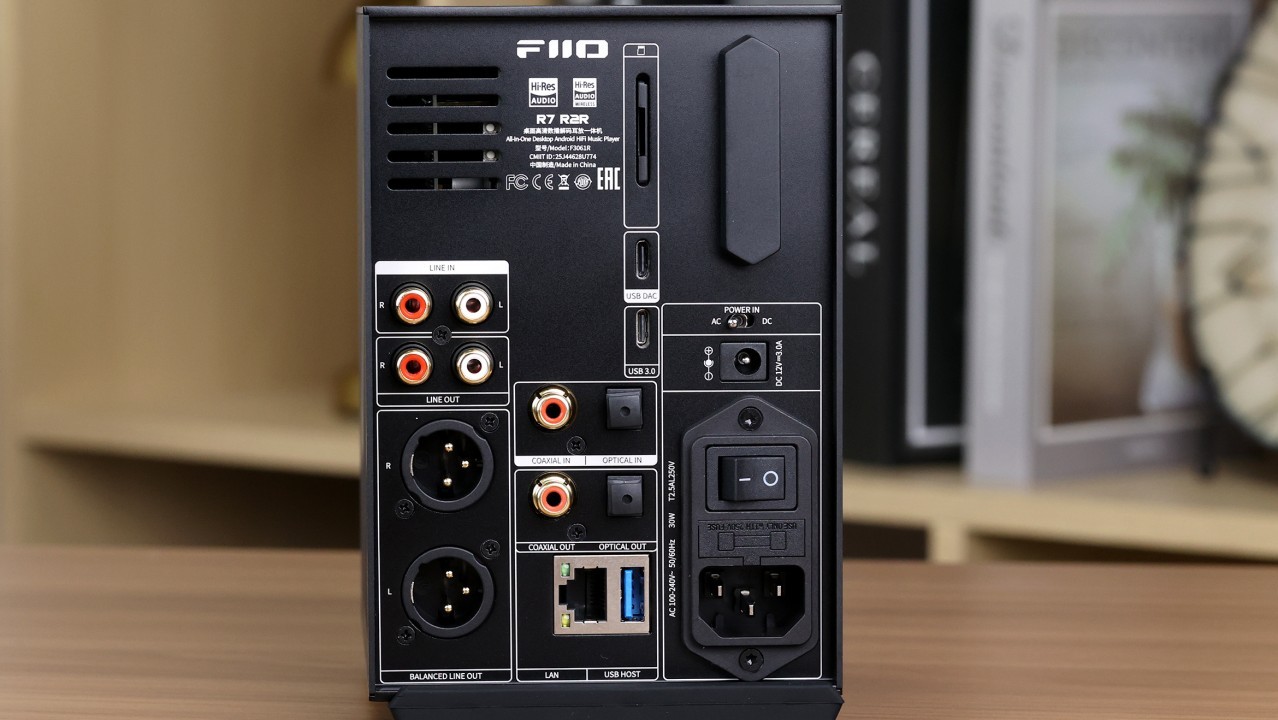
Two power supply options, DC and AC
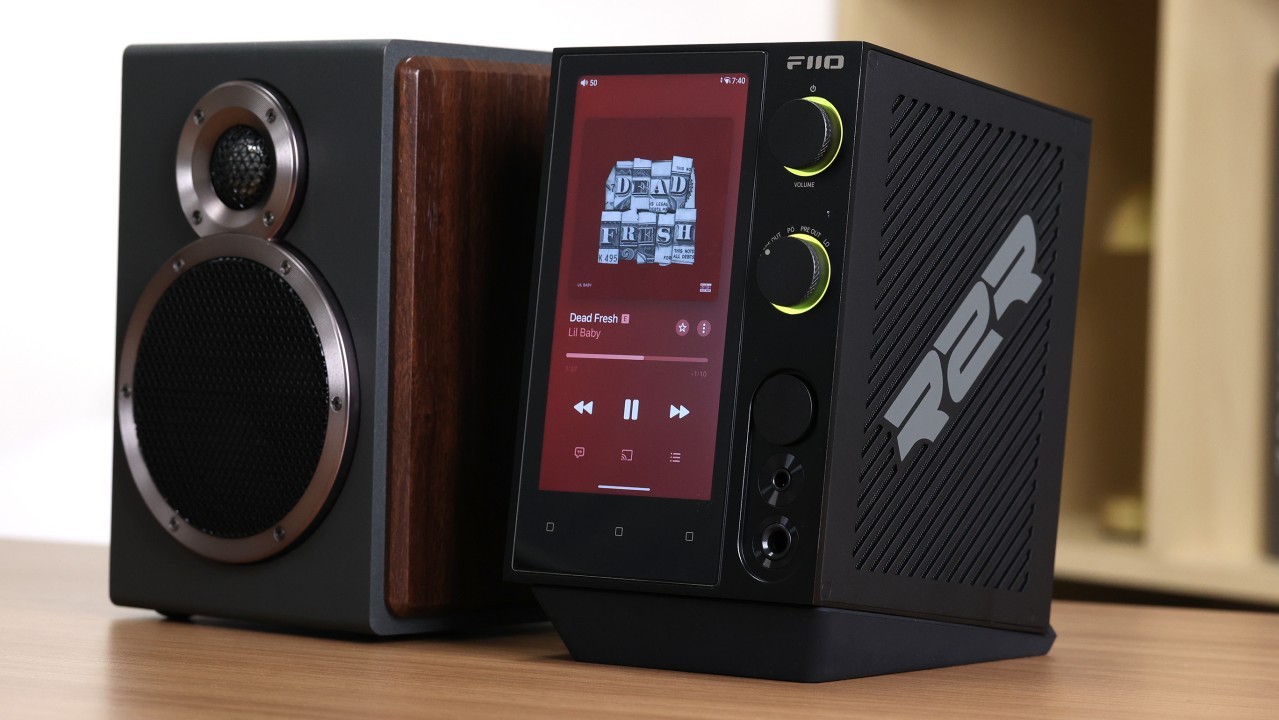
Like the original R7, the R7 R2R supports two power supply options, AC and DC.
For AC power, an IEC C14 inlet connects to the internal power supply. For DC power, a barrel connector allows an external power supply to be connected.
Connecting an external power supply makes it possible to use a linear power supply instead of the internal switching power supply. The R7 R2R accepts external supplies rated at 12–15 V with a current capacity of at least 3 A.
Synchronized audio and video for games and movies
The R7 R2R features the XMOS XU316 USB controller, which enables low-latency audio decoding. This keeps audio and video synchronized when watching movies and TV series or playing games. This is the same chip used in the FiiO M33 DAP.
System-wide 10-band PEQ, SRC bypass, and All to DSD
Like FiiO’s latest DAPs, the R7 R2R features a system-wide 10-band parametric equalizer (PEQ). Sample rate conversion (SRC) is also disabled in the device’s Android implementation. Users can additionally enable a feature that converts all audio playback to DSD.
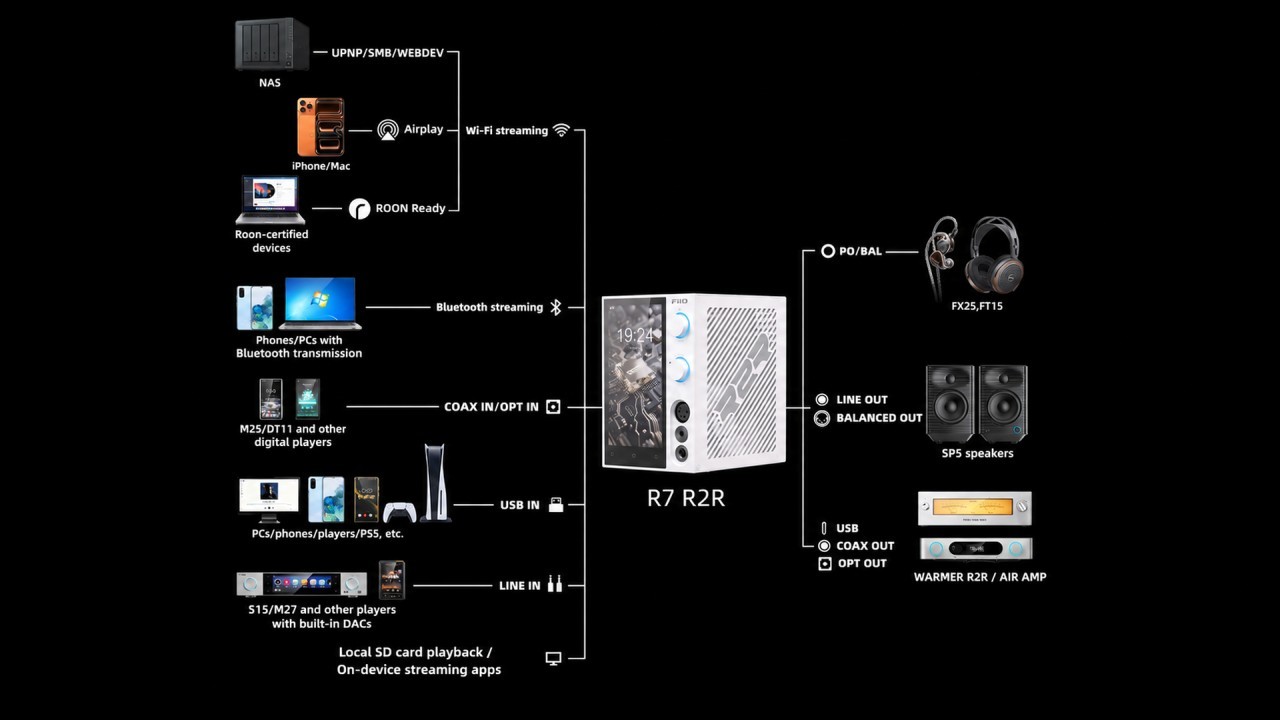
Connecting the R7 R2R to other devices
The diagram below illustrates the different ways to connect the FiiO R7 R2R to other devices.
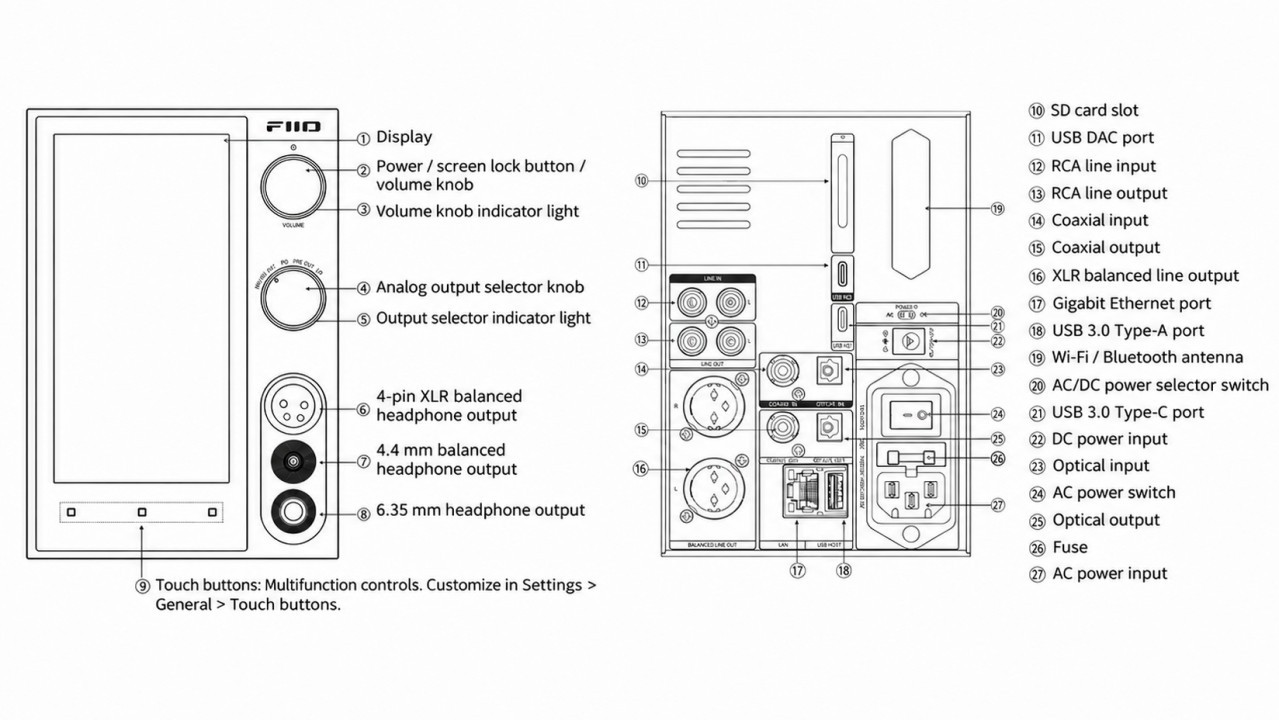
R7 R2R connections and controls
The following diagram provides an overview of the controls and connections available on the FiiO R7.
FiiO R7 R2R specifications
General specifications
• Analog headphone outputs (PO): 6.35 mm single-ended (SE), 4.4 mm balanced, and 4-pin XLR balanced
• Analog line outputs (LO): Single-ended RCA and balanced XLR
• Battery: None
• Bluetooth: 5.0
• Colors: Black and white
• DAC: R2R DAC developed internally by FiiO
• Digital inputs: USB-C, USB-A, Ethernet, optical, coaxial, Bluetooth, and Wi-Fi
• Digital outputs: USB-C, optical, and coaxial
• Dimensions: 110 × 134 × 160 mm
• Display: 5.5 inches with a resolution of 720 × 1440 pixels
• Internal storage: 128 GB
• Operating modes: Android / Pure Music / USB DAC / Bluetooth reception / AirPlay / coaxial decoding / Roon Ready / optical decoding / line input
• Operating system (OS): Android 13
• Physical controls: Volume knob, which also turns the device on, output selector knob, and power switch
• Power supply: DC, 12–15 V with a power supply rated for at least 3 A, or AC, 100–240 V at 50/60 Hz
• RAM: 8 GB
• SoC: Qualcomm Snapdragon 680
• Storage expansion: SD card slot supporting up to 2 TB
• USB controller: XMOS XU316
• Weight: 1,331.5 g
• Wi-Fi: 2.4 GHz and 5 GHz
Bluetooth specifications
• Bluetooth codecs supported for reception: SBC and LDAC
• Bluetooth codecs supported for transmission: SBC, aptX, aptX HD, LDAC, and LHDC
• Bluetooth transmission and reception: Supported
• Bluetooth version: 5.0
Audio specification
• Android SRC bypass
• Native decoding via coaxial input supports PCM up to 192 kHz/24-bit
• Native decoding via coaxial output supports PCM at 384 kHz/24-bit and DSD up to DSD128
• Native decoding via optical input supports PCM up to 96 kHz/24-bit
• Native decoding via optical output supports PCM up to 192 kHz/24-bit
• Native decoding via USB supports PCM up to 768 kHz/32-bit and DSD up to DSD512
• System-wide 10-band PEQ and AUTO EQ support
• System-wide All to DSD support
6.35 mm single-ended (SE) output specifications
| Parameter | Low Gain | Medium Gain | High Gain | Headphone Mode | Super Headphone Mode |
| Output impedance | < 0,5 Ω, with a 32 Ω load | < 0,5 Ω, with a 32 Ω load | < 0,5 Ω, with a 32 Ω load | < 0,5 Ω, with a 32 Ω load | < 0,5 Ω, with a 32 Ω load |
| Channel separation | ≥ 76 dB (1 kHz, at 32 Ω) | ≥ 76 dB (1 kHz, at 32 Ω) | ≥ 76 dB (1 kHz, at 32 Ω) | ≥ 76 dB (1 kHz, at 32 Ω) | ≥ 76 dB (1 kHz, at 32 Ω) |
| Noise floor | < 2,9 µV, A-weighted | < 3 µV, A-weighted | < 3,4 µV, A-weighted | < 5,3 µV, A-weighted | < 6,3 µV, A-weighted |
| Distortion + noise (THD+N) | PCM: 0,013%; DSD: 0,0029% | PCM: 0,013%; DSD: 0,0029% | PCM: 0,013%; DSD: 0,0027% | PCM: 0,013%; DSD: 0,0027%. | PCM: 0,013%; DSD: 0,0027% |
| Signal-to-noise ratio (SNR) | ≥ 106 dB, A-weighted | ≥ 112 dB, A-weighted | ≥ 116 dB, A-weighted | ≥ 119 dB, A-weighted | ≥ 120 dB, A-weighted |
| Dynamic range | ≥ 106 dB, A-weighted | ≥ 112 dB, A-weighted | ≥ 116 dB, A-weighted | ≥ 119 dB, A-weighted | ≥ 120 dB, A-weighted |
| Frequency response: 20 Hz to 50 kHz | Attenuation < 3 dB | Attenuation < 3 dB | Attenuation < 3 dB | Attenuation < 3 dB | Attenuation < 3 dB |
| Frequency response: 20 Hz to 20 kHz | Attenuation < 0,5 dB | Attenuation < 0,5 dB | Attenuation < 0,5 dB | Attenuation < 0,5 dB | Attenuation < 0,5 dB |
| Peak-to-peak output voltage | 1,7 Vp-p | 3,7 Vp-p | 6,9 Vp-p | 14 Vp-p | 19,8 Vp-p |
Output power through the 6.35 mm single-ended (SE) output
| Load Impedance | Low Gain | Medium Gain | High Gain | Headphone Mode | Super Headphone Mode |
| 16 Ω | ≥ 20 mW + 20 mW ; 0,6Vrms | ≥ 100 mW + 100 mW ; 1,3Vrms | ≥ 350 mW + 350 mW ; 2,4Vrms | ≥ 1.460 mW + 1.460 mW ; 4,8Vrms | ≥ 1.975 mW + 1.975 mW ; 5,6Vrms |
| 32 Ω | ≥ 10 mW + 10 mW ; 0.6Vrms | ≥ 50 mW + 50 mW ; 1,3Vrms | ≥ 180 mW + 180 mW ; 2,4Vrms | ≥ 750 mW + 750 mW ; 4,9Vrms | ≥ 1.325 mW + 1.325 mW ; 6,5Vrms |
| 300 Ω | ≥ 1 mW + 1 mW ; 0,6Vrms | ≥ 5 mW + 5 mW ; 1,3Vrms | ≥ 20 mW + 20 mW ; 2,4Vrms | ≥ 80 mW + 80 mW ; 4,9Vrms | ≥ 160 mW + 160 mW ; 7Vrms |
4.4 mm and 4-pin XLR balanced output specifications
| Parameter | Low Gain | Medium Gain | High Gain | Headphone Mode | Super Headphone Mode |
| Output impedance | < 0,5 Ω, with a 32 Ω load | < 0,5 Ω, with a 32 Ω load | < 0,5 Ω, with a 32 Ω load | < 0,5 Ω, with a 32 Ω load | < 0,5 Ω, with a 32 Ω load |
| Channel separation | ≥ 105 dB (1 kHz, at 32 Ω) | ≥ 110 dB (1 kHz, at 32 Ω) | ≥ 114 dB (1 kHz, at 32 Ω) | ≥ 116 dB (1 kHz, at 32 Ω) | ≥ 115 dB (1 kHz, at 32 Ω) |
| Noise floor | < 4,3 µV, A-weighted | < 4,8 µV, A-weighted | < 5,7 µV, A-weighted | < 9,8 µV, A-weighted | < 11,7 µV, A-weighted |
| Distortion + noise (THD+N) | PCM: 0,013%; DSD: 0,0027% | PCM: 0,013%; DSD: 0,0027% | PCM: 0,013%; DSD: 0,0027% | PCM: 0,013%; DSD: 0,0027%. | PCM: 0,013%; DSD: 0,0027% |
| Signal-to-noise ratio (SNR) | ≥ 109 dB, A-weighted | ≥ 114 dB, A-weighted | ≥ 118 dB, A-weighted | ≥ 120 dB, A-weighted | ≥ 120 dB, A-weighted |
| Dynamic range | ≥ 109 dB, A-weighted | ≥ 114 dB, A-weighted | ≥ 118 dB, A-weighted | ≥ 120 dB, A-weighted | ≥ 120 dB, A-weighted |
| Frequency response: 20 Hz a 50 kHz | Attenuation < 3 dB | Attenuation < 3 dB | Attenuation < 3 dB | Attenuation < 3 dB | Attenuation < 3 dB |
| Frequency response: 20 Hz a 20 kHz | Attenuation < 0,5 dB | Attenuation < 0,5 dB | Attenuation < 0,5 dB | Attenuation < 0,5 dB | Attenuation < 0,5 dB |
| Peak-to-peak output voltage | 3,5 Vp-p | 7,4 Vp-p | 13,8 Vp-p | 28 Vp-p | 39,6 Vp-p |
RCA line output specifications
• Channel separation: ≥ 110 dB
• Dynamic range: ≥ 119 dB, A-weighted
• Line output level: 2.2 Vrms at 1 kHz into a 10 kΩ load
• Noise floor: < 2.5 µV, A-weighted
• Signal-to-noise ratio: ≥ 119 dB, A-weighted
• Total harmonic distortion plus noise (THD+N): PCM: 0.013%; DSD: 0.0029%
XLR balanced line output specifications
• Channel separation: ≥ 117 dB
• Dynamic range: ≥ 121 dB, A-weighted
• Line output level: 4.4 Vrms at 1 kHz into a 10 kΩ load
• Signal-to-noise ratio: ≥ 121 dB, A-weighted
• Total harmonic distortion plus noise (THD+N): PCM: 0.013 (unit not specified in the image); DSD: 0.0029%
What is included in the FiiO R7 R2R box?
The following items are included with the FiiO R7 R2R:
• R7 R2R unit
• Angled base
• Flat base
• USB data cable
• Power cable
• 6.35 mm to 3.5 mm headphone adapter
• Cartridge fuse
• Dust cover
• Quick start guide
• After-sales service card
Release, pricing, and availability
The FiiO R7 R2R is now available internationally in black and white for US$829.25 from FiiO’s official AliExpress store.
Share:


Product launches
iBasso DC07Ultra Launches With Six DACs and More Power
Product launches
FiiO BTR25 Launches With aptX Lossless and Magnetic Clip

Product launches
No comments have been made yet, be the first!