

Questyle MEX Dongle DAC Launches at $199 With Parametric EQ
From: Vitor Valeri
A headphone hobbyist for over 15 years, he founded the Hi-Fi Hub website and is an administrator of the "Fones High-End" and "Fones Low-End" groups on Facebook.


Published in: 23/11/26 at 18:30
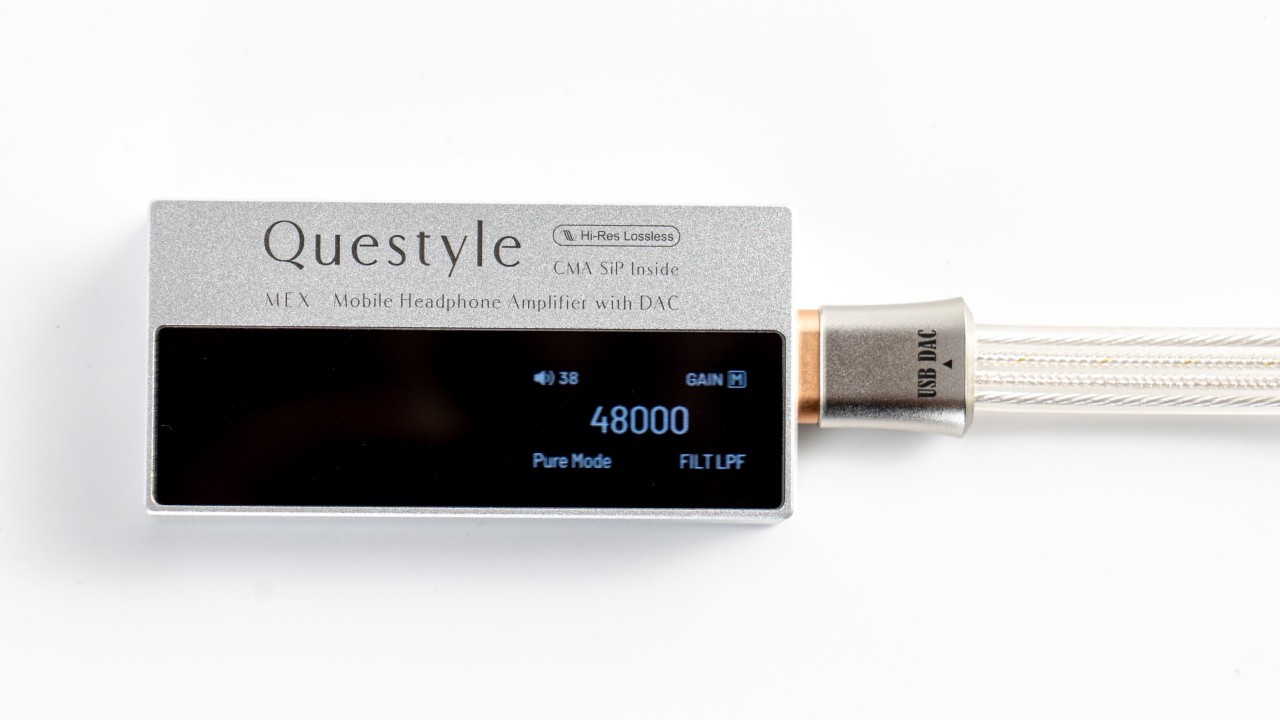 Questyle MEX portable DAC/amp and DDHifi TC19CC USB cable (Image: KotaloG/weibo)
The Questyle MEX launched internationally about a week ago. The MEX is a portable DAC/amp with an aluminum alloy chassis and a small window that reveals its circuit board. It also features an OLED display, a parametric equalizer (PEQ), a built-in microphone, and physical controls. Full details of the release follow below.
The MEX Is Questyle’s Answer to Dongle DACs Priced at $200 or Less
Two years after releasing the M15i, Questyle introduced the MEX, an equally compact portable DAC/amp with a broader feature set. The new model adds a display that shows the selected playback mode, information about the track being played, and the gain setting.
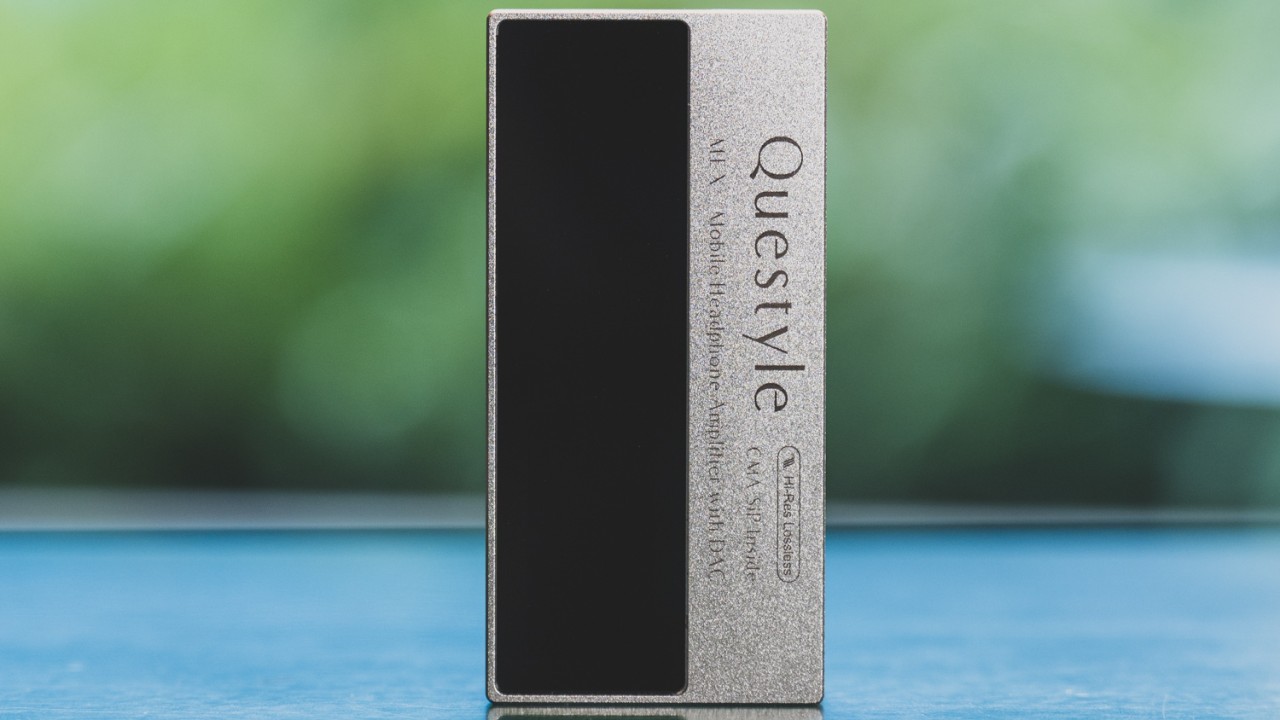
The MEX also supports the Questyle app, which includes Sound Lab for adjusting equalization (EQ). Users who prefer to skip manual PEQ adjustments can select an EQ preset or use PURE mode.
According to Questyle, the MEX can drive both in-ear monitors (IEMs) and over-ear headphones. The DAC/amp also carries Apple MFi certification for use with the iPhone and iPad, ensuring compatibility with its full range of features. The following sections examine the Questyle MEX in more detail.
The MEX Display
A display that shows which features are active and provides information about the current track clearly improves the user experience. A pair of physical buttons on the MEX allows users to navigate the on-screen menu.
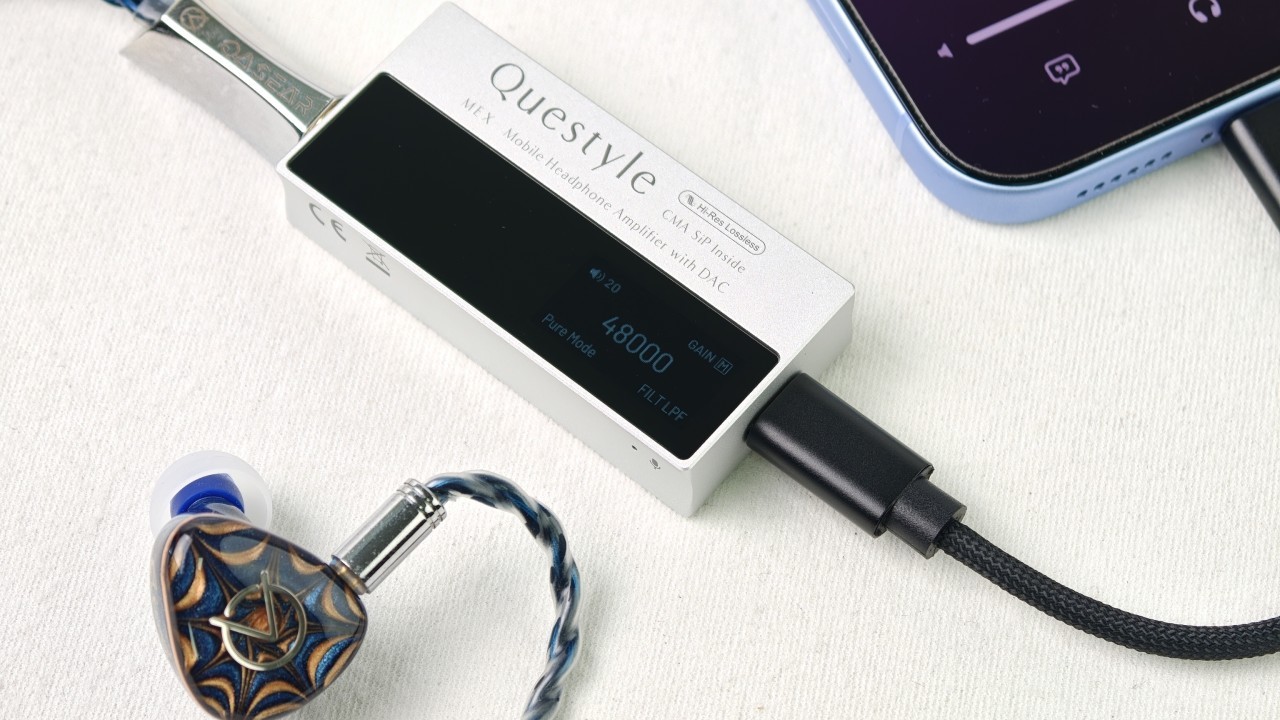
The MEX has a monochrome OLED display and uses its volume buttons for menu navigation. Other devices offer more appealing implementations. The FiiO QX11, for example, pairs a color display with a rotary knob that users can turn and press to navigate the menu.
The most important aspect of a DAC/amp, however, is the design of its audio circuitry. This is where Questyle sought to deliver a well-engineered solution.
The Three-Tier Architecture of the MEX
Questyle says its patented amplification technology enables the MEX to drive both high-impedance headphones and sensitive IEMs. The company describes the implementation in its new DAC/amp as follows.
“The patented SiP amplifier’s core amplification and negative feedback operate in the current domain, delivering high speed, wide bandwidth, low distortion and fast transient response. Together with the decoding and power-supply chain, this power is heard in natural dynamic transitions, tightly controlled bass and clearly defined musical layers.”
Questyle adds the following about the role of the preamplifier.
“Precise preamplifier control in the TTA Three-Tier Architecture helps the DAC and headphone amplifier work together effectively, providing a suitable drive foundation for different headphones.”
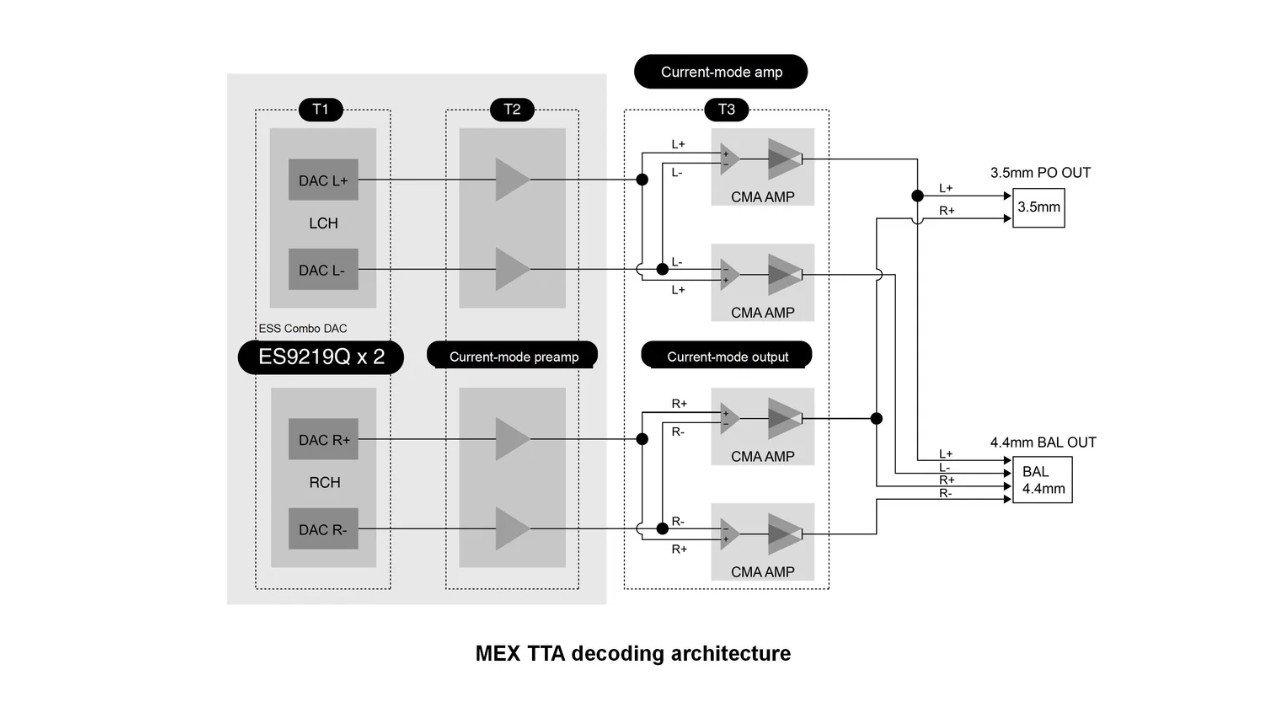
Achieving this performance requires effective management of the power supplied to the DAC/amp circuitry. Questyle therefore incorporated a high-precision power management system into the MEX.
Power Delivery to the MEX Circuit Board
Questyle uses TOREX’s precision power management system to supply the components on the MEX’s printed circuit board (PCB). The USB-C port supplies all operating power. The stated advantages are as follows.
“Efficient DC-to-DC conversion and low-noise LDO regulation ensure stable operating conditions for the DAC, preamplifier, and amplifier.”
DAC Chips and Output Voltage
The Questyle MEX uses two ES9219Q DAC chips from ESS Technology. The ES9219Q is designed for high energy efficiency to limit the drain on a smartphone’s battery. The MEX’s amplification circuit delivers a maximum output voltage of 4 V into 300 Ω through the 4.4 mm balanced output. The 3.5 mm single-ended (SE) output delivers half that voltage, or 2 V, into the same 300 Ω load.
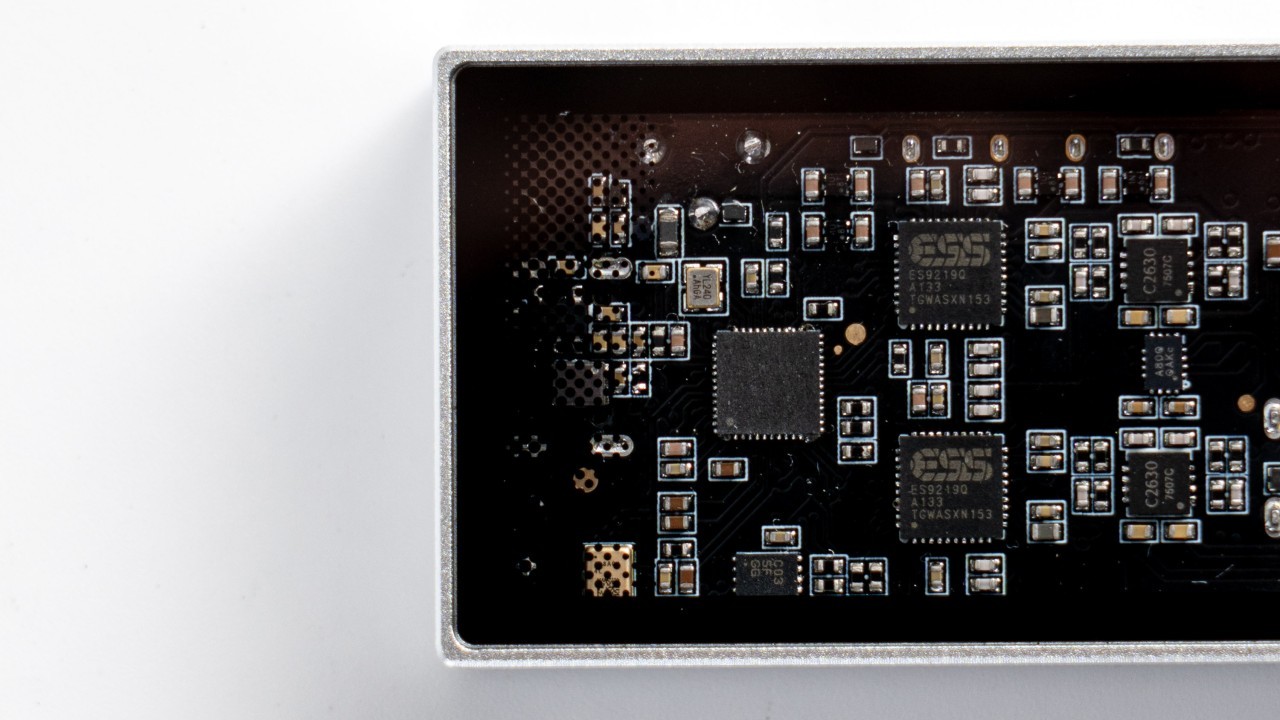
Three gain settings (low, medium, and high) give users finer control over volume. Selecting the appropriate gain keeps background noise low and allows precise volume adjustments with both IEMs and over-ear headphones.
PURE and TUNE Sound Modes
A slide switch on the side of the MEX chassis lets users switch between PURE and TUNE modes.
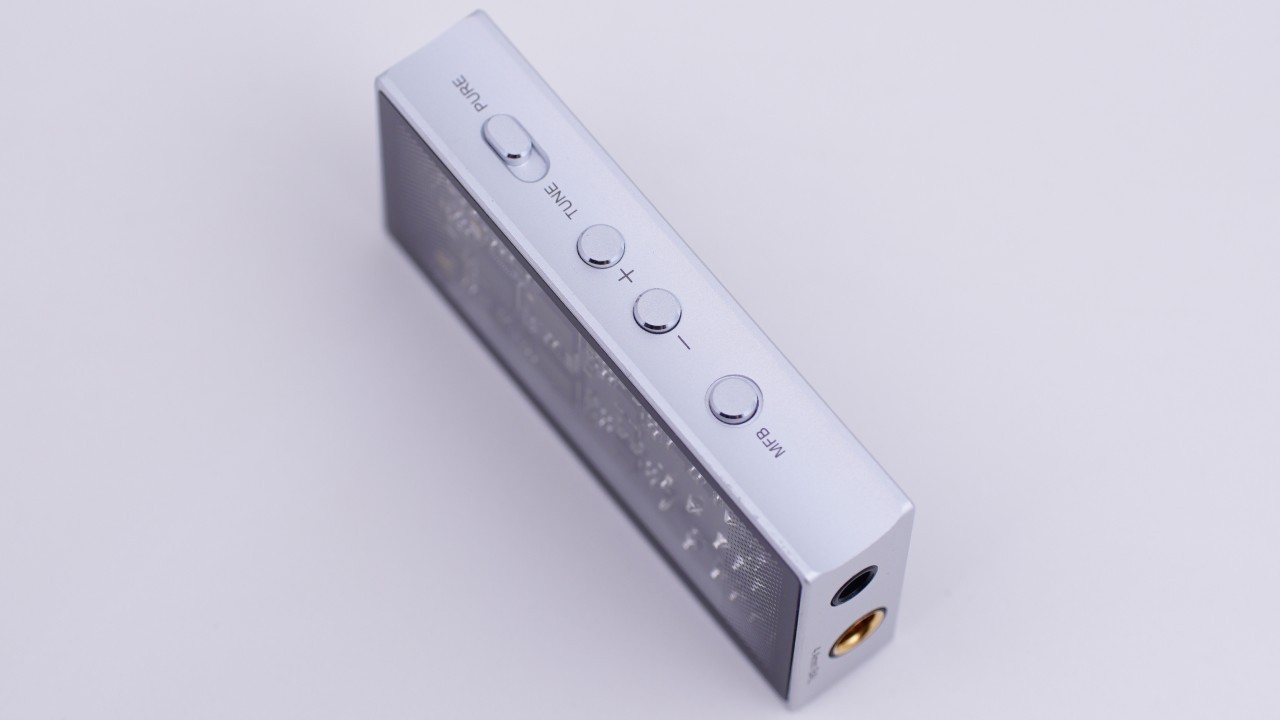
According to Questyle, PURE mode “faithfully reproduces the music’s timbre, dynamics and detail.” The company further describes the listening experience in PURE mode.
“From vocal breath and trailing notes to instrument texture and spatial layers, familiar recordings unfold naturally.”
In TUNE mode, users can apply EQ presets or use the parametric equalizer to create a custom profile.
Q-Code for Sharing EQ Profiles
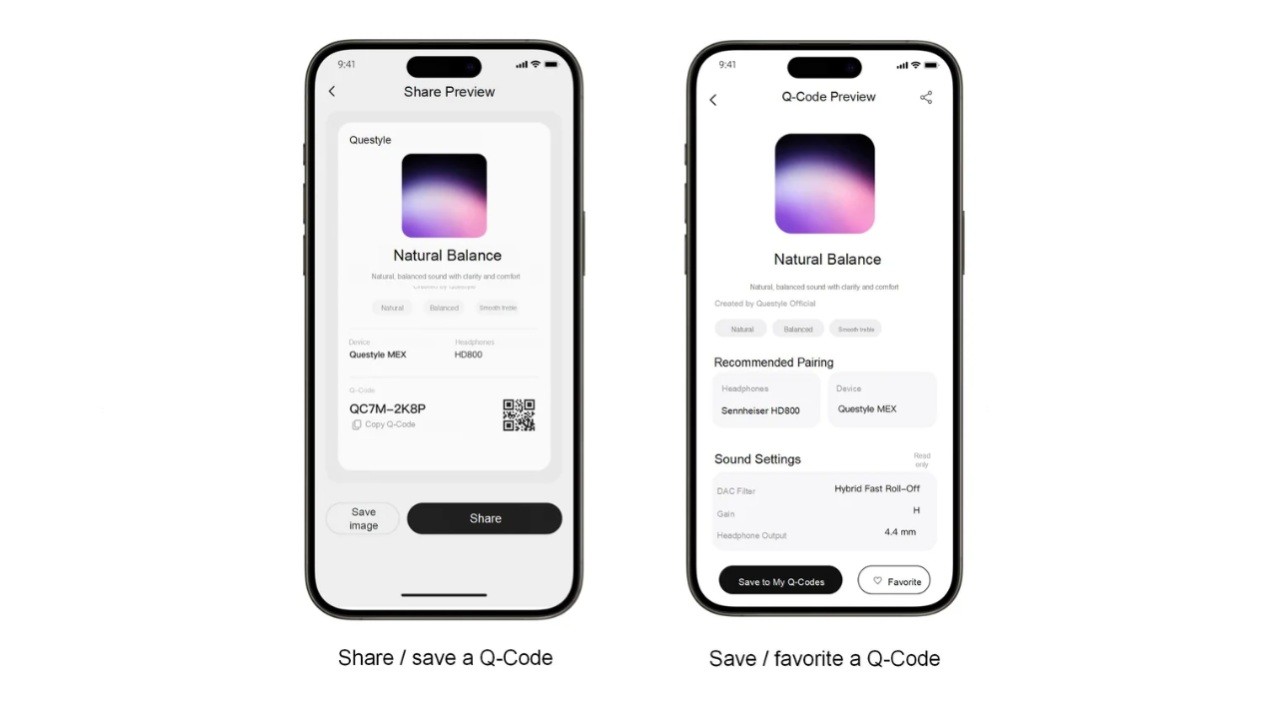
Questyle has pledged to add EQ profile sharing through future firmware updates. The feature, called Q-Code, will allow MEX users to share and download custom EQ profiles. It follows the same EQ “social network” concept used in the Moondrop and FiiO apps.
Questyle MEX Specifications
General Specifications
• App support: Yes
• Battery: None
• Bluetooth receiver: No
• Chassis material: Aluminum alloy
• DAC chips: Two ESS ES9219Q chips
• Dedicated USB power port: No
• Detachable cable: Yes
• Digital input: USB-C
• Dimensions: Not specified
• Display: Monochrome OLED
• Gain levels: Low, medium, and high
• Headphone outputs: 3.5 mm single-ended (SE) and 4.4 mm balanced
• MFi certification: Yes
• Microphone support: Yes, including in-line controls and an in-line microphone
• Parametric equalizer (PEQ): Yes
• Physical controls: Two volume buttons, one multifunction button, and a slide switch for PURE and TUNE modes
• Simultaneous fast charging and music playback: No
• UAC 1.0 support: Yes
• Volume steps: 64
• Weight: Not specified
Audio Specifications
• Native decoding: PCM up to 384 kHz/32-bit and DSD up to DSD256
• Maximum output voltage, 3.5 mm single-ended (SE) output: 2 V into 300 Ω
• Maximum output voltage, 4.4 mm balanced output: 4 V into 300 Ω
• Total harmonic distortion plus noise (THD+N): < 0.0002%
• Signal-to-noise ratio (SNR): > 125 dB
• Frequency response: ±0.5 dB from 20 Hz to 20 kHz in PURE mode
What Comes in the Questyle MEX Box?
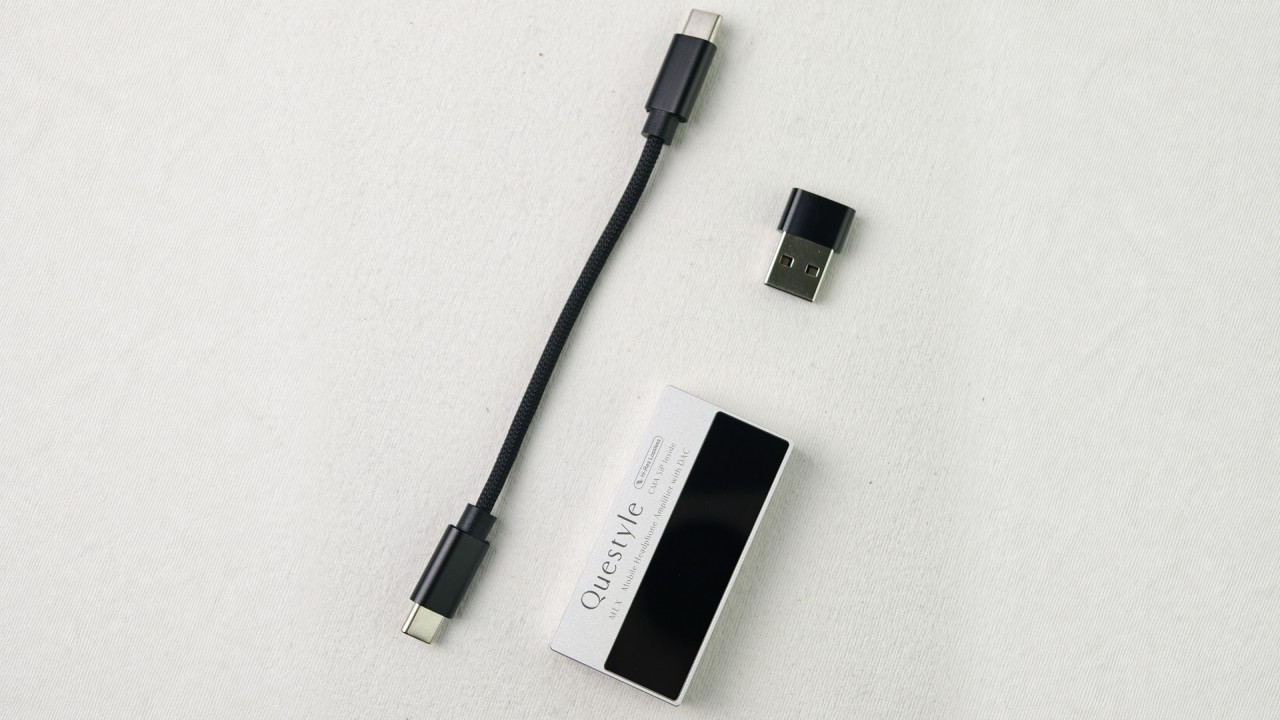
The Questyle MEX package includes the following items.
• Questyle MEX
• USB-C to USB-C cable
• USB-A to USB-C adapter
• Warranty card and user manual
Release, Pricing, and Availability
The Questyle MEX is now available internationally for US$199 through Questyle’s official store.
Share:


Product launches
ddHiFi Launches HS110MAG 25W Magnetic Charging Stand
Product launches
Qudelix-5K Plus launches with aptX Lossless and 4.4mm output
No comments have been made yet, be the first!