

DDHiFi TC19BC Comet Gold USB Cable Review
From: Vitor Valeri
A headphone hobbyist for over 15 years, he founded the Hi-Fi Hub website and is an administrator of the "Fones High-End" and "Fones Low-End" groups on Facebook.


Published in: 24/10/26 at 11:26
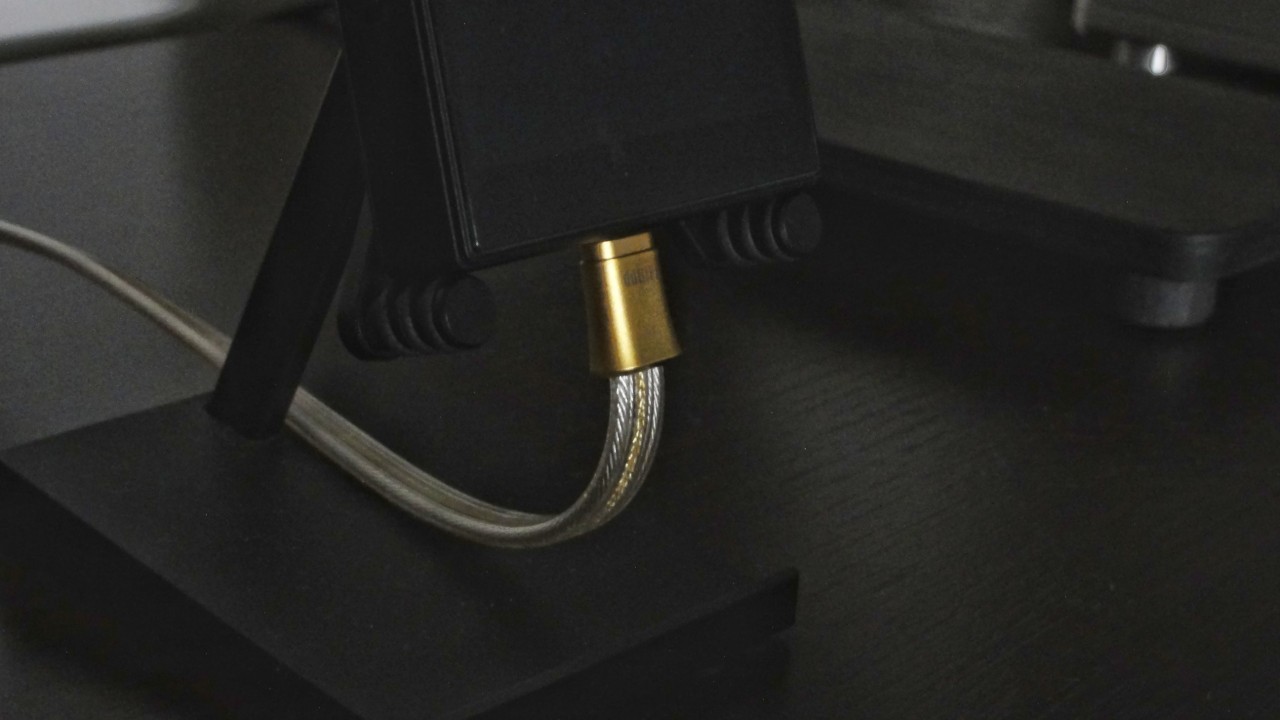 DDHiFi TC19BC Comet Gold USB cable (Image: Vitor Valeri/Hi-Fi Hub)
After evaluating the DDHiFi TC19BC Comet Gold, I can state that this USB cable represents a clear evolution of the original TC19BC Comet (OG). The Comet Gold not only improves the sound but also addresses the lack of midrange presence in the Comet OG. In addition, this new version is five centimeters longer than the first generation, allowing greater flexibility when positioning equipment. The fit of the USB-C plug has also improved.
In this review of the TC19BC Comet Gold, I evaluated its construction, usability, and perceived improvements in sound, while also comparing it with the first generation. It is important to emphasize that I still consider flexibility the primary distinguishing feature of DDHiFi’s Comet USB cable series. Although the sound quality provided by these cables has been apparent since I reviewed the TC19BC Comet OG, I regard it as an additional benefit.
The Build Quality of the TC19BC Comet Gold
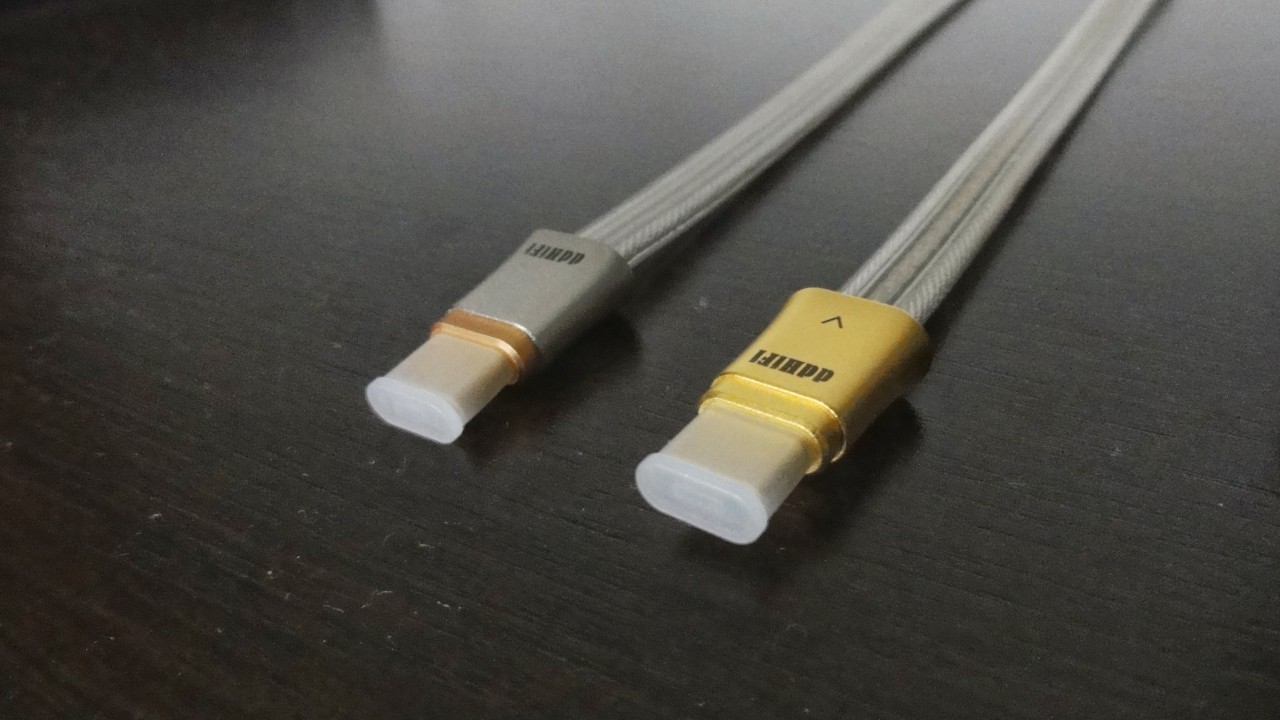
Both the flexibility of the wires and the fit of the USB plugs are of an exceptionally high standard in the DDHiFi TC19BC Comet Gold USB cable. In addition, the materials used in the USB connectors and conductor shielding have changed to provide better isolation from interference.
The Flexibility of the TC19BC Comet Gold
Like the Comet OG, the TC19BC Comet Gold retains a transparent “PVC SoftFlex” jacket that makes the USB cable extremely flexible. In my opinion, this is the greatest benefit offered by DDHiFi’s TC19 Gold cable series, which is available in USB-C to USB-B (TC19BC) and USB-C to USB-C (TC19CC) versions.
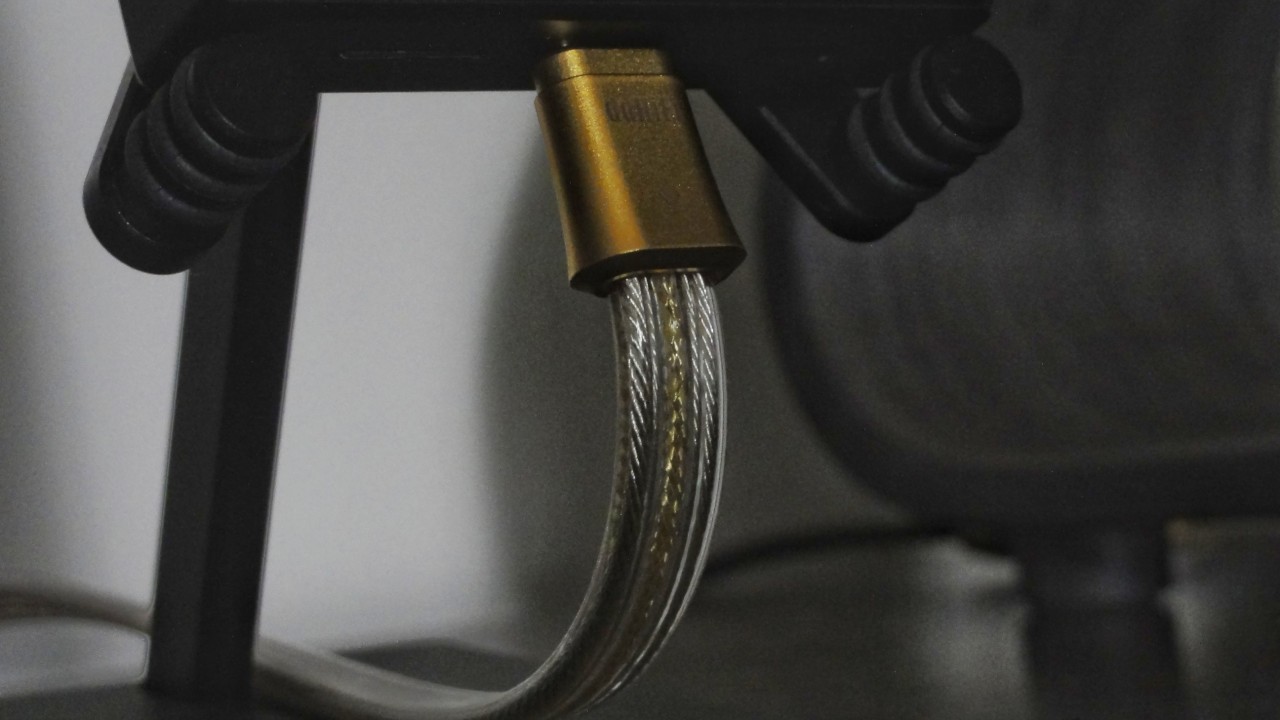
The TC19BC Comet Gold can be bent and twisted easily, making it considerably easier to connect equipment, whether portable or desktop. Even when using the DDHiFi HS110SE stand for digital audio players (DAPs) (review here), the limited clearance did not prevent connection to the FiiO DT11.
In my desktop system, the FiiO DT11 sits directly beside the Topping D70S desktop DAC. The TC19BC Comet Gold twisted easily to the side as it passed beneath the desk and then back up to connect to the DT11.
The Fit of the USB Connectors on the TC19BC Comet Gold
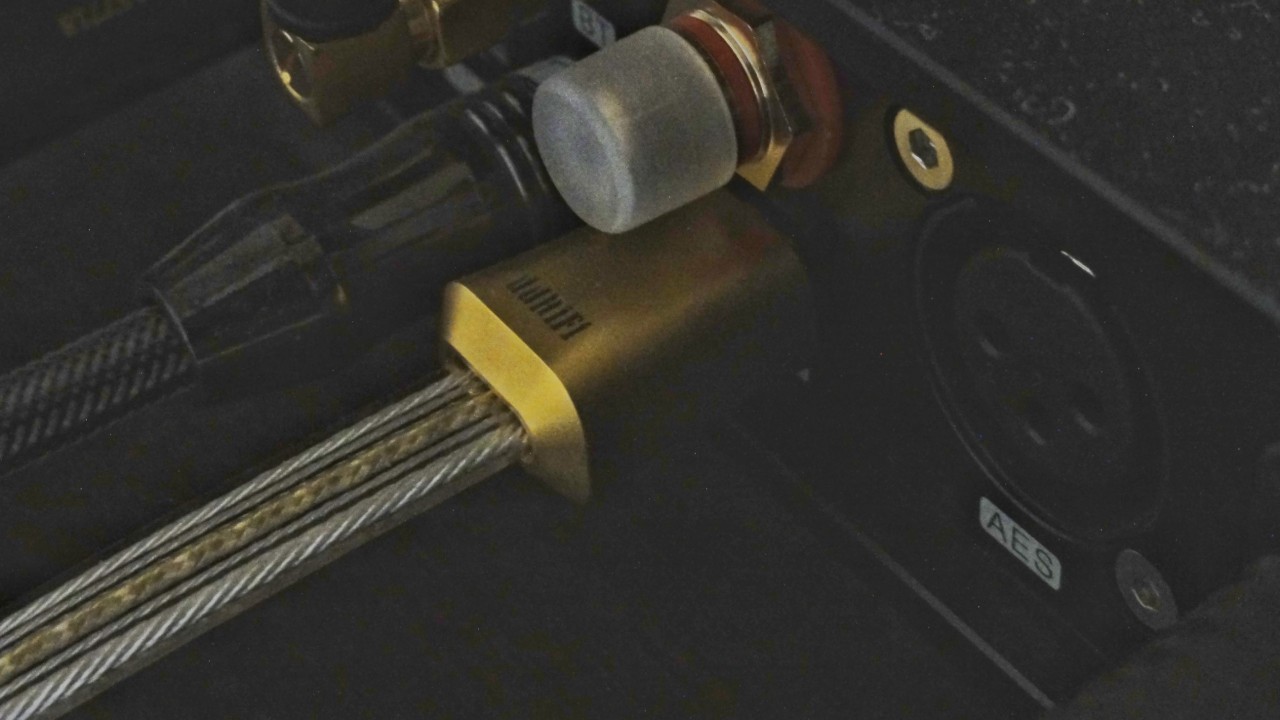
Compared with the USB cables supplied with equipment, I found that the TC19BC OG already offered a superior fit when inserting the USB plugs. However, the TC19BC Comet Gold takes this characteristic to a new level.
Both the USB-B and USB-C plugs on the Comet Gold fit more securely into the DAC and DAP. Compared with the Comet OG, I also noticed that considerably more force is required to insert and remove the USB-C connector from the DAP. To prevent damage, I therefore recommend maintaining a secure grip on the USB-C plug, using the connector’s curved surface to support your fingers.
The Conductor Shielding of the TC19BC Comet Gold
The wires in the TC19BC Comet Gold have two layers of shielding. Although DDHiFi has not provided this information for the Comet OG, I believe that it has only one shielding layer. This characteristic, together with the material used in the USB connectors, provides better isolation from electromagnetic interference.
The Material Used in the USB Connector Housings of the TC19BC Comet Gold
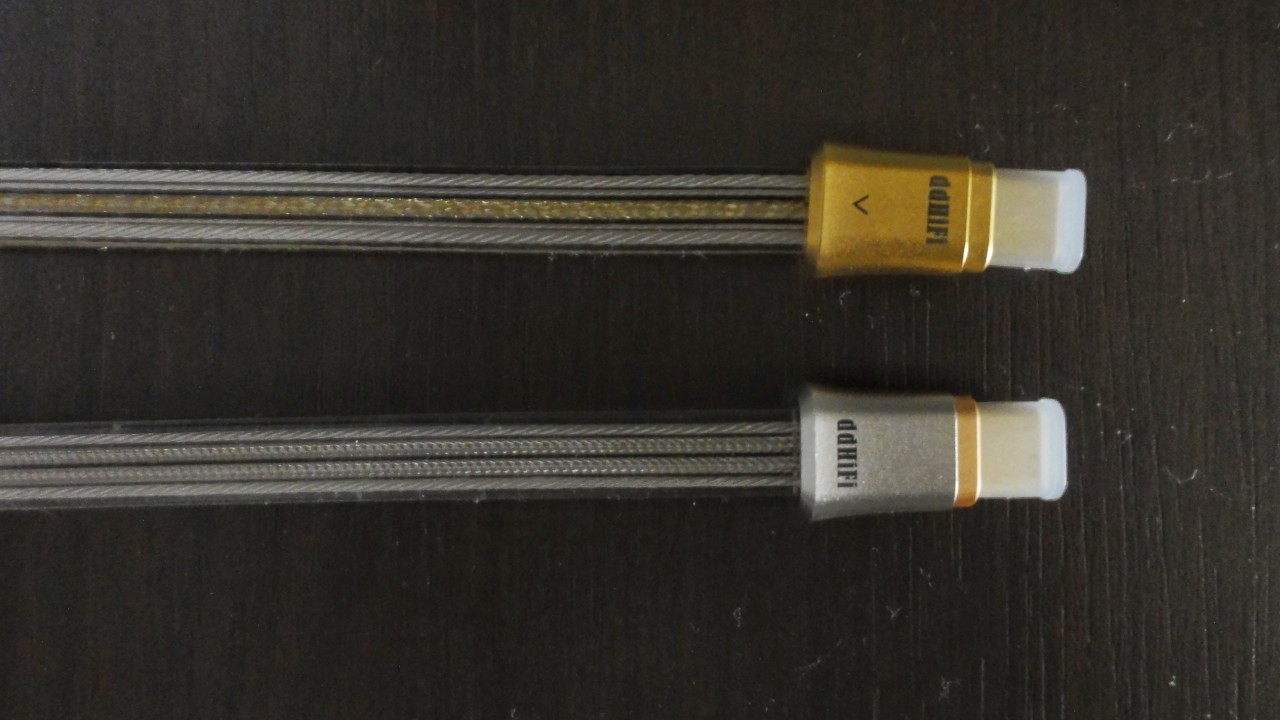
Instead of using aluminum alloy USB plug housings, as in the TC19BC Comet OG, DDHiFi chose copper for the TC19BC Comet Gold. The use of copper in audio equipment enclosures is not uncommon. DAP manufacturers such as Sony, Astell & Kern, Onix, and Hidizs have released models with copper enclosures.
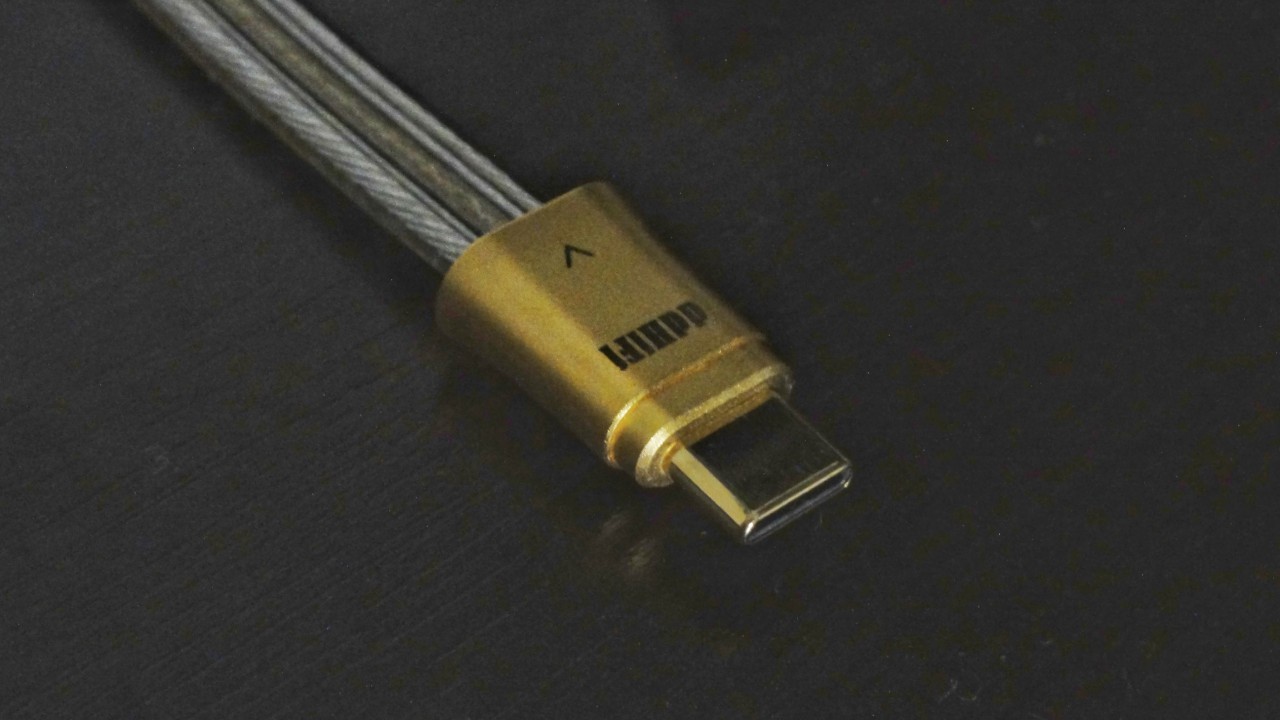
Audio manufacturers justify using copper in their equipment on the grounds that it improves isolation from interference and enhances sound quality.
DDHiFi explained the benefits of copper for shielding against interference as follows:
“It provides excellent grounding and shielding performance while optimizing signal transmission.”
The manufacturer of the TC19BC Comet Gold also stated that using copper in the USB connectors improved the sound:
“Compared with the standard Comet, the Gold version delivers a fuller, richer sound, better high-frequency control, and effectively reduces hollowness.”
After reading these two statements from the USB cable manufacturer, you may wonder whether these claims are reflected in practice. In the following section, I describe what I perceived when testing the TC19BC Comet Gold in terms of sound.
Perceived Changes in Sound with the TC19BC Comet Gold
When reviewing the TC19BC Comet OG, I was surprised by the results I obtained during listening sessions with my desktop system. Initially, I did not believe that changing USB cables could alter the sound, but I found that I was mistaken. With the TC19BC Comet Gold, these changes are even more apparent.
Background Silence
The first thing I noticed when connecting the TC19BC Comet Gold was an even quieter background than that provided by the Comet OG. Sounds emerged with remarkable vividness. Classical music revealed this characteristic most clearly.
The quieter background provided by the Comet Gold became even more apparent when I replaced the FiiO JM21 with the FiiO DT11. Both devices were connected to the Topping D70S desktop DAC.
Changes in Sound Presentation
The changes introduced by the TC19BC Comet Gold improve the sound without sacrificing the strengths of the Comet OG. The soundstage remains very wide, with well-defined layering, but now features a sweeter midrange, more extended treble, and fuller bass.
I must emphasize that the only aspect I found lacking in the Comet OG has been addressed in the Comet Gold: the midrange. I found the Comet OG’s midrange presentation recessed, creating a sense of emptiness, particularly in classical and jazz performances. With the Comet Gold, the midrange sounded engaging, alluring, and more natural.
In the low-frequency region, I noticed that the midbass became more pronounced, creating a greater sense of fullness. This also contributed to the body of voices and string instruments that rely on bass frequencies for their presence.
In the high-frequency region, I perceived greater detail. The treble exhibited more texture. This was particularly evident when listening to cymbals in jazz performances.
Equipment Used for Testing
The equipment I used to test the DDHiFi TC19BC Comet Gold USB cable is listed below.
• Woo Audio WA3 amplifier with one Western Electric 421A tube and two Sylvania JAN 6DJ8 tubes, powered through a Pangea Audio AC-14SE MKII power cable
• VR Cables Storm RCA cable
• Topping D70S DAC with a Pangea Audio AC-14 power cable
• FiiO JM21 DAP
• Grado RS2e open-back on-ear headphones
• Audio-Technica ATH-W3000ANV closed-back over-ear headphones
• Sennheiser HD 600 open-back over-ear headphones
• FiiO DT11 portable digital transport
Conclusion
The DDHiFi TC19BC Comet Gold represents a genuine evolution of the Comet OG, providing a quieter background and a more musical, euphonic sound. Its midrange presentation brings greater vividness to the music, making listening more engaging.
For those interested, I purchased the TC19BC Comet Gold from DDHiFi’s official store on AliExpress. Please note that this USB-C to USB-B model is 100 cm (1 meter) long. The USB-C to USB-C version is also available in lengths of 10 cm, 45 cm, and 100 cm through this link.
No comments have been made yet, be the first!