

FiiO Launches a Modular Desktop Rack
From: Vitor Valeri
A headphone hobbyist for over 15 years, he founded the Hi-Fi Hub website and is an administrator of the "Fones High-End" and "Fones Low-End" groups on Facebook.


Published in: 10/02/26 at 14:20
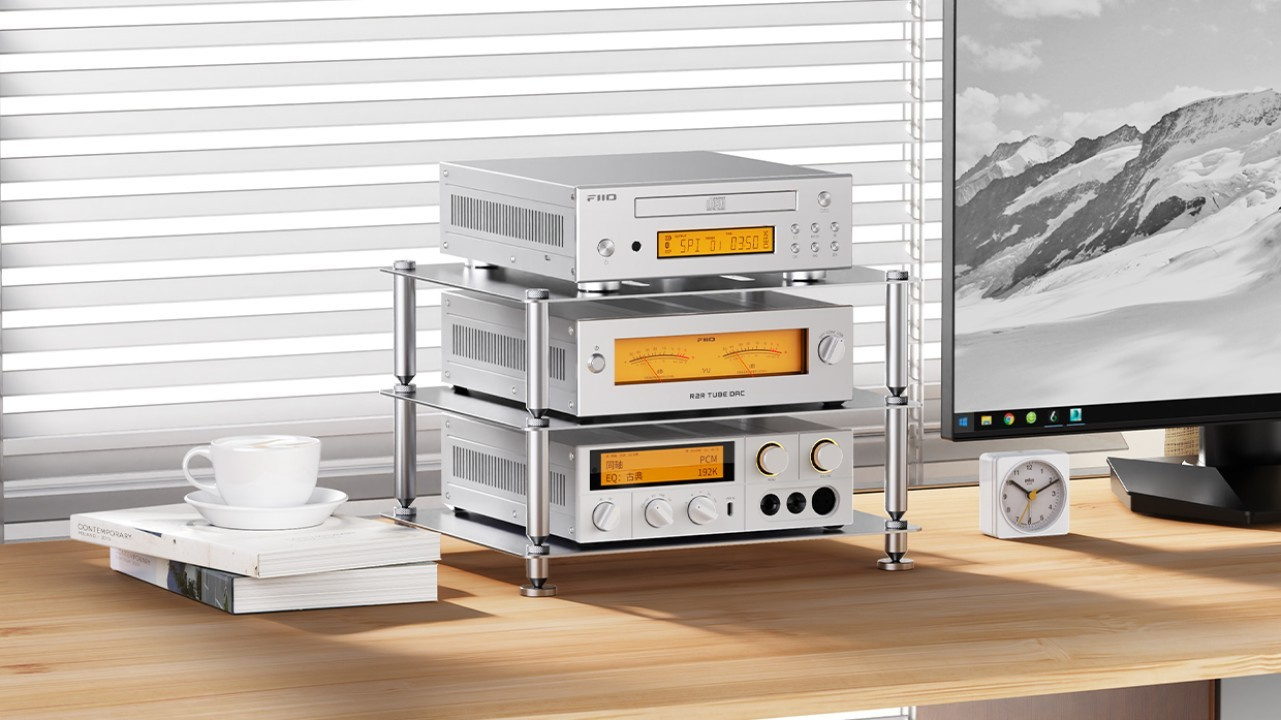
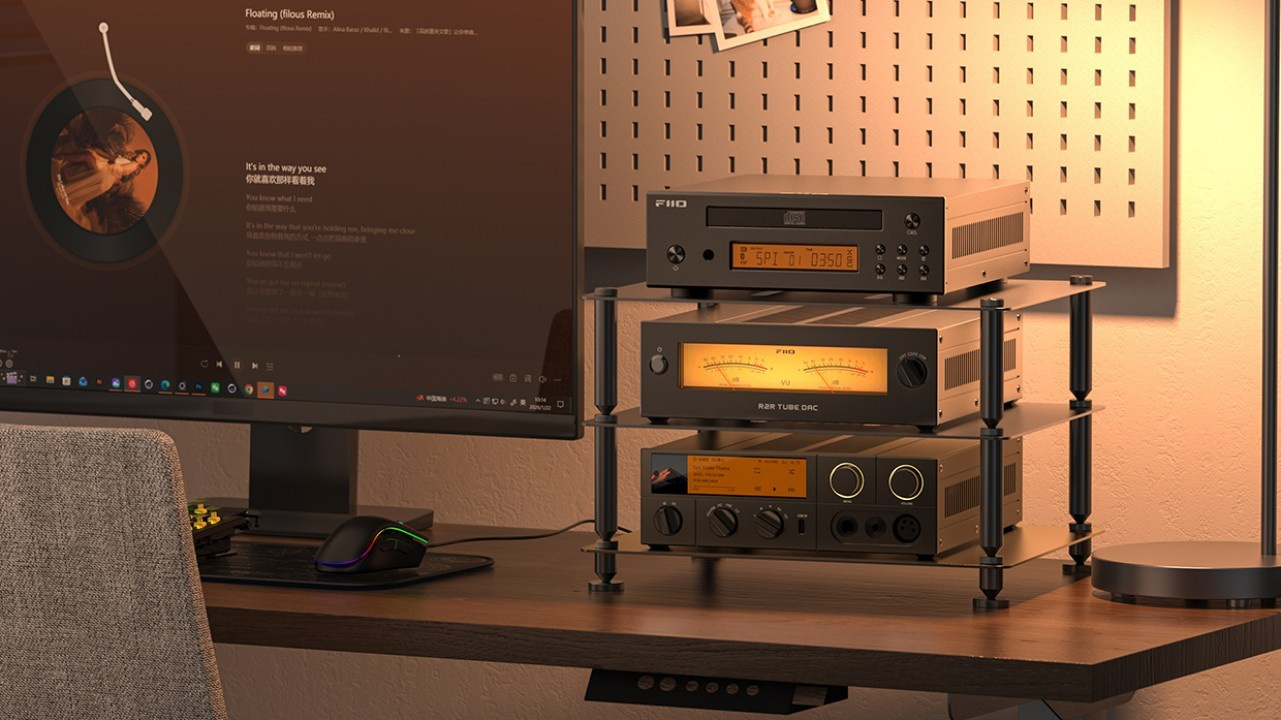 FiiO Modular Metal Desktop Rack (Image: FiiO / Courtesy of FiiO)
The FiiO “Modular Hi-Fi Device Rack” was officially launched today (the 10th). According to the company, the modular rack is the result of feedback and suggestions from users who wished for the development of a product of this kind. Numerous assessments were conducted to evaluate the product’s feasibility, and, fortunately, FiiO decided to bring the long-awaited rack to market as a gesture of appreciation to its long-time users. Details are provided below.
Modular architecture to accommodate multiple use scenarios
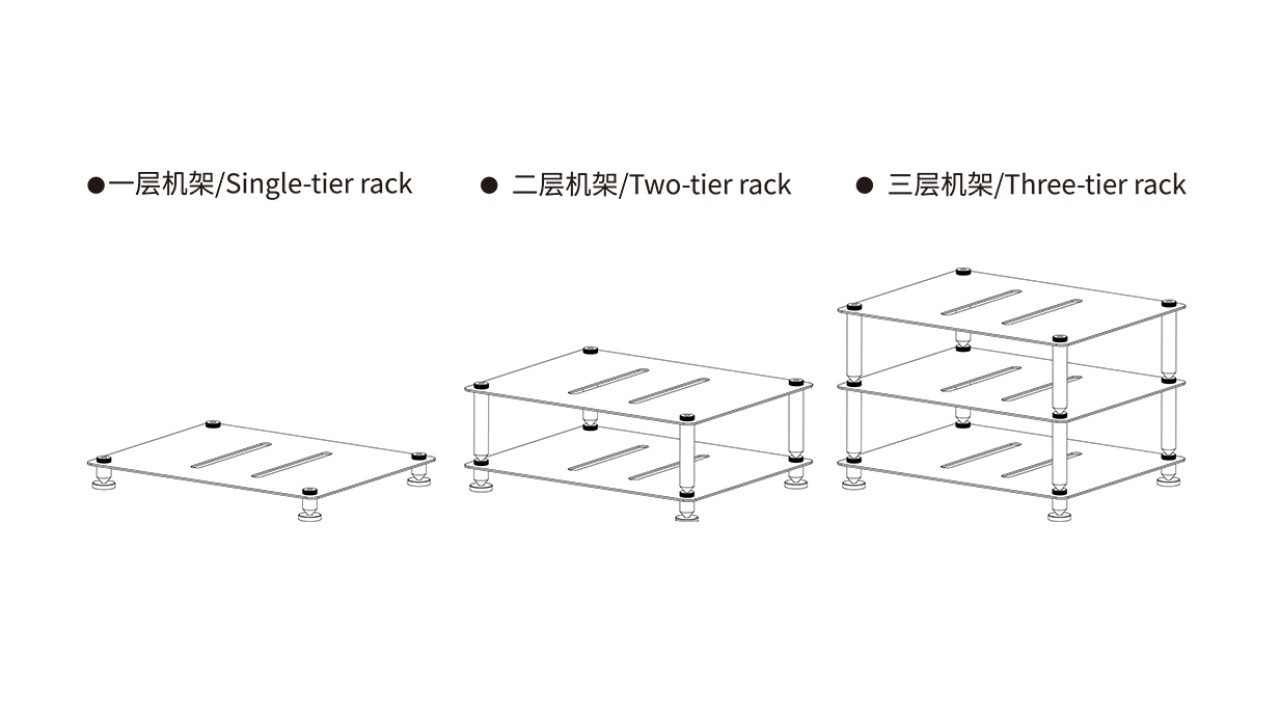
A modular architecture was adopted for the FiiO “Modular Hi-Fi Device Rack,” allowing users to purchase only what they need, depending on the desktop devices they intend to place on the metal plates. The version released at this time features three tiers; however, according to the manufacturer, two-tier and single-tier versions will be launched at a later date.
Below is an image illustrating the rack structure in one-tier, two-tier, and three-tier configurations.
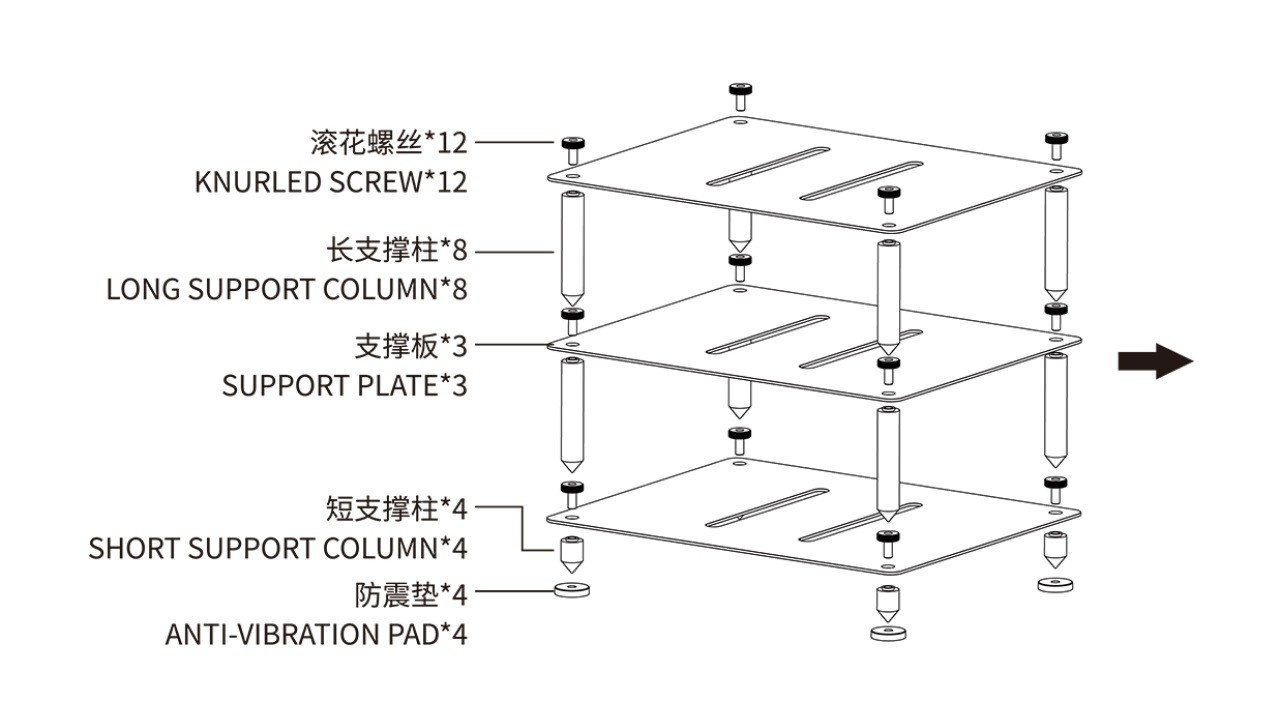
Dimensions and assembly of the FiiO rack
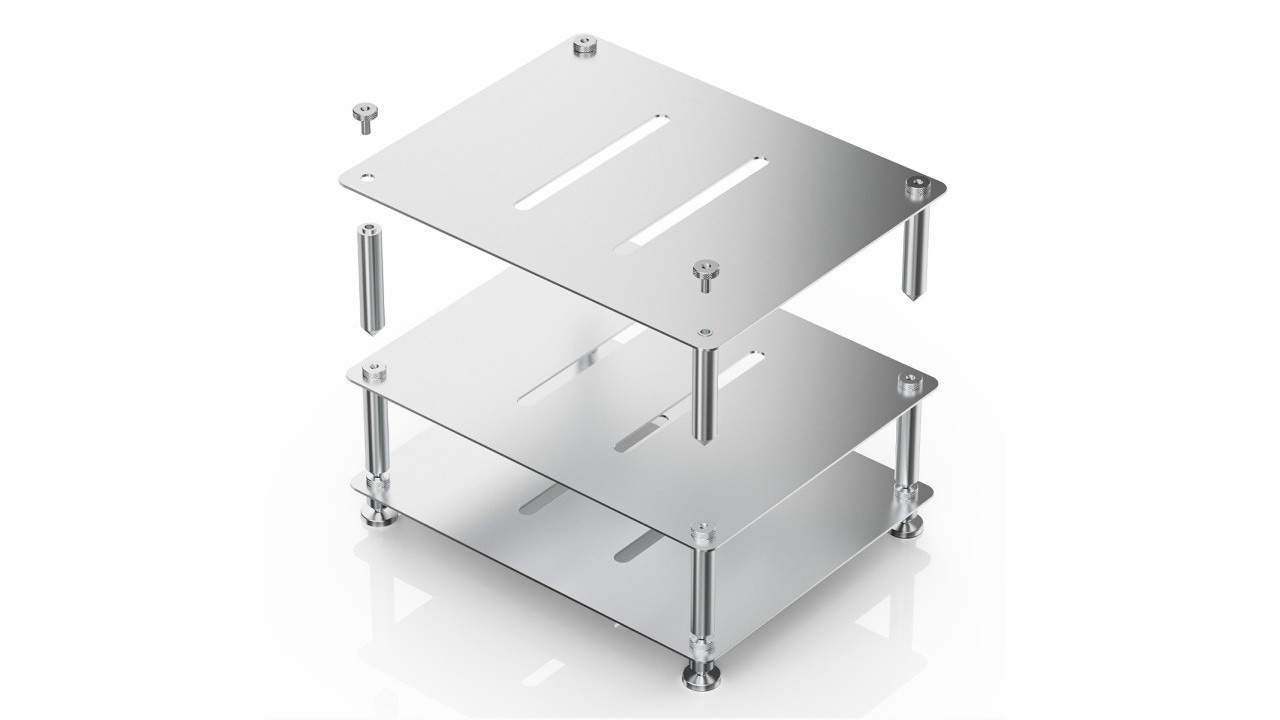
Assembly of the FiiO rack is straightforward and does not require tools. The tiers are connected by screws whose top central area is slightly domed to support the columns. Each screw is threaded into the top of the columns, with the metal plate positioned in between.
At the base of the rack, which is also considered the first tier, there is a clearance of nearly 2.7 cm from the surface.
The distance between the first and second tiers, as well as between the second and third tiers, is 8.5 cm. Therefore, if a desktop device has a greater height, it is recommended to place it on the top metal plate in the three-tier version of the rack.
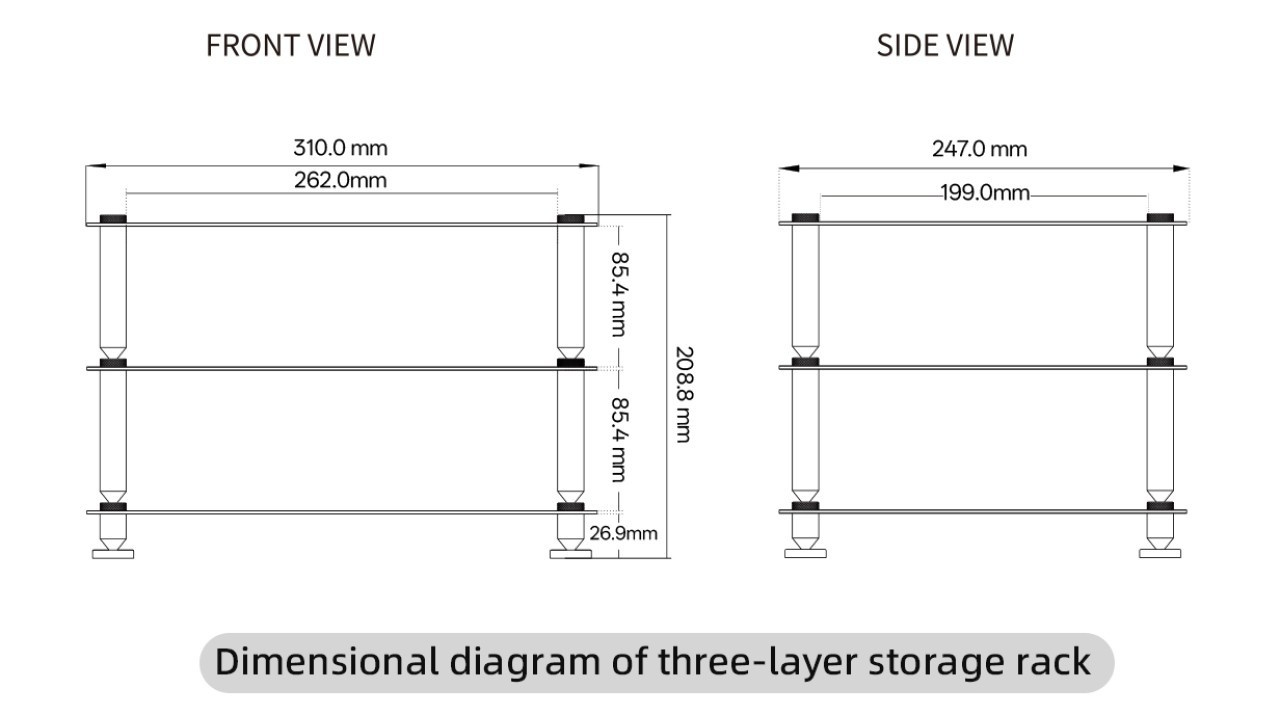
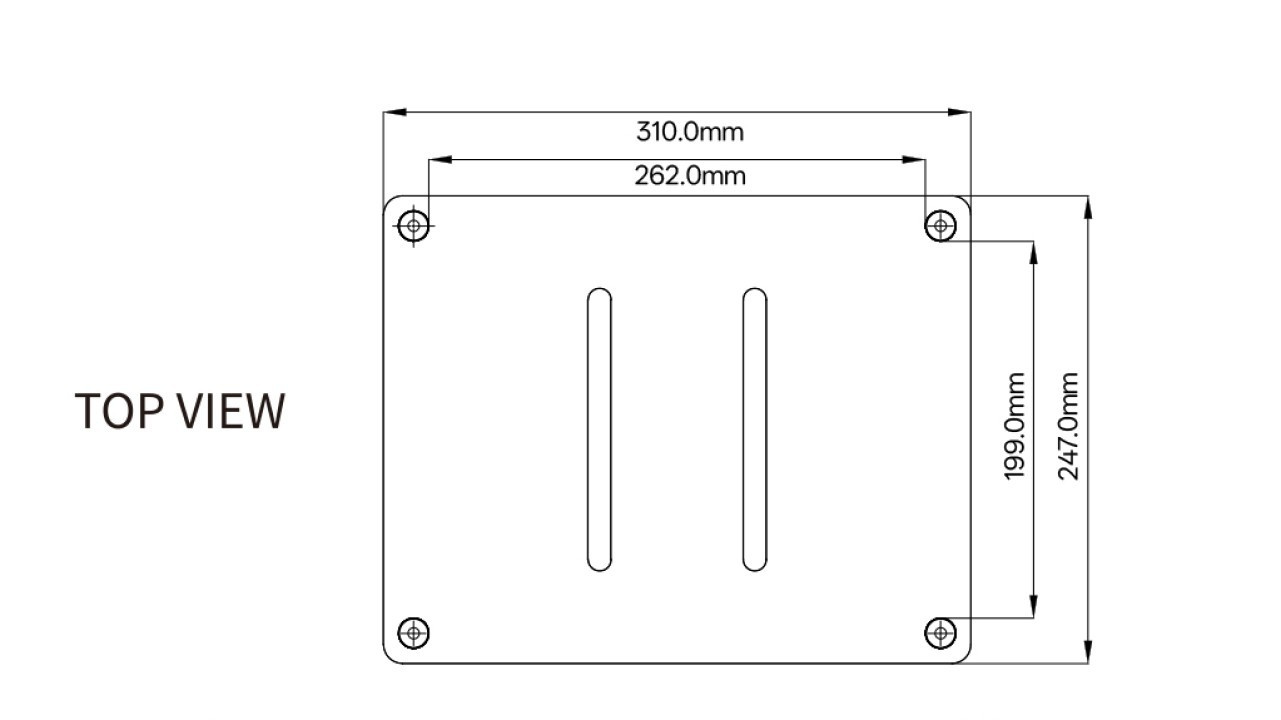
In terms of length and depth, the supported equipment should ideally measure no more than 26.2 cm × 19.9 cm. Above these dimensions, the feet of the desktop device may rest on the column screws, which protrude beyond the metal plate.
Anti-vibration system
On the first tier of the rack, there are feet with vibration-absorbing material on the underside. In the topic “Anti-vibration feet and misconceptions (Vibration Tip)” on the Bambu Lab 3D printer manufacturer’s forum, a user identified as “julie777” explained the function of this component as follows:
“Isolation feet are made of some kind of elastomer, a material flexible enough to allow the equipment to move independently of the surface on which it rests.”
Essentially, the purpose of the anti-vibration feet is to isolate the equipment placed on the rack from vibrations caused by loudspeakers or other vibration sources.
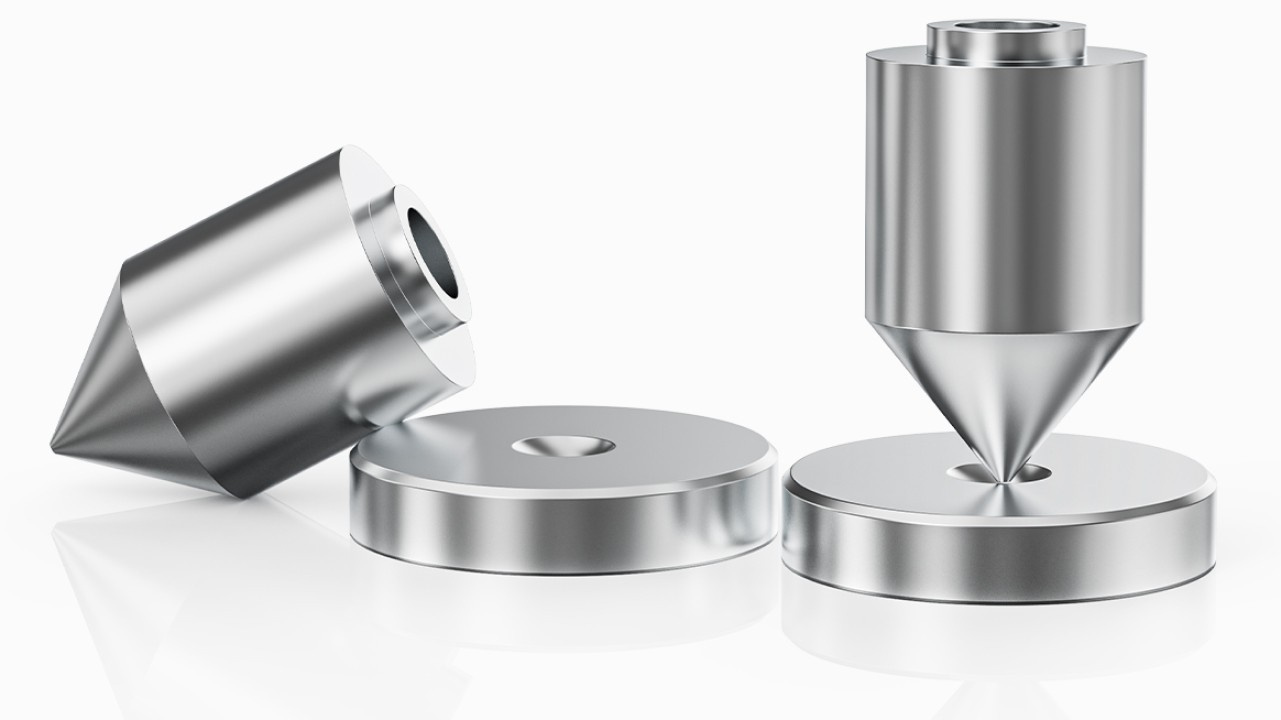
To support the metal plates, the rack uses columns with pointed tips at the bottom and screws with flat heads at the top. The use of fine points helps increase pressure at a small contact area, contributing to greater stability. Notably, to prevent unwanted movement of the components, there is a domed area at the point where the columns make contact.
Maximum load per tier
According to FiiO, each tier supports a maximum load of 10 kg. Each plate is made of solid metal with a thickness of 16 mm.
Cooling-assistance solution
To assist with equipment cooling, each metal plate of the FiiO rack features two elongated cutouts in the center. This design allows hot air to circulate more freely.
Launch, pricing, and availability
The three-tier FiiO “Modular Hi-Fi Device Rack” is already available in black and silver through FiiO’s official AliExpress store for US$109.12. As mentioned above, two-tier and single-tier versions will be offered at a later date, at lower price points.
Share:


No comments have been made yet, be the first!