

Smartphone as a DAP (Digital Audio Player): Is It Possible?
From: Vitor Valeri
A headphone hobbyist for over 15 years, he founded the Hi-Fi Hub website and is an administrator of the "Fones High-End" and "Fones Low-End" groups on Facebook.


Published in: 23/12/25 at 14:24 - Updated in: 16/01/26 at 11:37
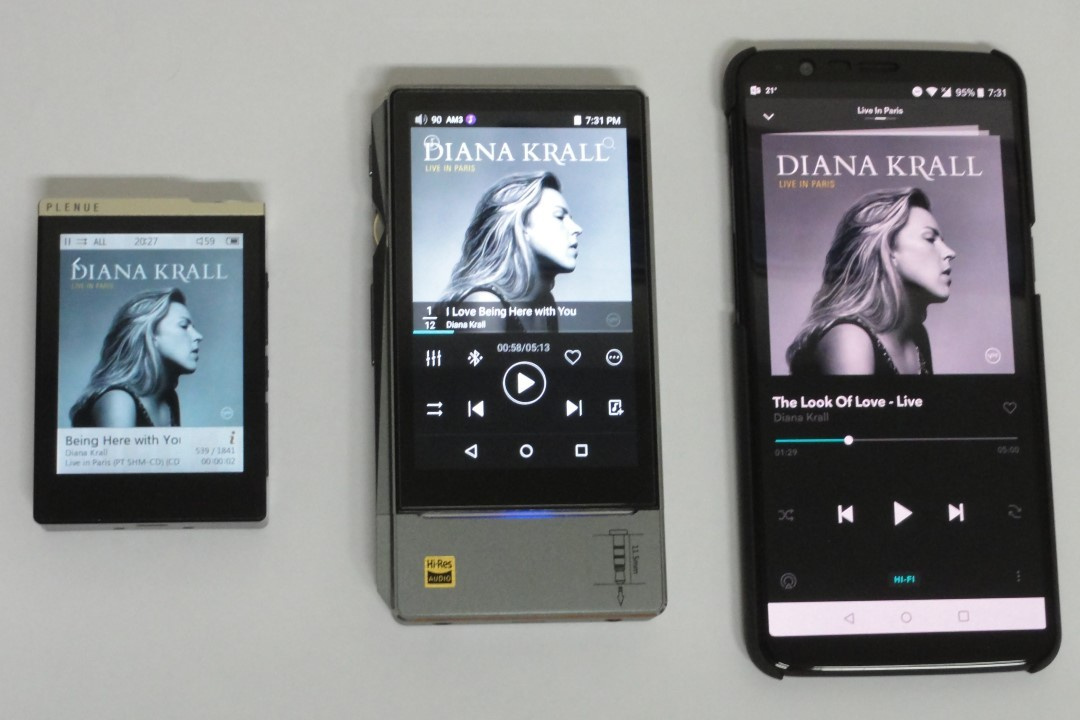
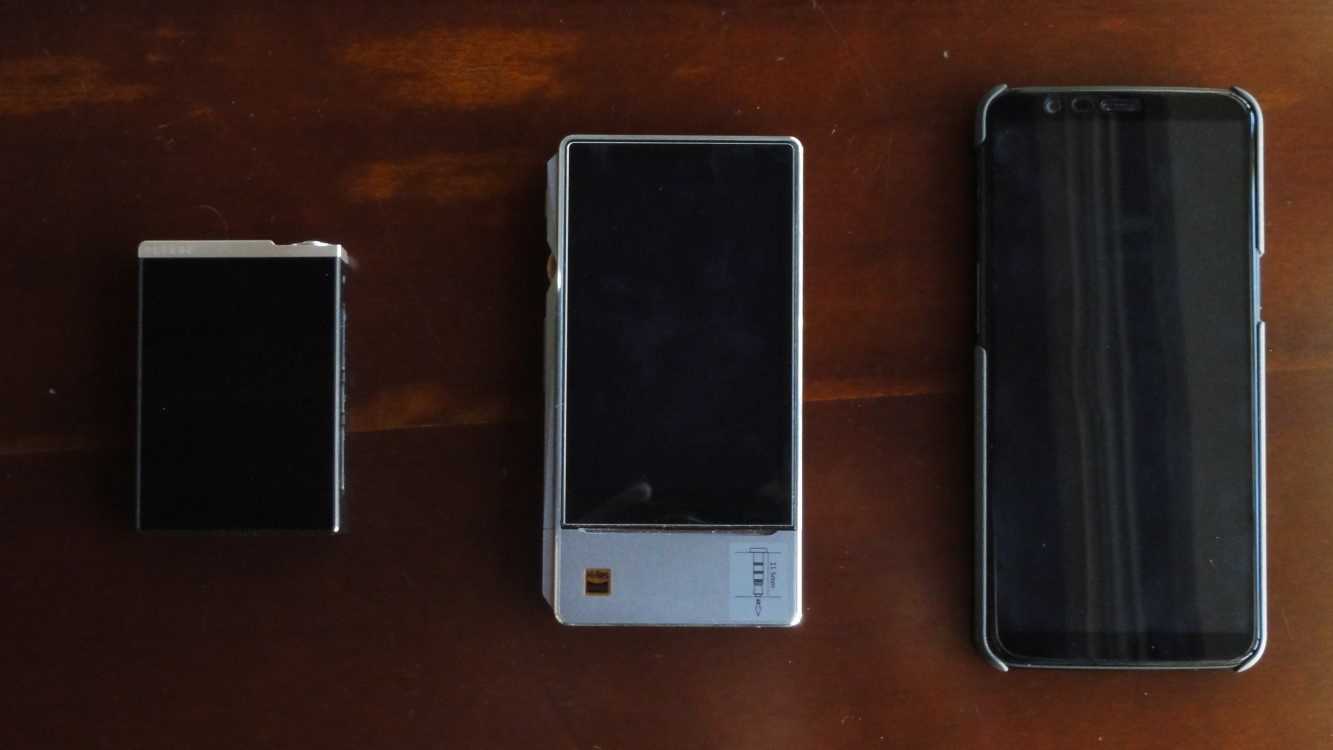 Illustrative image of Digital Audio Players (DAPs) and smartphones – In the photo, from left to right, the Cowon Plenue D, the FiiO X7 MKII, and the OnePlus 5T (Image: Vitor Valeri/Hi-Fi Hub)
Using a smartphone with a 3.5 mm (P2) headphone output to fulfill the role of a DAP (Digital Audio Player) is only partially feasible. Unfortunately, the experience is not the same due to differences related to features, external physical structure, and optimizations in terms of both internal hardware and software, including application-specific and operating system functionalities.
What is a Digital Audio Player (DAP)?
A Digital Audio Player (DAP) is an electronic device specifically designed to play music in the form of audio files in formats such as MP3, WAV, FLAC, ALAC, among others. However, there are additional characteristics that distinguish a DAP from other devices.
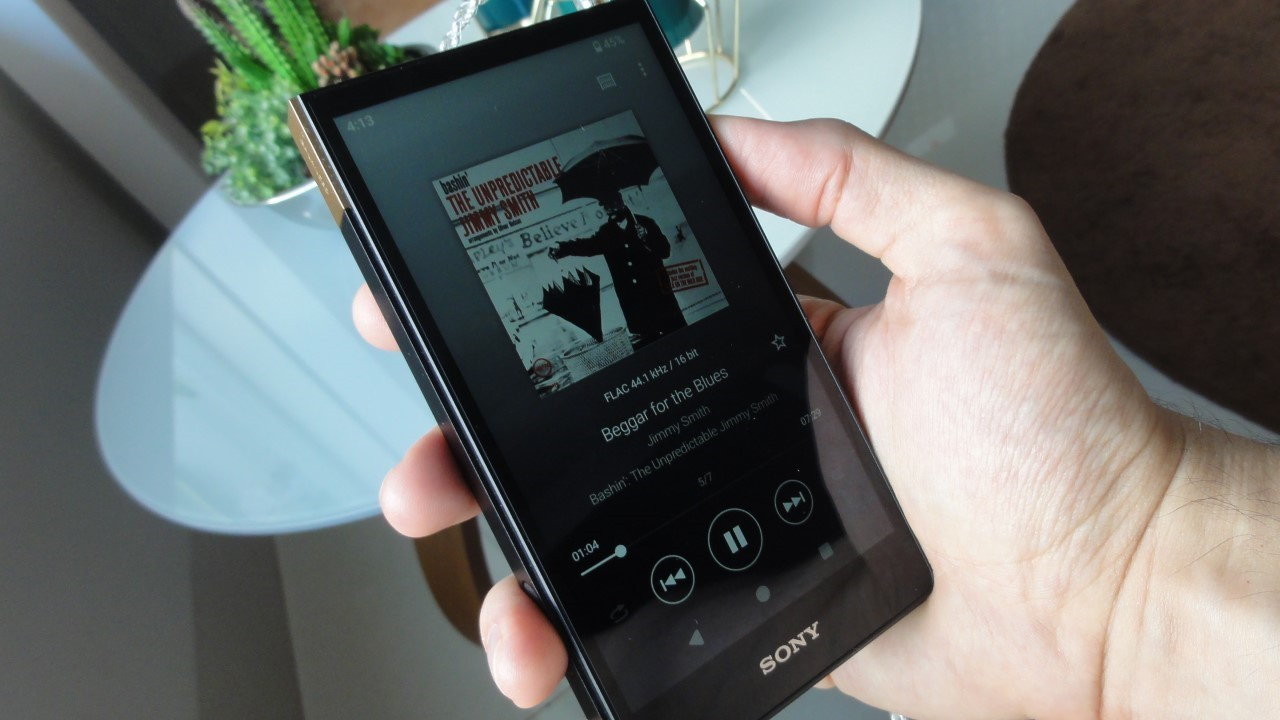
Physical characteristics of a DAP
Physically, a DAP usually has a smaller display than those found on smartphones, since there is no need for a large screen to view a music list or an album cover. In addition, the screen resolution is typically 720p or lower, which results in lower power consumption.
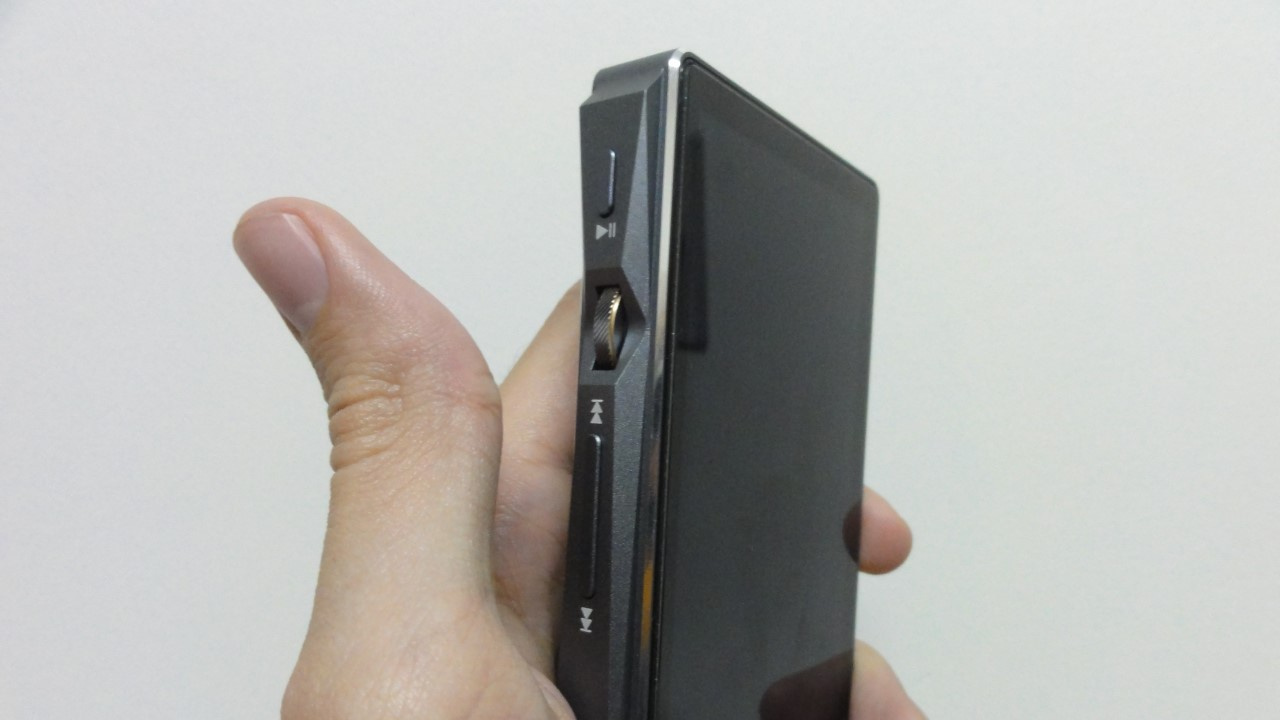
Another physical characteristic commonly found in DAPs is the presence of physical buttons that allow music control without requiring the user to turn on the device’s screen to skip to the next track or pause playback. Some models also feature a knob [1] for volume adjustment.
DAPs include connections dedicated to audio, such as 3.5 mm and 4.4 mm outputs, which can be used to connect headphones, dedicated amplifiers, or DACs with optical and/or coaxial inputs. Some models also provide an IIS (Inter-Integrated Sound) output.
[1] A knob is a rotary control, similar to the crown of a wristwatch.
Internal hardware in DAPs
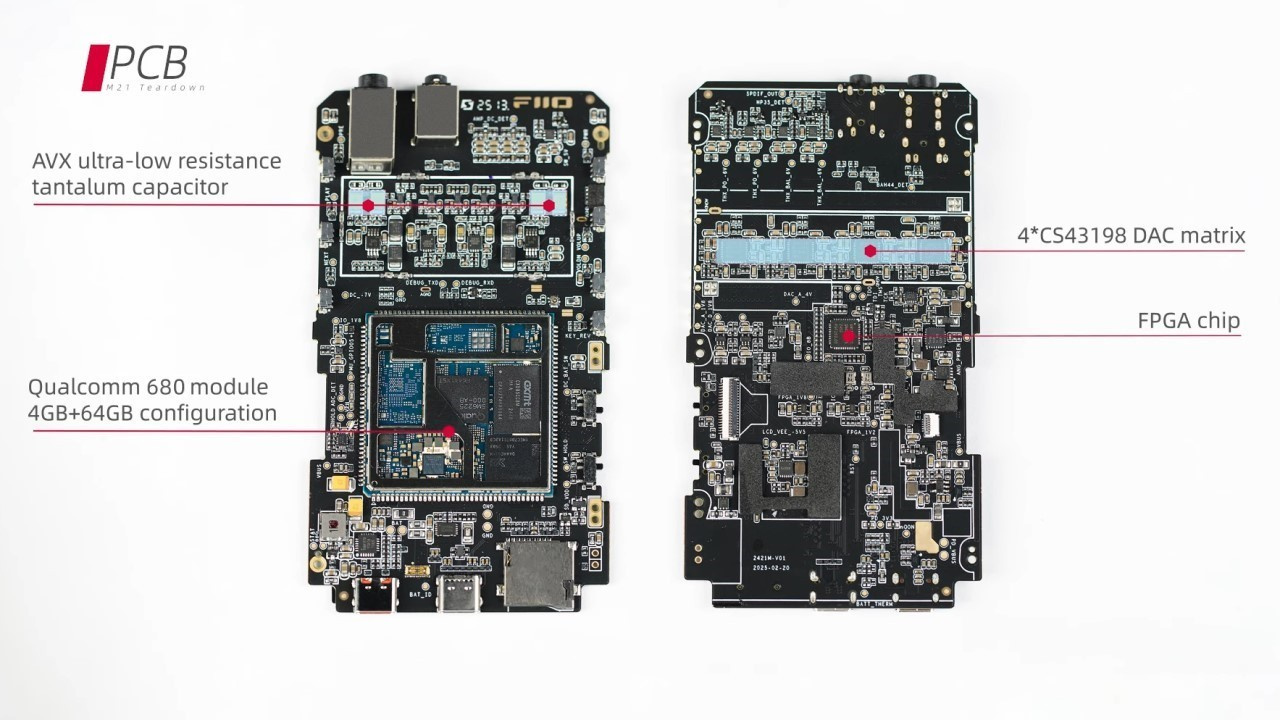
The internal hardware of a DAP is composed of several components, some of which are specifically selected to enhance audio playback performance, such as high-quality capacitors and high-precision clocks. Manufacturers usually physically separate these components on the printed circuit boards (PCBs) into distinct regions, namely:
• Power supply for the components
• Pre-amplification and amplification (the area responsible for handling analog signals)
• Digital signal processing (DAC chips and related components)
This separation is necessary to avoid electromagnetic interference in the transmission of the audio signal.
Operating system (OS) features in DAPs
DAPs provide several operating system features that allow better control over audio playback, including:
• Bitrate control for Bluetooth audio codecs: some DAPs allow users to define higher or lower bitrates for a Bluetooth codec, enabling greater transmission stability and lower battery consumption (for example, adjusting the bitrate of the LDAC codec in FiiO DAPs).
• Disabling battery charging in USB DAC mode: some DAPs allow users to disable battery charging when the device is connected to a computer or to an external DAC.
• More volume steps: a higher number of steps for adjusting the volume level makes it easier to fine-tune audio playback to a level that is more comfortable for the listener.
• Gain levels: these provide finer control over the output power delivered by the device, allowing more precise volume adjustment and making it easier to match headphones with different impedance and sensitivity values.
Android OS optimizations in DAPs
Android-based DAPs do not run Google’s operating system in its standard form. Digital Audio Player manufacturers implement modifications to prevent interference in audio transmission that may be caused by the OS itself and by the execution of installed applications.
In DAPs, Android is modified so that:
- The SRC (Sample Rate Conversion) [2] applied by Android’s audio APIs is bypassed.
- There is no interference from other applications in the transmitted audio, allowing the music playback app to have exclusive access to the audio API.
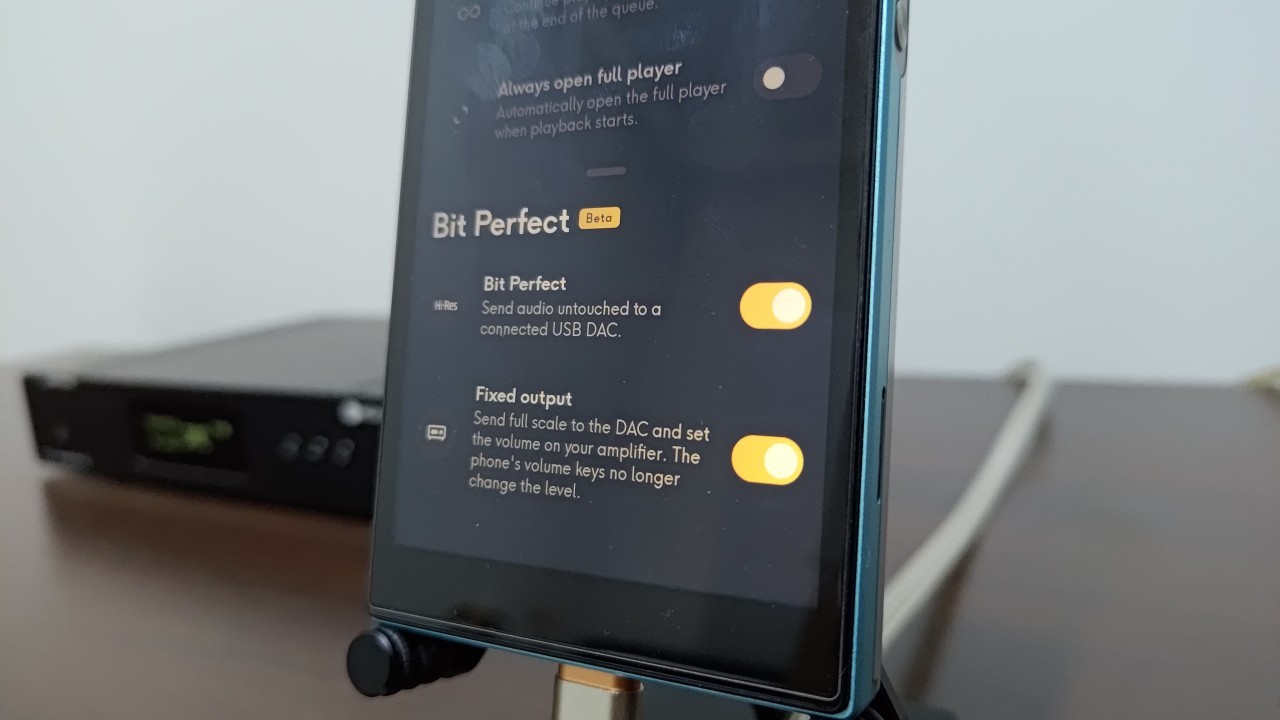
These changes to Google’s operating system enable bit-perfect transmission, a scenario in which there is no software-level interference in the audio signal path.
[2] SRC (Sample Rate Conversion) performs resampling, converting all audio files to a sampling rate of 48 kHz.
Can smartphones with a headphone output fulfill the role of a DAP?
Smartphones can partially fulfill the role of a DAP. To facilitate understanding, the characteristics of Digital Audio Players that a smartphone with a headphone output can provide are separated from those that are not possible on a phone.
DAP benefits that smartphones with a headphone output can provide
If the user employs a smartphone with a headphone output exclusively for music playback, it is possible to obtain the following benefits commonly found in DAPs:
• Good-quality DAC chips: some smartphones use DAC chips of good quality.
• Non-shared battery consumption: by uninstalling all applications not related to music, better energy efficiency can be achieved.
• No distractions: by enabling airplane mode and uninstalling messaging, email, and other non-audio-related applications, there will be no notifications to cause distractions.
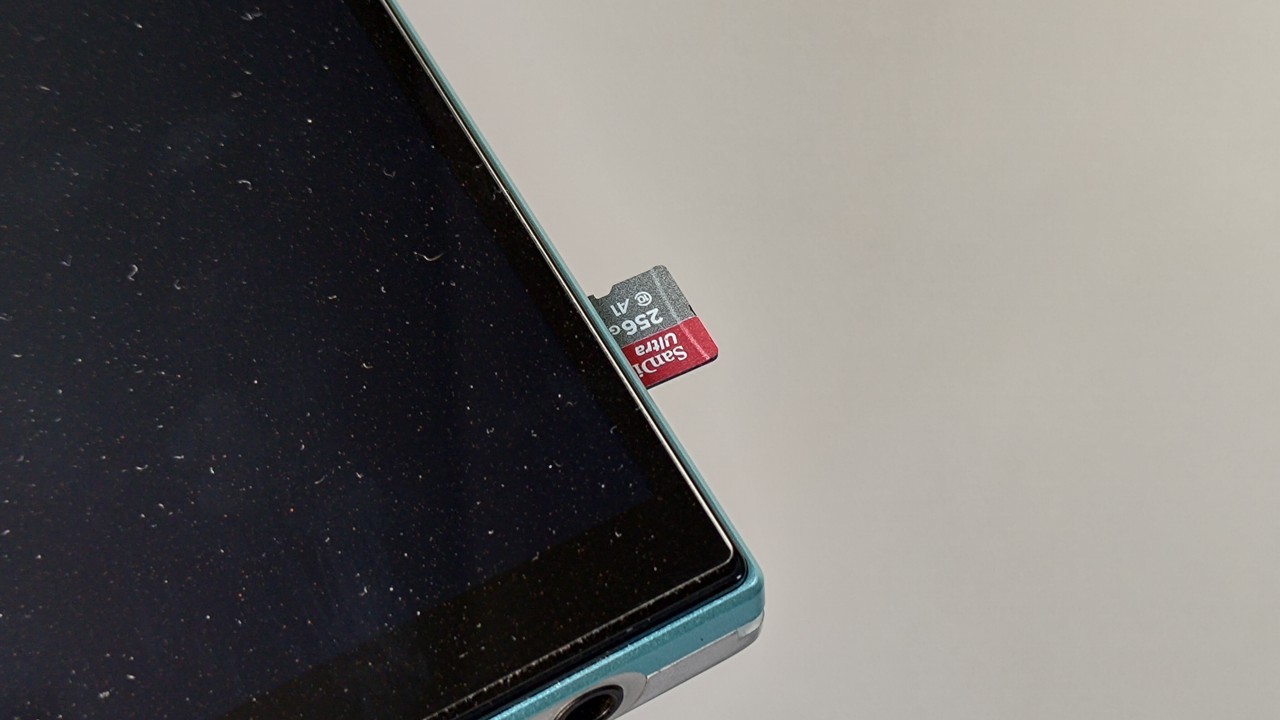
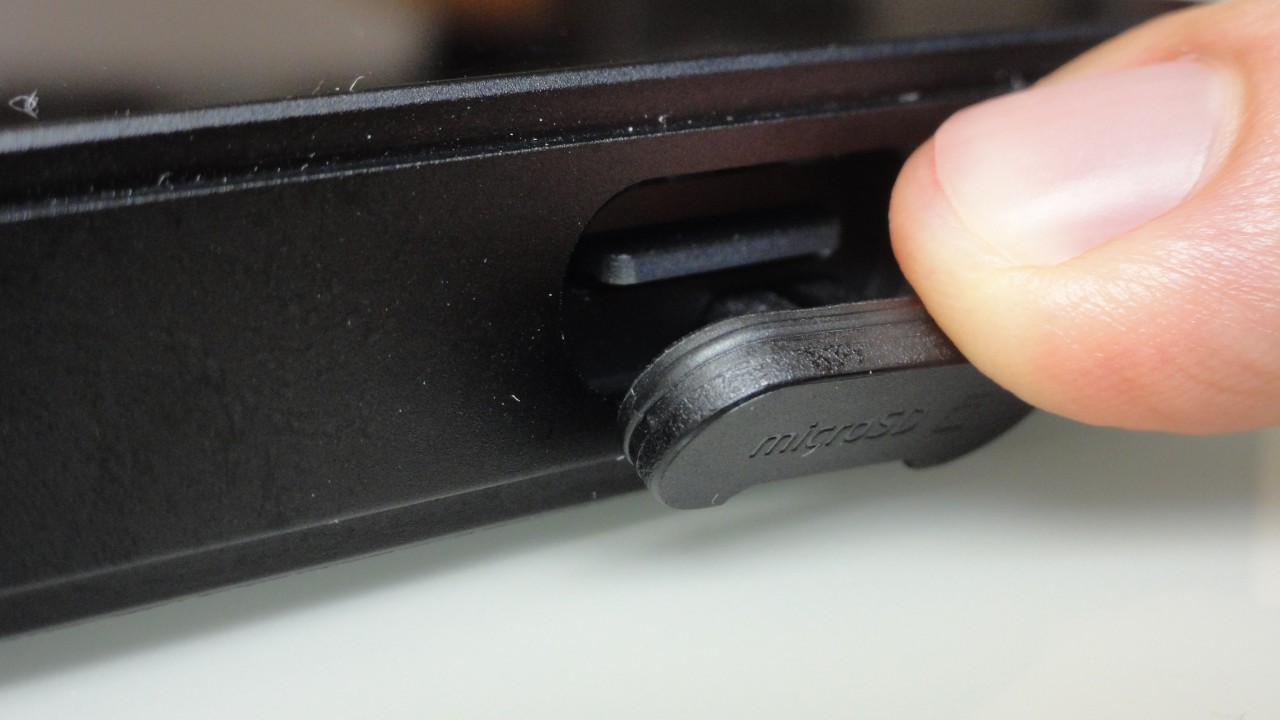
• microSD card slot: some smartphones still include a microSD card slot, although this has become increasingly rare.
DAP characteristics that smartphones do not provide
There are characteristics present in DAPs that smartphones with a headphone output cannot offer, namely:
• Lack of physical buttons for music control: without physical buttons, it is necessary to turn on the smartphone screen every time one wants to skip to the next track or pause playback.
• Internal hardware not optimized: there is no PCB design focused on protecting the audio signal from interference, nor are components selected specifically to enhance sound quality (such as higher-quality capacitors and clocks).
• Higher output power: over-ear headphones with lower sensitivity and higher impedance may prevent a smartphone from delivering adequate sound quality.
• Fewer connection options: it is not possible to use headphones with balanced 4.4 mm cables or to connect the smartphone via optical or coaxial cables to an external DAC.
• Lack of audio-oriented OS features: compared to DAPs, smartphones do not provide operating system features aimed at offering better audio control, such as a higher number of volume steps and adjustable gain levels.
• No Android optimization for interference-free audio transmission: there is no bypass of the SRC applied by Android’s audio APIs.
Recommended related articles:
• The evolution of chipsets and Android optimization in DAPs
• How RAM memory consumption works in Android DAPs
• Why use a DAP (Digital Audio Player)?
Share:


No comments have been made yet, be the first!