

iBasso AMP18: New Amplification Card for the DX340 Is Launched
From: Vitor Valeri
A headphone hobbyist for over 15 years, he founded the Hi-Fi Hub website and is an administrator of the "Fones High-End" and "Fones Low-End" groups on Facebook.


Published in: 30/12/25 at 12:31
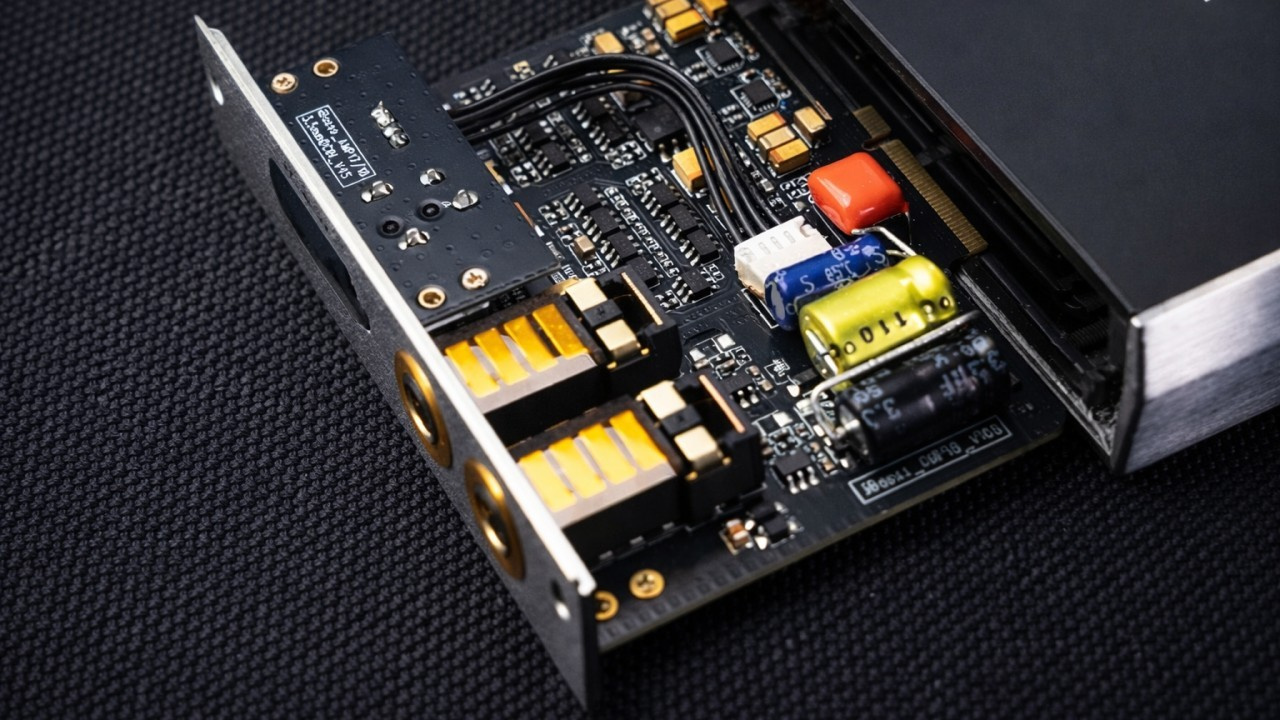 AMP18 amplification card for the iBasso DX340, DX320, and DX300 Digital Audio Players (DAPs) (Image: iBasso / Reproduction)
The iBasso AMP18 was released today (30th) for the DX340, DX320, and DX300 Digital Audio Players (DAPs). It is an amplification circuit card designed to enable the use of different amplifier designs in iBasso’s top-of-the-line (TOTL) DAPs. The highlight of the AMP18 is its two-stage amplification with 80 transistors, allowing greater current delivery for over-ear headphones and better compatibility with low-impedance earphones.
Why use 80 transistors in the AMP18?
To provide greater output current capacity for over-ear headphones and improved compatibility with low-impedance in-ear monitors (IEMs), the AMP18 amplification card uses 40 dual transistors, forming an 80-transistor matrix, according to iBasso. Allocating this number of transistors presented a high level of engineering difficulty, but resulted in “exceptional sound performance,” according to the manufacturer.
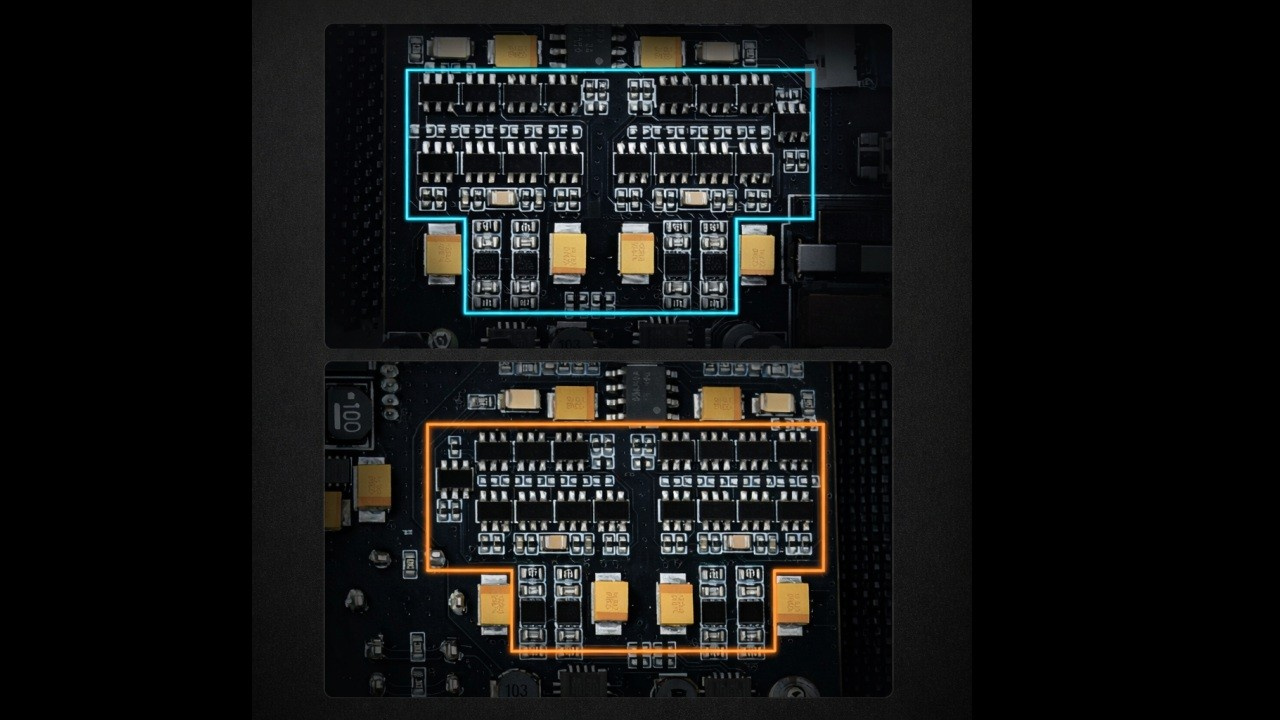
Implementation of a cascaded current feedback circuit
To avoid distortion during sudden dynamic changes in music, iBasso implemented a cascaded current feedback circuit in the AMP18. Most headphone amplifiers adopt a deep negative feedback design to achieve low static distortion, but this causes delays in audio signal transmission and results in slower attack speed, as well as a loss of impact and detail.
This loss of sound quality caused by negative-feedback amplifiers typically occurs during passages with many overlapping instrument and vocal sounds, or when there is a sudden change in musical dynamics—such as a drum hit following a string section passage in an orchestral piece.
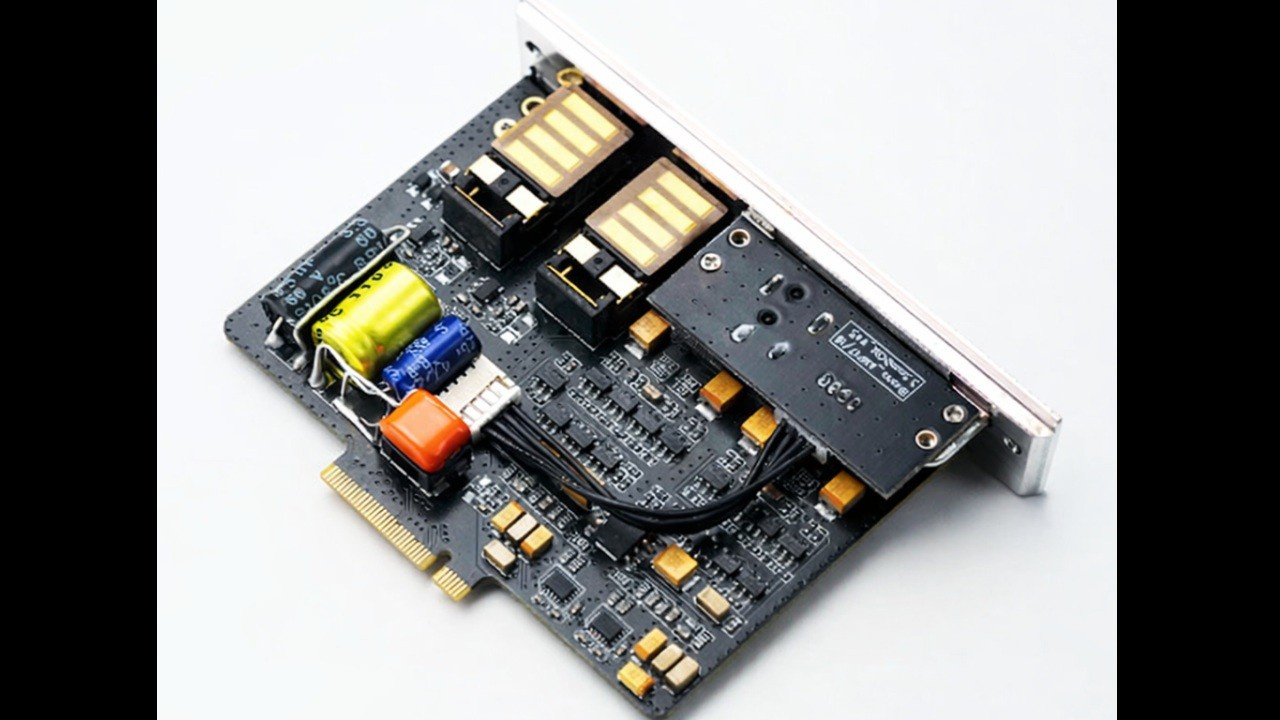
Two-stage amplification design
According to iBasso, a two-stage amplification architecture was adopted in the AMP18 to provide natural decay and greater clarity in musical detail.
In the first stage, the board uses OP-amps (operational amplifiers) combined with transistors to “accurately restore the details” of the audio track being played.
The second stage employs a current-mirror amplification architecture with complementary outputs for current delivery, according to the company.
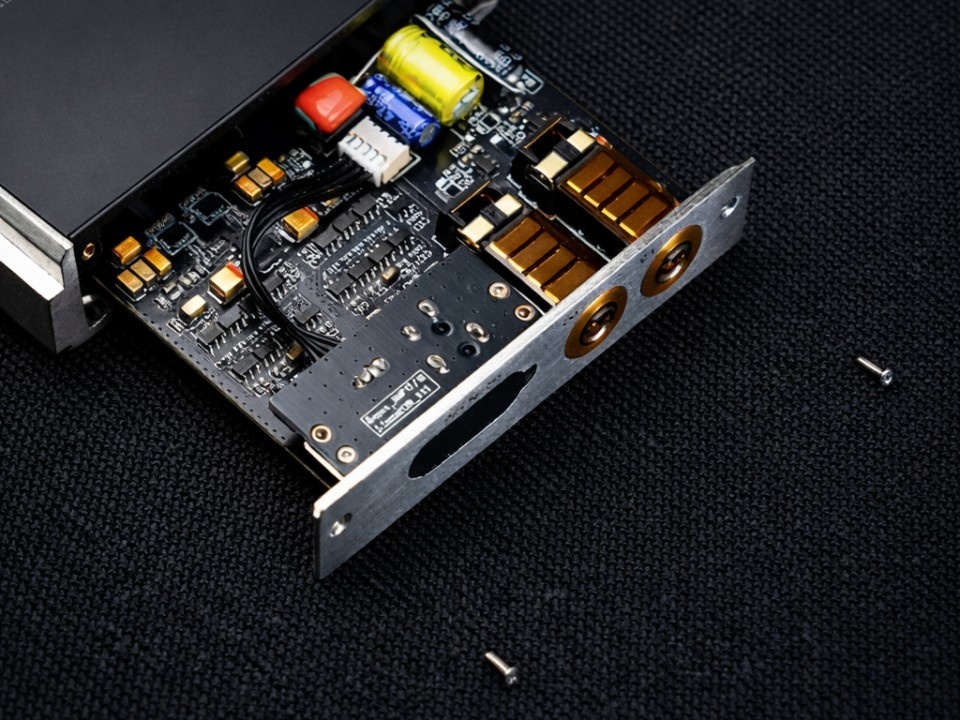
The complementary outputs in the AMP18’s second stage allow for a significant reduction of the “asymmetrical distortion typically found in conventional transistor output stages,” says iBasso. By using symmetrical amplification, signal clipping—which causes distortion in deep bass and high-frequency extension—is avoided. The result, according to the manufacturer, is the “reduction of dry digital sound,” delivering “a warmer and more natural listening experience.”
High output power
When used with an external 12V power supply, the AMP18 is capable of delivering 1740 mW at 32 ohms. This allows the amplification board to drive nearly all over-ears and IEMs, providing strong bass performance, full-bodied mids, and extended treble, according to iBasso.
Dual 4.4 mm balanced outputs
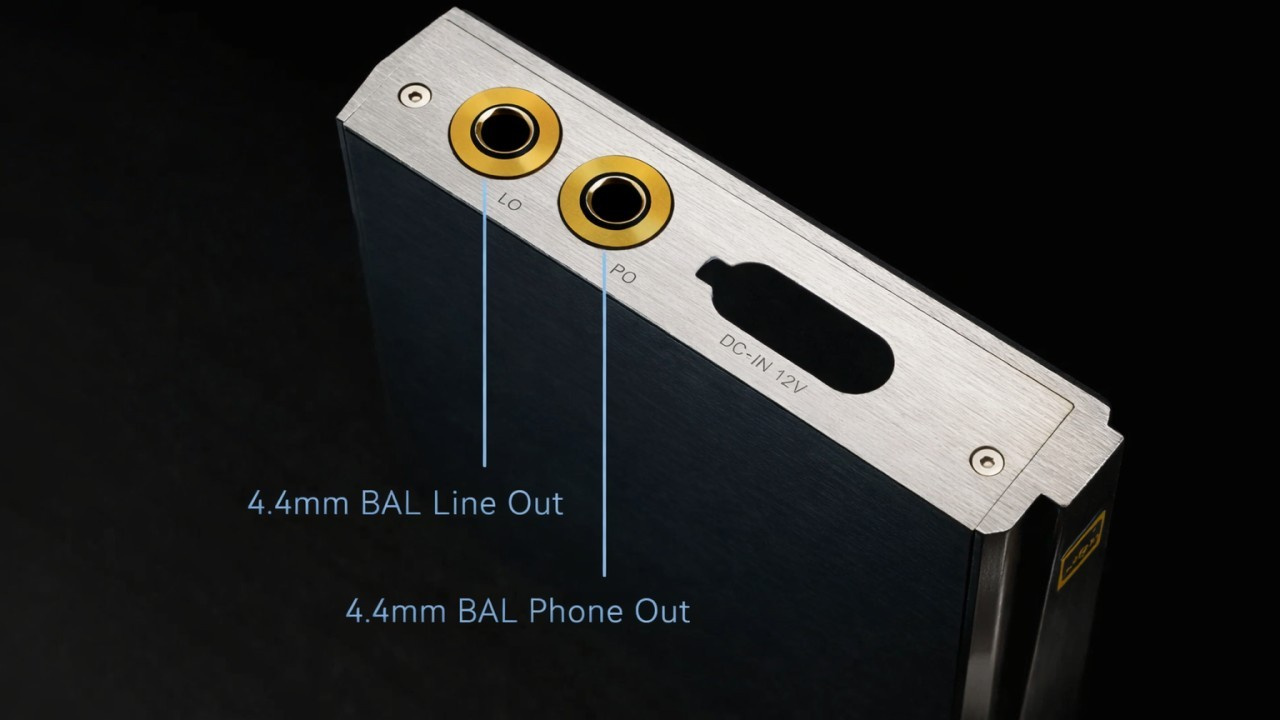
To increase versatility, the AMP18 features two 4.4 mm balanced outputs — one for headphone output and one for line-out (LO). This allows headphones and amplifiers to be connected with a clean audio signal.
AMP18 compatibility
According to iBasso, the AMP18 amplification card is compatible with the DX340, DX320, and DX300 DAPs. However, the DX300 and DX320 do not support the external 12V power supply.
iBasso AMP18 — Specifications
4.4 mm balanced headphone output (PO)
THD+N:
• −114 dB (no load)
• −105 dB (300 Ω load)
• −93 dB (32 Ω load)
Dynamic range: 123 dB
Signal-to-noise ratio: 122 dB
Maximum output power:
• 1740 mW + 1740 mW @ 32 Ω (with 12V DC power supply)
• 1170 mW + 1170 mW @ 32 Ω (battery power)
Crosstalk: −122 dB
Frequency response: 10 Hz – 40 kHz ± 0.9 dB
Output impedance: 1.2 Ω
4.4 mm balanced line-out (LO)
THD+N: −110 dB (no load)
Dynamic range: 123 dB
Signal-to-noise ratio: 123 dB
Crosstalk: 114 dB
Launch, price, and availability
The iBasso AMP18 amplification card is already available and can be purchased on the brand’s official website for US$ 279. At the time of writing, its status is listed as “out of stock,” but I believe it will soon change to “in stock.”
Share:


Product launches
Topping DX1 II: Release Date and Specs Revealed

Product launches
No comments have been made yet, be the first!