

Headphone Cables: To What Extent Do They Improve the Listening Experience?
From: Vitor Valeri
A headphone hobbyist for over 15 years, he founded the Hi-Fi Hub website and is an administrator of the "Fones High-End" and "Fones Low-End" groups on Facebook.


Published in: 23/01/26 at 15:08
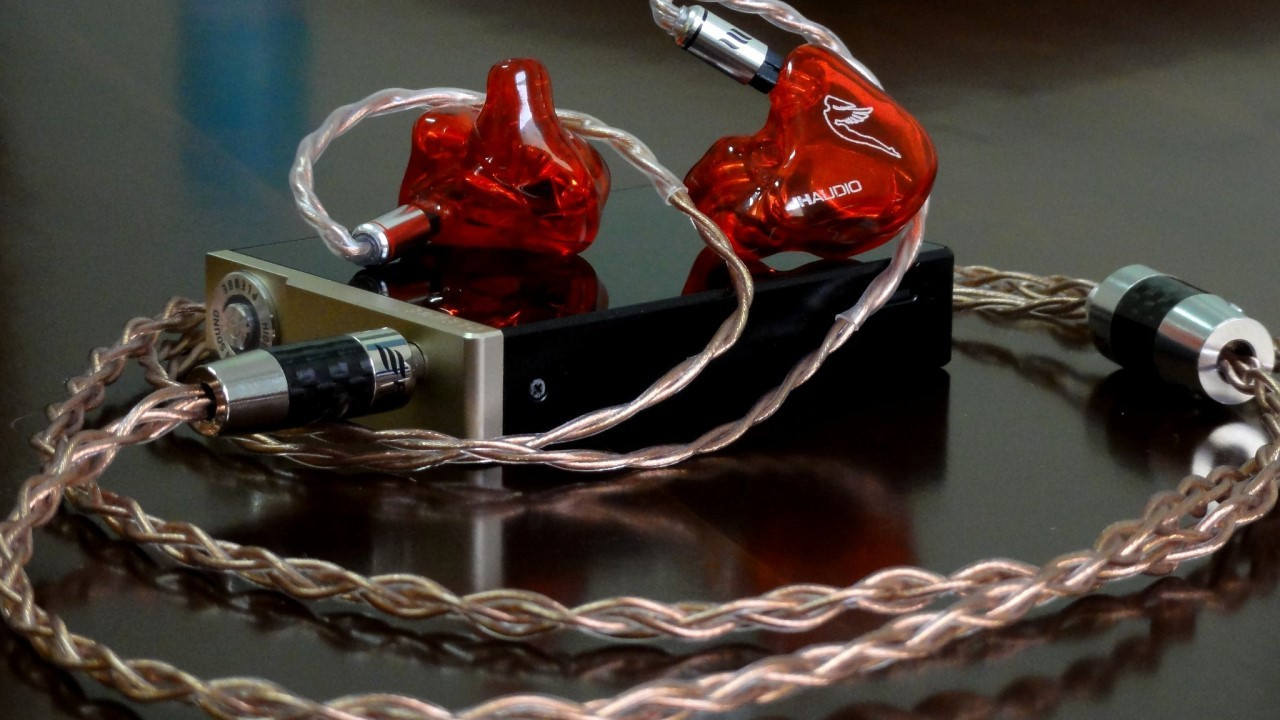 Photo of the Effect Audio Ares in-ear monitor (IEM) cable (Image: Vitor Valeri/Hi-Fi Hub)
Headphone cables can provide either a positive or a negative experience, depending on the quality of the materials, the way they are constructed, and characteristics such as length. In addition, user needs may vary according to the scenario in which the headphones will be used. By understanding what to analyze in a cable, it becomes easier to achieve greater comfort and practicality with both in-ear monitors (IEMs) and headphones.
It is difficult to define precisely to what extent headphone cables can improve the user experience, but it is possible to list some benefits that become evident when purchasing a cable. These advantages are most often clear when comparing the stock cable supplied with the headphones to third-party cables, especially customized or personalized ones.
In this article, I list the main aspects that I consider important when purchasing a cable, in order to weigh whether the investment is worthwhile when compared with the characteristics of the stock cable included with the headphones.
What should be considered when buying a headphone cable?
When purchasing a headphone cable, it is important to consider the following aspects:
• Characteristics of the materials used in the cable
• Design of the cable components
• The need for a longer or shorter cable length
• Which devices the cable will be connected to
• Which plug or plugs will be used
• The use of different connectors to fit the headphones
Why consider the characteristics of the materials used in the cable?
It is important to consider the characteristics of the materials used in each component of the cable. For this reason, customized/personalized cables or more “premium” models usually deliver a differentiated experience compared to the stock cable.
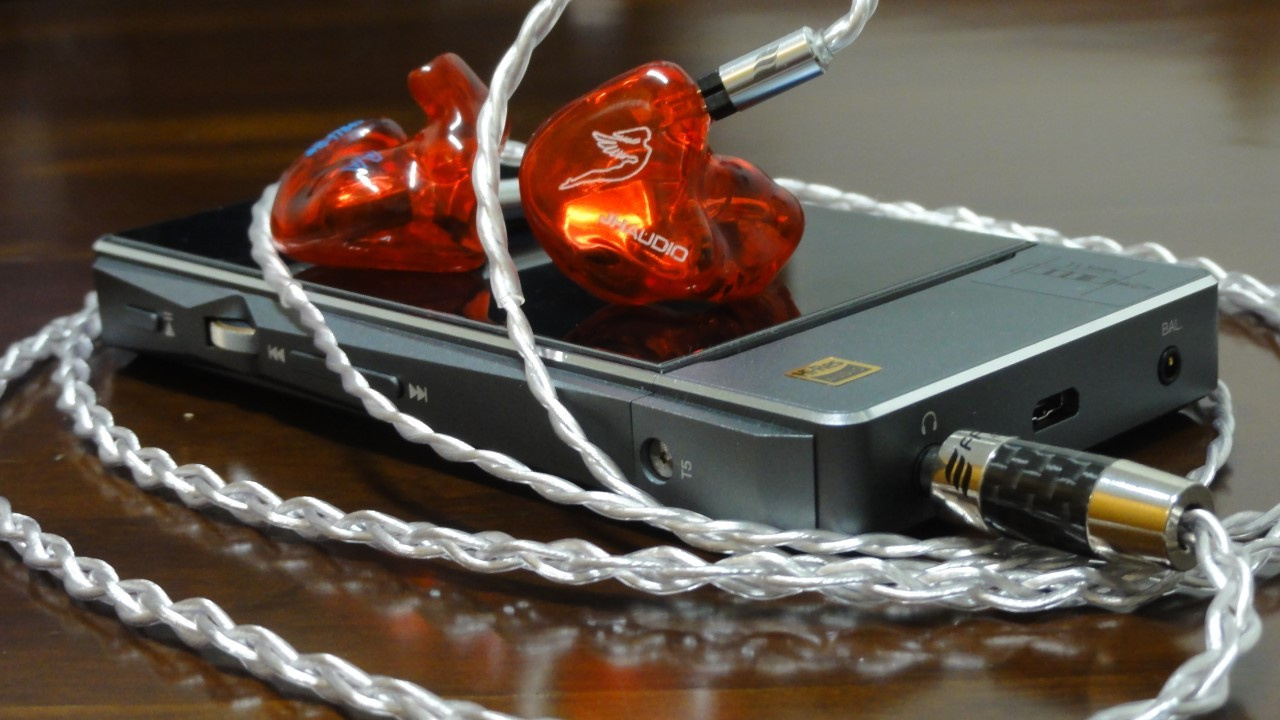
1 – Jacket that surrounds the cable wires
The first thing I look at when buying cables is the jacket that surrounds the wires. This is a crucial point for in-ear monitors (IEMs), since they are designed to be portable and, when the user moves, microphonics may occur [1].
For over-ear headphones, microphonics generated by the cable jacket are not as critical, because the user is usually seated, as this type of headphone does not provide as much mobility. However, the weight of the jacket can negatively affect the user experience for both IEMs and over-ears.
In the case of in-ears, since the cable passes behind the ear, jackets made exclusively of PVC (polyvinyl chloride) or TPU (thermoplastic polyurethane) [2] are more suitable, as they provide a more pleasant feel on the skin and, in most cases, generate less or no microphonics. It is possible to find both matte and transparent/translucent jackets, which allow visualization of the cable’s metal filaments.
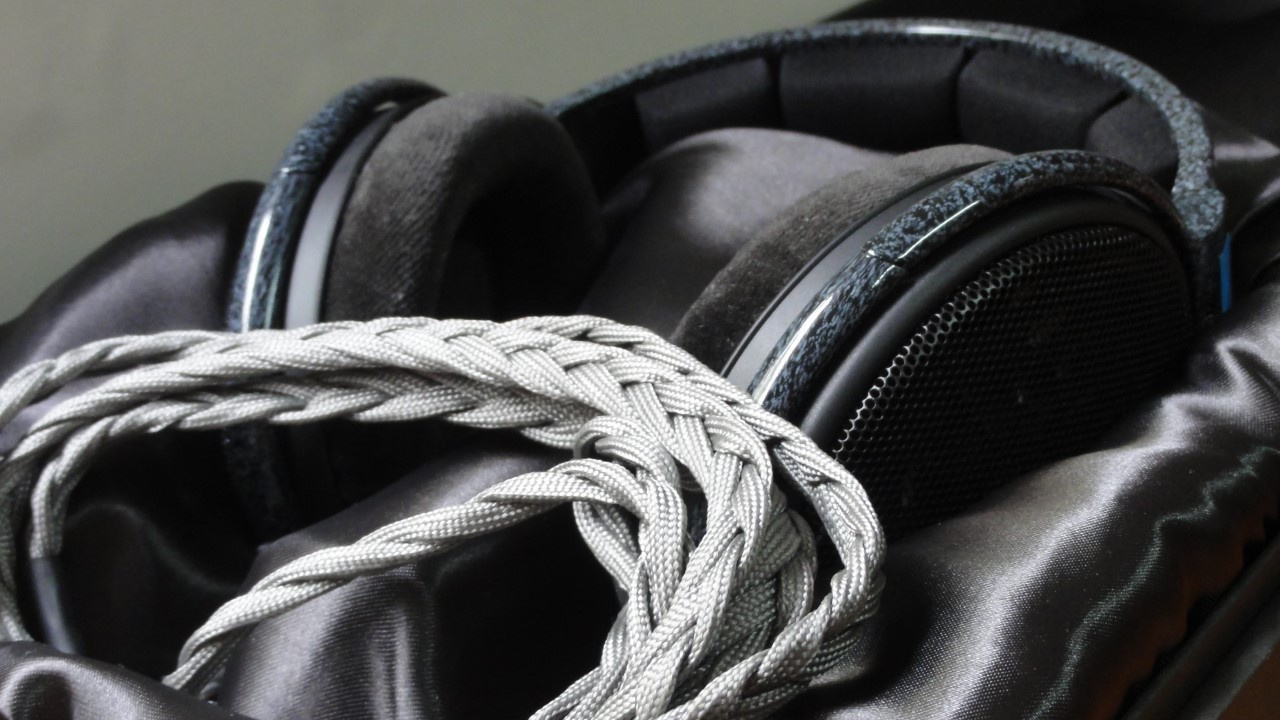
The jackets of over-ear cables allow greater freedom in material choice. Both fabric-covered cables with an internal plastic jacket and those made exclusively of PVC or TPU can be interesting options. Nevertheless, it is important to compare the weight differences among jacket materials, as using heavy cables is genuinely uncomfortable.
[1] Cable microphonics refer to the conduction of sound generated by friction between the cable jacket and objects, such as clothing or furniture.
[2] PVC and TPU are types of plastics that exhibit flexibility and resistance, especially in medical-grade formulations.
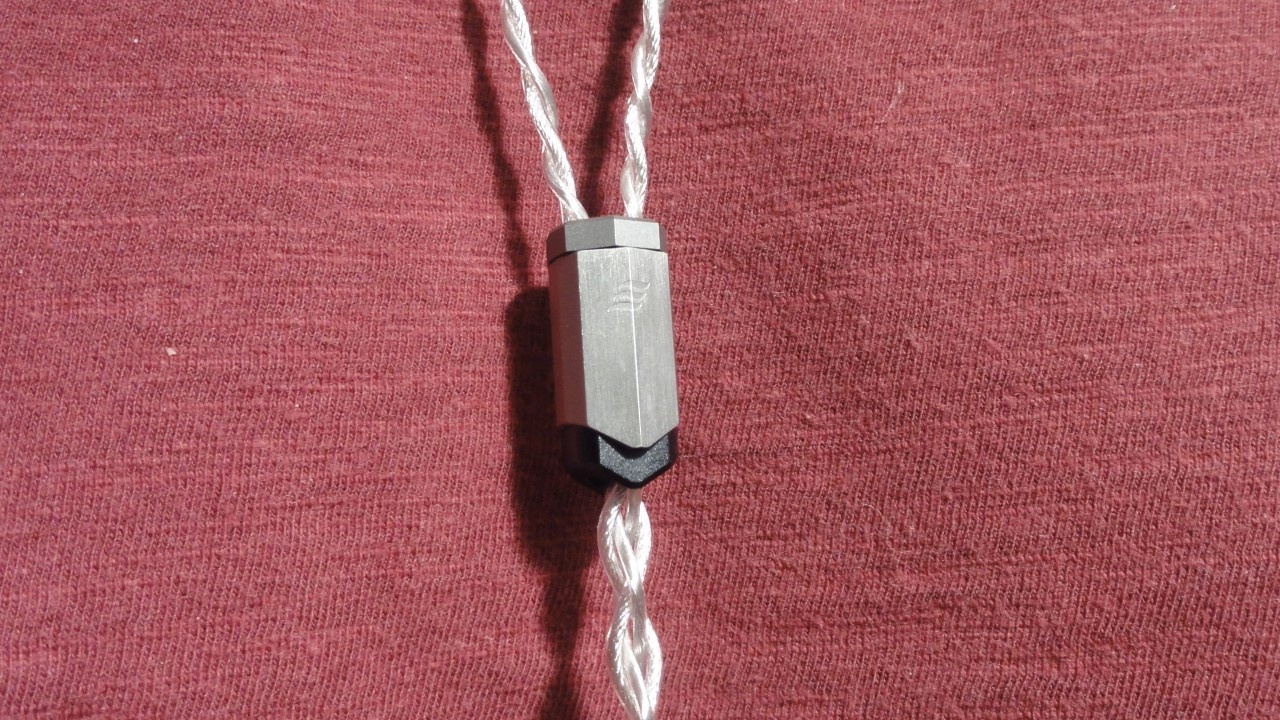
2 – Cable splitter
The main function of the “Y” splitter in headphone cables is to divide the audio signal between the left and right channels. However, if it is heavy, it will negatively affect comfort, especially for IEMs. In the case of over-ear headphones, since the weight is more evenly distributed, this effect is less noticeable.
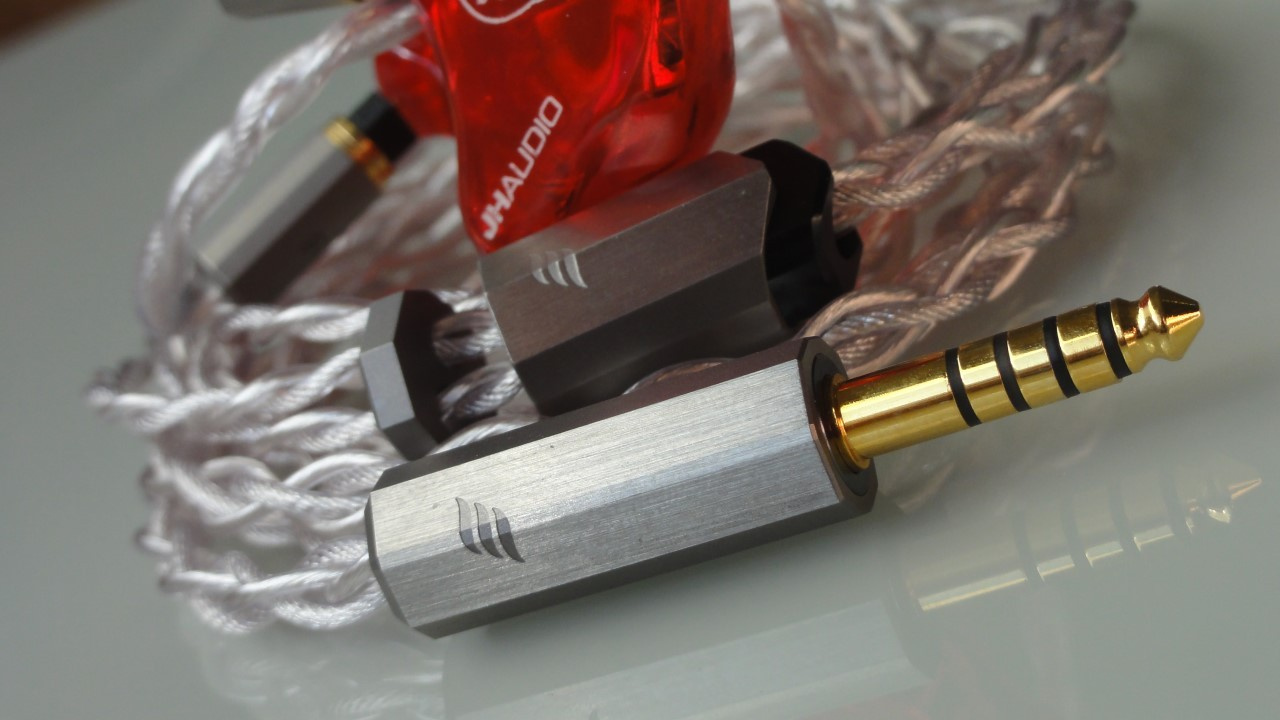
For in-ears, it is preferable that the splitter be made of plastic, wood, or a lightweight metal alloy, such as an aluminum alloy. Weight differences among splitters become evident when using IEMs that fit very tightly in the ear concha, such as Sennheiser models (IE 200, IE 600), Final Audio models (A4000, B3), or CIEMs (custom in-ear monitors).
3 – Cable plug
The quality of the plug material can influence both the durability of the component itself and the prevention of wire oxidation. For this reason, brass is commonly used, plated with a layer of nickel and finished with a gold plating. Plating with these metals prevents oxidation, improves conductivity, and provides a firmer fit.
Some higher-end plugs use rhodium plating instead of gold, as rhodium has better abrasion resistance and also protects the brass plug from oxidation. Considering this advantage, it is worth comparing prices and trying to choose a cable that uses rhodium plating.
The importance of the design of cable components
Depending on the design adopted for the cable components, flexibility may be affected and microphonics may be introduced. The components that most influence these aspects are the splitters and the cable wires themselves.
How does the design of splitters affect the experience?
The design of a cable splitter can affect the user experience because, if the component has sharp edges or pointed lines, microphonics will occur when it slides against clothing or furniture. In addition, depending on the material used, size will also influence comfort, as it can considerably increase weight, especially in the case of in-ears.
For over-ears, the shape of the splitter has a greater impact than its size, since the weight is better distributed on the head. Nevertheless, it is always desirable that the splitter be lightweight and have rounded lines, both for IEMs and for headphones.
The influence of cable wire design
The way the cable wires are designed influences both flexibility and weight. The number of wires [4] and the AWG [4] are the main factors that determine how flexible a cable can be, but the geometry of the cable filaments also has some influence.
The greater the number of conductors in a cable, the less flexible it becomes. At the same time, a lower AWG results in thicker conductors, which increases stiffness. Therefore, a balance must be achieved in this configuration.
For in-ear headphones, I recommend cables with a 4-core configuration and AWG between 26 and 24. For over-ears, AWG can be as low as 16 without significantly affecting usability, if a 2-core configuration is used. If the headphone cable has a 4-core configuration, it should not be too thick; for example, 22 AWG is recommended.
[3] The number of wires in a cable is related to how many insulated wires are braided together within the cable.
[4] AWG (American Wire Gauge) refers to the total diameter of the conductors (wires) in a cable. The smaller the number, the larger the diameter.
How cable length can affect the experience
Depending on how the headphones will be used, a 3-meter cable may only hinder the user experience. For example, if the headphones are connected to a device that is in your pocket or close to you on a desk, it is preferable to use a cable between 1.2 m and 1.5 m in length so that it does not drag on the floor.
Why consider which devices the cable will be connected to?
It is important to consider which devices the cable will be connected to, because depending on the device, it may be more appropriate to use a 4.4 mm output, a 3.5 mm (P2) output, or a 6.35 mm (P10) output. If you frequently use two or more types of plugs, I recommend purchasing a modular cable, which allows easy switching between different plugs, including USB-C, which incorporates an internal DAC/amp.
There are cases in which one type of plug is used predominantly (for example, 90% of the time). In this situation, it is better to choose a non-modular cable, as this will save money, since modular plugs are more expensive.
Different connectors to fit the headphones: why is this important?
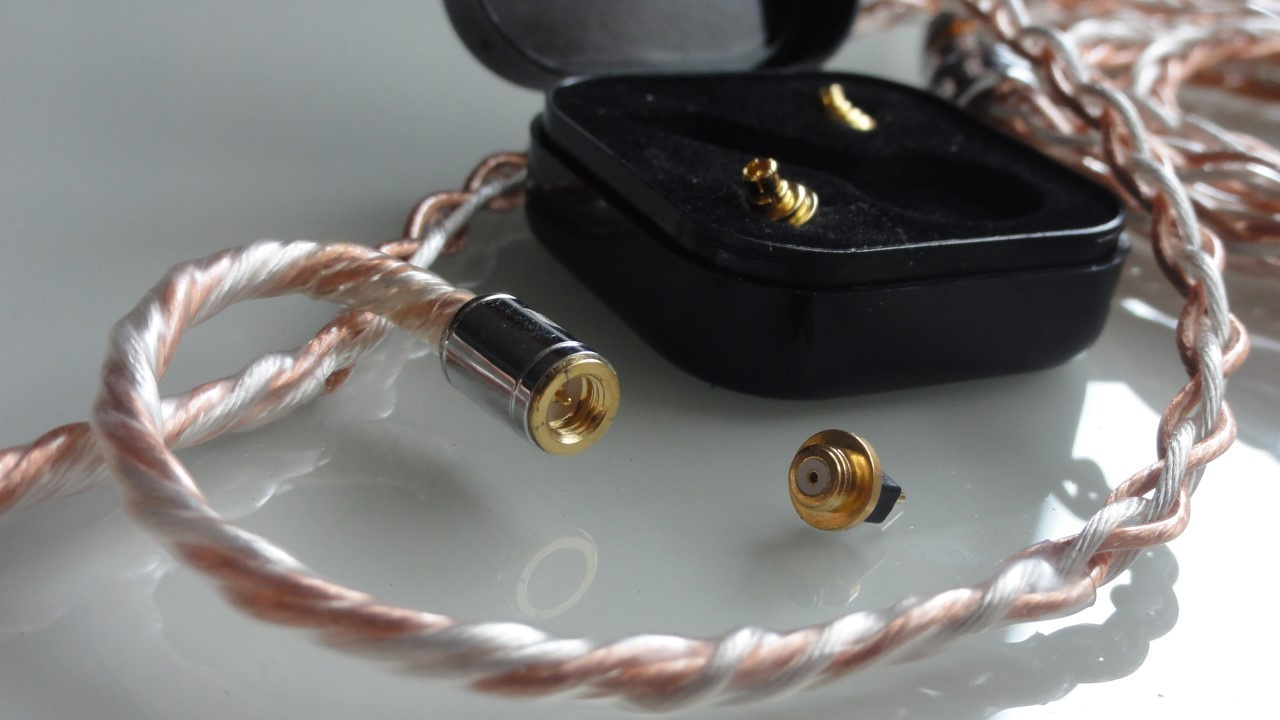
Considering the headphone connectors is important for models with detachable cables. If you have IEMs with different types of connections, such as MMCX and 2-pin, it may be advantageous to purchase a cable with modular connectors. In this way, a single cable can be used with multiple headphones. This makes sense for IEMs, since over-ear headphone cables do not typically have modular connectors on the headphone side.
Conclusion: to what extent do cables improve the experience?
In the vast majority of cases, replacing the stock cable with a third-party cable that offers better build quality can provide a significant improvement in the overall user experience in terms of comfort and usability, and in some cases may also improve sound quality—although this topic will be addressed in another article.
Due to better flexibility, a well-constructed cable practically does not exhibit “memory,” since its rigidity is minimal. This allows for better handling both during use and when storing the headphones in a case.
If the selection of materials for the cable components is appropriate, there will be no concern about noise generated by friction, which causes the microphonic effect. In addition, components made from lighter materials contribute to greater comfort.
Plug modularity (3.5 mm, 4.4 mm, 6.35 mm, USB-C) can increase flexibility in cable usage, but it also increases cost. Therefore, consider in which situations each type of plug will provide the greatest benefit, as this depends on your equipment configuration, whether it is a DAP, a DAC/amp, a dongle DAC/amp, a notebook, or a smartphone.
With proper construction, a high-quality cable tends to last for many years. For example, I personally have cables that are eight years old and are still functioning perfectly.
Ultimately, all the characteristics of a high-quality cable component significantly influence its cost, including the type or types of metals used in the conductors, which are the most expensive part. That said, when evaluating whether it is worth purchasing a better cable for your headphones, consider the following:
- You can use the cable with more than one pair of headphones: thanks to plug and connector modularity, it is possible to use the same cable with several IEMs, for example.
- The value of the headphones compared to the price of the cable: depending on the configuration, the cable may be considerably more expensive than the headphones themselves, so it is important to weigh the benefits obtained from changing the cable.
- The durability of a more expensive cable may be considerably greater than that of the stock cable: considering that a well-made cable can last for many years, the cumulative cost of several low-quality cables may equal the price of a single high-quality one.
- The comfort provided by the cable can transform the headphone experience both during listening and when storing the headphones in a case: being lighter, more flexible, and more pleasant to the touch, well-constructed cables can significantly enhance overall enjoyment.
Share:


No comments have been made yet, be the first!